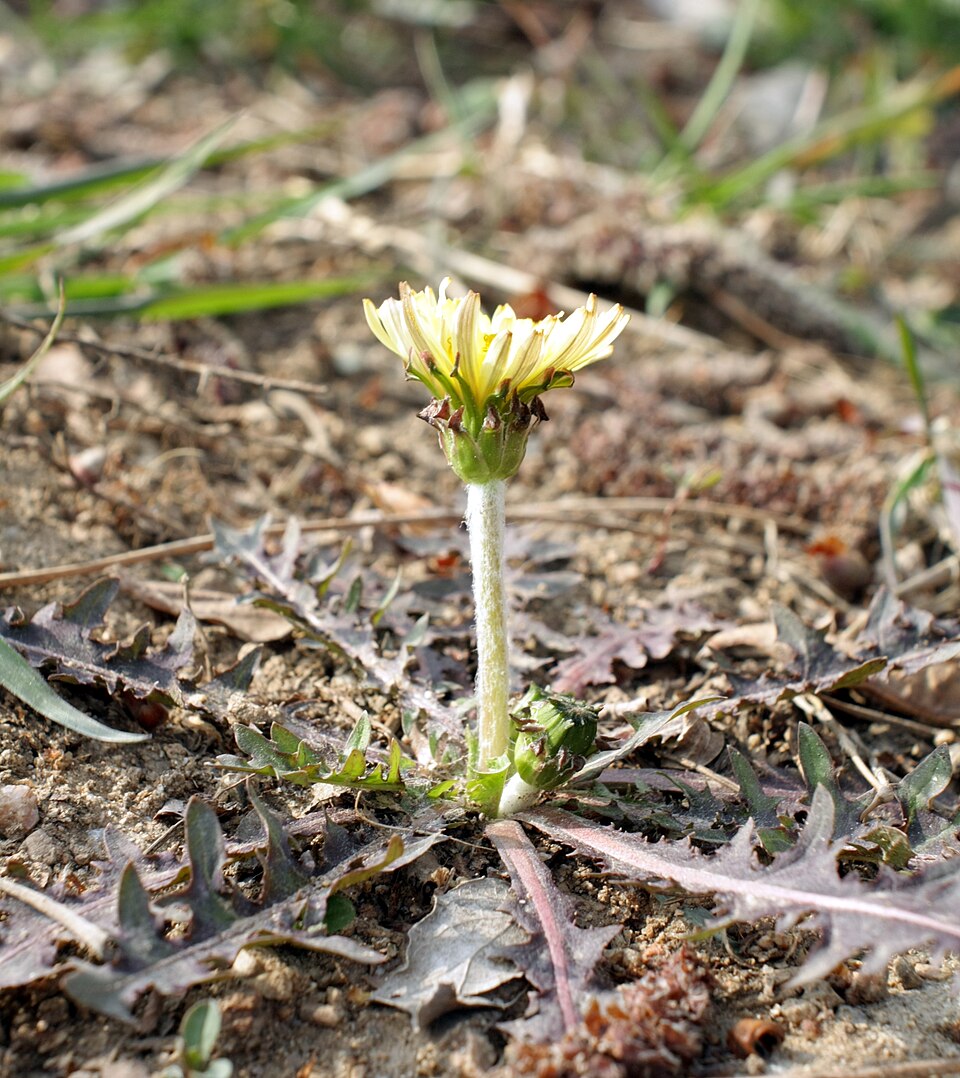
Kanto Dandelion🌼
Taraxacum platycarpum
カントウタンポポ
A native Japanese dandelion distributed from the Kanto region to southern Tohoku. Distinguished from the introduced Taraxacum officinale by involucral bracts that stand upright (rather than reflexing). A sexual diploid that flowers only in spring, producing seeds through normal pollination.
Identification Points
- ✓Outer involucral bracts stand upright (not reflexed) — the key identification point
- ✓Yellow ligulate florets
- ✓Flowers only in spring (March–May)
- ✓Rosette of lobed leaves
Habitat
Grasslands, roadsides, and embankments in Honshu (Kanto to southern Tohoku)
Season
March to May (flowers)
Morphological TraitsAI-estimated, needs verification
Petal count
3 petals
Ovary position
Inferior
Stamen count
1-2
Phylogenetic Positionキク科 →
Phylogenetic Position
Angiosperms > Eudicots > Core eudicots > Asterales > Asteraceae
Divergence Era
Late Cretaceous to Paleogene (approx. 80–70 million years ago)
Evolution Notes
Native Japanese dandelions are mostly diploid (two chromosome sets) and reproduce sexually, flowering briefly in spring. Meanwhile, the introduced Western dandelion is a triploid apomict that clones itself and blooms year-round. In urban Japan, hybrids between the two are expanding, pushing pure natives toward suburbs and satoyama.
View on evolution timeline →Sources & References
AI-generated, needs verification