Plant List
719 species719 results
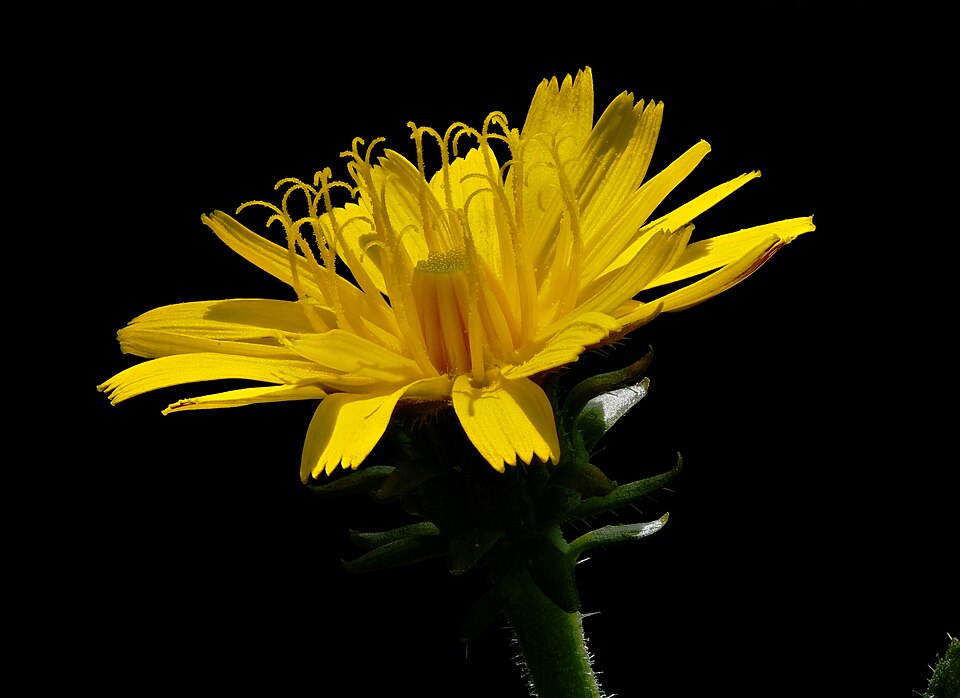
Common Dandelion🌼
Taraxacum officinale
キク科
A perennial herb that blooms yellow flowers from spring to early summer. One of the most commonly seen plants along roadsides and in parks. Originally from Europe, this introduced species can be distinguished from native Japanese dandelions by its reflexed (recurved) outer involucral bracts.

Sunflower🌻
Helianthus annuus
キク科
An annual herb native to North America, reaching 1-3 m in height, characterized by its large yellow capitula. The seeds are used for food and oil production. Commonly cultivated in school gardens and farmland.

Annual Fleabane🌼
Erigeron annuus
キク科
An introduced species from North America. An annual or biennial herb that produces numerous small white flowers from spring to autumn. Commonly found along roadsides and in vacant lots. Often confused with the similar Erigeron philadelphicus.

Philadelphia Fleabane🌼
Erigeron philadelphicus
キク科
An introduced perennial from North America, common along roadsides in spring. Closely resembles E. annuus but can be distinguished by its earlier flowering period (spring only), hollow stems, and cauline leaves that clasp the stem.

Japanese Mugwort🌿
Artemisia indica var. maximowiczii
キク科
A perennial herb found throughout Japan in grasslands and along roadsides. Young spring shoots are used to make kusa-mochi (mugwort rice cakes). The undersides of leaves are covered in white woolly hairs, and the plant has a distinctive aroma. Also known as the source material for moxa (used in moxibustion).

Tall Goldenrod🌼
Solidago altissima
キク科
An introduced species from North America. Forms dense colonies with yellow flower spikes in autumn. Known as an invasive alien species, forming large stands along riverbanks and wastelands. Once mistakenly blamed for hay fever, but it is insect-pollinated and not a cause of pollen allergies.

Garden Cosmos🌸
Cosmos bipinnatus
キク科
An annual herb native to Mexico. A quintessential autumn flower, producing pink, white, and red blooms. The leaves are finely divided into thread-like segments. Also written as 'autumn cherry blossom' in Japanese, it is a beloved symbol of autumn in Japan.
DSCF2986%E2%98%86%E5%BD%A1.jpg?width=400)
Somei-yoshino Cherry🌸
Prunus × yedoensis
バラ科
The most widely beloved cherry blossom in Japan. Believed to be a hybrid between Prunus pendula f. ascendens and Prunus speciosa. Originated in the late Edo period and now accounts for the majority of cherry trees planted along streets and in parks. Characteristically flowers before the leaves emerge.

Japanese Apricot🌸
Prunus mume
バラ科
A deciduous small tree originating from China, cultivated in Japan since ancient times. Blooms white to pink flowers before the leaves emerge in early spring. An important source for umeboshi (pickled plums) and plum wine. Flowers earlier than cherry blossoms, heralding the arrival of spring.

Japanese Rose🌸
Rosa multiflora
バラ科
A wild rose native to the mountains and fields of Japan. Produces clusters of small white 5-petaled flowers in early summer, followed by small red rose hips in autumn. Branches bear thorns. Also widely used as rootstock for grafted roses.

Japanese Silver Grass🌾
Miscanthus sinensis
イネ科
An iconic plant of autumn in Japan. A perennial grass (Poaceae) that forms dense colonies in grasslands, riverbanks, and mountain meadows. The silvery plumes swaying in the autumn breeze are a beloved sight. Stems are thick and erect.

Green Foxtail🌾
Setaria viridis
イネ科
One of the most common annual grasses found along roadsides and in vacant lots. Produces cylindrical green to yellowish-brown bristly spikes from summer to autumn. Commonly known as 'neko-jarashi' (cat teaser) in Japan, as children use the spikes to play with cats.

Common Reed🌾
Phragmites australis
イネ科
A large perennial grass that forms dense colonies along rivers, lakes, and wetland margins. Reaches 1-3 m in height and produces brown plumes in autumn. Distributed worldwide, it is used for thatched roofing and water purification. Also known as common reed.

White Clover🌿
Trifolium repens
マメ科
An introduced perennial from Europe, widely found in parks and grasslands. Bears white globular flower heads. Characterized by its trifoliate leaves (rarely four-leaved), beloved by children who search for four-leaf clovers. Performs nitrogen fixation through symbiosis with rhizobia.

Red Clover🌿
Trifolium pratense
マメ科
An introduced perennial from Europe, originally introduced as a forage crop and now naturalized along roadsides and in grasslands. Bears reddish-purple globular flower heads. Larger and more upright than white clover.

Common Vetch🌿
Vicia sativa
マメ科
A winter annual found along roadsides and in grasslands in spring. Bears reddish-purple papilionaceous flowers and produces black pods resembling snap peas. Climbs using tendrils that coil around other plants and structures. Named 'karasu-no-endou' (crow's pea) because the pods turn black when ripe.

Shepherd's Purse🌼
Capsella bursa-pastoris
アブラナ科
One of the seven herbs of spring (nanakusa). A winter annual found along roadsides and in fields. Bears small white 4-petaled flowers and distinctive triangular seed pods (silicles). The Japanese nickname 'penpen-gusa' derives from the shape of the fruit.
_Brassica_napus_-_Habit.jpg?width=400)
Rapeseed🌼
Brassica napus
アブラナ科
A crop of European origin, important as the source of canola (rapeseed) oil. Produces bright yellow flowers in spring that blanket fields. Known in Japan as 'nanohana,' this introduced plant creates iconic spring landscapes along riverbanks and farmland.
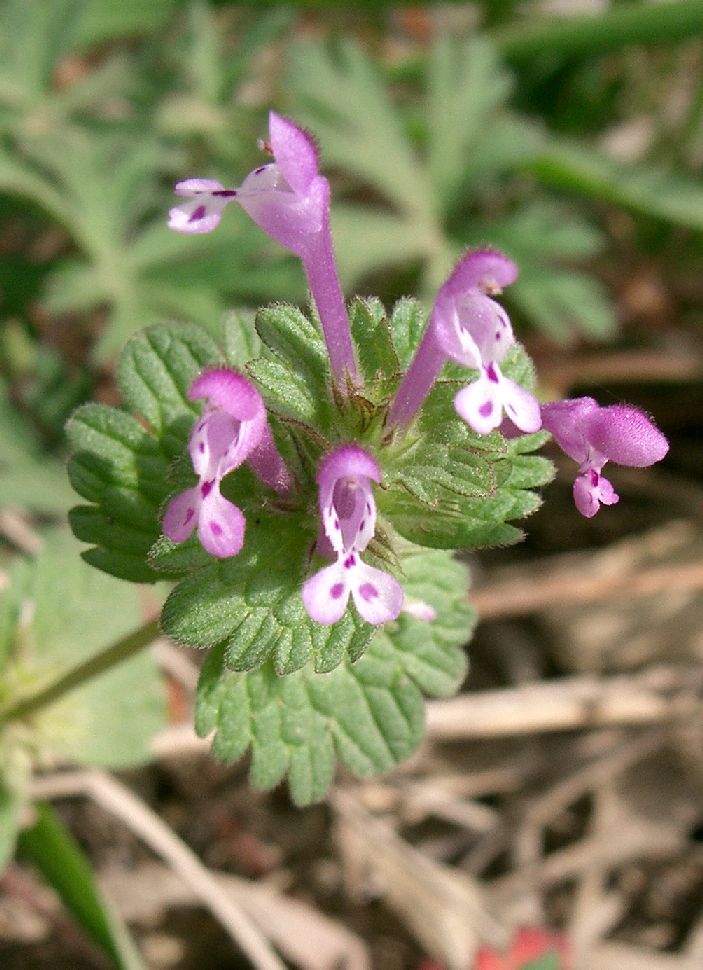
Henbit Deadnettle🌿
Lamium amplexicaule
シソ科
A winter annual that forms dense colonies in fields and along roadsides in spring. Bears reddish-purple labiate (two-lipped) flowers. The Japanese name 'hotoke-no-za' (Buddha's seat) refers to the whorled leaves that resemble a lotus pedestal. Note: the 'hotokenoza' of the seven spring herbs refers to Lapsanastrum apogonoides, a different species.

Red Henbit🌿
Lamium purpureum
シソ科
An introduced annual from Europe, found along roadsides and in fields in spring. Resembles Lamium amplexicaule but can be distinguished by its triangular, wrinkled leaves and the upper leaves that are tinged reddish-purple.

Common Sorrel🌿
Rumex acetosa
タデ科
A perennial herb found in grasslands and along roadsides. The leaves have a strong sour taste, which gives the plant its Japanese name 'suiba' (sour leaf). Dioecious, with small reddish flowers borne in spike-like panicles.

Japanese Knotweed🌿
Reynoutria japonica
タデ科
A large, vigorous perennial herb found along roadsides and on disturbed land throughout Japan. Notorious as an invasive species abroad (Japanese knotweed). Young stems are sour and edible. Numerous small white flowers bloom in autumn.

Chickweed🌸
Stellaria media
ナデシコ科
One of the seven herbs of spring (hakobera). A small herb found along roadsides and in fields throughout the year. The white 5-petaled flowers are so deeply bifid that they appear to have 10 petals. Well known as bird feed.

Broadleaf Plantain
Plantago major
オオバコ科
A perennial herb highly tolerant of trampling, growing along roadsides and on compacted ground. Broad leaves spread in a basal rosette. Wind-pollinated, with numerous small flowers on slender spikes.

Bird's-eye Speedwell
Veronica persica
オオバコ科
An introduced annual from Europe. Produces small bright cobalt-blue flowers along roadsides and in fields in early spring -- an iconic sight of the season. After flowering, distinctive heart-shaped capsules develop.
.jpg?width=400)
Standing Violet💜
Viola grypoceras
スミレ科
The most commonly seen violet in Japan. A perennial herb that produces blue-violet flowers along roadsides and forest edges in early spring. Distinguished by its ascending stems and heart-shaped leaves.

Wood Sorrel
Oxalis corniculata
カタバミ科
A small perennial herb commonly found along roadsides and in gardens, with three heart-shaped leaflets. Tolerant of trampling and regenerates from roots even after weeding. Bears small yellow 5-petaled flowers. The leaves have a sour taste (due to oxalic acid) and were once chewed by children.

Pink Wood Sorrel
Oxalis corymbosa
カタバミ科
An introduced species from South America. Blooms pale pink to reddish-purple flowers from spring to summer. Slightly larger than O. corniculata, spreading via bulbils (small bulb-like structures). Often forms colonies along roadsides and in gardens.

Heartleaf Houttuynia
Houttuynia cordata
ドクダミ科
A perennial herb with a distinctive strong odor. Thrives in moist, shaded areas. The white cross-shaped structure (actually 4 bracts, with the true flowers in a central spike) is characteristic. Used medicinally and as food since ancient times, also known as 'juyaku' (ten-medicine herb).

Cattail🌾
Typha latifolia
ガマ科
A quintessential wetland plant. A large perennial that produces sausage-shaped brown flower spikes in summer. The upper portion is the male inflorescence and the lower portion is the female inflorescence. Featured in the Japanese myth of the White Rabbit of Inaba. The dispersal of cottony seeds is also distinctive.

Asian Skunk Cabbage🌿
Lysichiton camtschatcensis
サトイモ科
An iconic wetland plant of places like Oze Marshland. Opens large white spathes as the snow melts in spring. Celebrated in the famous Japanese song 'Natsu no Omoide' (Summer Memories). The leaves grow large, reaching nearly 1 m by summer.

London Plane🌳
Platanus × acerifolia
スズカケノキ科
A deciduous tall tree widely planted as a street tree throughout Japan. Distinguished by bark that peels in a camouflage-like pattern. A hybrid originating in Europe, commonly known in Japan as 'platanus' (London plane tree).

Konara Oak🌳
Quercus serrata
ブナ科
A representative deciduous tall tree of secondary woodlands. Produces acorns. Beautiful autumn foliage; along with Q. acutissima, it is a key component species of satoyama (traditional rural landscapes). Historically used for charcoal and firewood.

Sawtooth Oak🌳
Quercus acutissima
ブナ科
A representative deciduous tall tree of satoyama landscapes. Produces large acorns. Famous for its sap flow, which attracts rhinoceros beetles and stag beetles. Together with Q. serrata, it has been used for charcoal and firewood production.

Camphor Tree🌿
Cinnamomum camphora
クスノキ科
A large evergreen tree common at shrines and temples in western Japan. Has a distinctive aroma (camphor scent). Leaves feature three prominent veins (triplinerved). An exceptionally long-lived tree, with some specimens exceeding 1,000 years old.

Japanese Camellia🌺
Camellia japonica
ツバキ科
An evergreen small tree native to Japan. Blooms red, white, or pink flowers from winter to spring. The way flowers drop whole (rather than petal by petal) was historically considered an ill omen by samurai. Camellia oil is used as hair oil and cooking oil.

Sasanqua Camellia🌺
Camellia sasanqua
ツバキ科
An evergreen shrub similar to C. japonica but blooming in autumn to early winter. The key difference is that petals fall individually (unlike camellia, where the whole flower drops). Widely used for hedges and park plantings.

Kobushi Magnolia🌸
Magnolia kobus
モクレン科
A deciduous tall tree that blooms profusely with white flowers before the leaves emerge in spring. Flowers slightly earlier than Yoshino cherry. Flowers have 6 white tepals with a slightly reddish center. Native to mountain areas from Hokkaido to Kyushu.

Japanese Red Pine🌲
Pinus densiflora
マツ科
An evergreen conifer widely distributed in the mountains and satoyama of Japan. Distinguished by its reddish bark, especially on the upper trunk. Forms a mycorrhizal association with matsutake mushrooms and is highly valued for bonsai.

Japanese Black Pine🌲
Pinus thunbergii
マツ科
An evergreen conifer commonly found along coastlines. Highly resistant to sea winds and salt spray, widely used for coastal windbreaks and bonsai. Characterized by its stiff, sharp needles that prick when touched.
%2C_Nagata-ku%2C_Kobe_(22615368281).jpg?width=400)
Japanese Cedar🌲
Cryptomeria japonica
ヒノキ科
An evergreen conifer endemic to Japan. Dominates much of Japan's mountain forests and is well known as a major cause of hay fever (pollinosis). Its lightweight, easy-to-work timber is highly valued for construction and woodworking.

Ginkgo🍃
Ginkgo biloba
イチョウ科
A gymnosperm known as a 'living fossil.' One of the oldest surviving tree lineages, with Ginkgo biloba as the sole extant species in the family Ginkgoaceae. Famous for its fan-shaped leaves and brilliant golden autumn foliage. Widely planted as a street tree and as a sacred tree at shrines.

Japanese White Birch🌳
Betula platyphylla var. japonica
カバノキ科
A deciduous tall tree with distinctive white bark, representative of Hokkaido and highland areas. The beautiful white bark symbolizes highland landscapes. Leaves are rhombic to triangular with serrate margins. Turns yellow in autumn.

Hydrangea🌸
Hydrangea macrophylla
アジサイ科
The quintessential flowering shrub of the rainy season (tsuyu). Native to Japan, the flower color changes from blue to reddish-purple depending on soil pH. What appear to be flowers are mostly sterile decorative florets (enlarged sepals); the true flowers are the small ones in the center.

Japanese Zelkova
Zelkova serrata
ニレ科
One of Japan's most representative deciduous tall trees. Grows into a large tree with an elegant form, making it one of the most widely used species for parks and street plantings. Beautiful autumn foliage. The timber is hard and durable, traditionally used in fine architectural construction.

Japanese Morning Glory🌸
Ipomoea nil
ヒルガオ科
An annual vine native to tropical Asia, beloved in Japan since the Edo period. Flowers open in the morning and close by midday. The funnel-shaped flowers come in blue, purple, red, white, and other colors. A staple plant for elementary school science classes in Japan.

Field Horsetail🌿
Equisetum arvense
トクサ科
A pteridophyte (fern ally) found in fields and along roadsides. In spring, the fertile stems (tsukushi/horsetail spore cones) emerge first, followed by the vegetative stems (sugina). A surviving member of the horsetail lineage that flourished in the Carboniferous Period. Spreads via rhizomes and is difficult to eradicate.

Japanese Royal Fern🌿
Osmunda japonica
ゼンマイ科
A fern growing on moist slopes and waterside areas in mountain regions. The young fiddleheads (zenmai) that emerge in spring are a well-known edible wild vegetable. The vegetative fronds (trophophylls) and fertile fronds (sporophylls) are separate, with the fertile fronds turning conspicuous brown.

Ostrich Fern
Matteuccia struthiopteris
コウヤワラビ科
A large fern that grows in colonies along moist forest edges and stream valleys in mountain areas. The young fiddleheads (kogomi) that emerge in spring are a popular edible wild vegetable with little bitterness, enjoyed simply blanched. Sterile fronds spread in a vase-like shape, sometimes exceeding 1 m. In autumn, distinctive fertile fronds with bead-like rolled pinnae emerge upright from the center.
_03-04-2023_(d.j.b.).jpg?width=400)
Japanese Maple🍁
Acer palmatum
ムクロジ科
A deciduous small tree that epitomizes autumn in Japan. Characterized by palmately 5-7 lobed leaves that turn brilliant red, orange, and yellow in autumn. Widely found in gardens, parks, and mountains, with numerous cultivars. The name reportedly derives from a children's game of counting leaf lobes with the old Japanese alphabet 'i-ro-ha-ni-ho-he-to.'

Trident Maple🍁
Acer buergerianum
ムクロジ科
A deciduous tall tree native to China, widely planted in Japan as a street and park tree. Distinguished by its 3-lobed (trident-shaped) leaves, making it easy to tell apart from other maples. Turns orange to red in autumn; bark is grayish-brown and peels slightly in scales.

Flowering Dogwood🌸
Cornus florida
ミズキ科
A deciduous small tree native to North America. It became widespread in Japan after being gifted in return for cherry trees sent by Tokyo's mayor to Washington, D.C. in 1912. Around April, four large petal-like bracts (white to pink) open before the leaves emerge. It also displays beautiful autumn foliage and red berries.

Weeping Willow🌿
Salix babylonica
ヤナギ科
A deciduous tall tree native to China, characterized by its long, pendulous branches. Commonly planted along waterways and riverbanks, it produces yellow-green leaves and catkins in spring. Cottony seeds called willow fluff are released in large quantities in early summer. It was introduced to Japan before the Nara period.

Japanese Chestnut🌳
Castanea crenata
ブナ科
A deciduous tall tree native to Japan and the Korean Peninsula. The spiny bur-enclosed nuts, which ripen in autumn, have been eaten since the Jomon period. The male catkins appear in early summer as white spike-like clusters with a distinctive odor. It is one of the most representative edible trees of the satoyama landscape.

Japanese Cypress🌲
Chamaecyparis obtusa
ヒノキ科
An evergreen conifer endemic to Japan. Its timber has a natural luster and pleasant fragrance, and is prized as a premium building material for shrines, temples, and bathtubs. Along with Japanese cedar, it is one of Japan's major plantation species and a common cause of hay fever. The undersides of the leaves bear distinctive Y-shaped white stomatal bands.

Red Spider Lily🌺
Lycoris radiata
ヒガンバナ科
A perennial that blooms en masse with vivid red flowers around the autumn equinox. It is a "leaf unseen, flower unseen" plant: the leaves are absent during flowering and emerge only after the flowers fade. It grows in dense colonies on paddy field embankments, cemeteries, and satoyama areas. The entire plant is toxic (containing lycorine and other alkaloids). It was historically planted around rice paddies to repel moles and rodents.

Wild Chive🌺
Allium macrostemon
ヒガンバナ科
A perennial found along roadsides and in grasslands. It has a small underground bulb, and both the leaves and bulb are edible. When young leaves are broken in spring, they release an onion-like fragrance. White florets and bulbils appear at the tip of the flower stalk.

Asiatic Dayflower💧
Commelina communis
ツユクサ科
An annual that produces vivid blue flowers from summer to autumn. The flowers are ephemeral, opening in the morning and closing by midday. The stems creep along the ground, rooting at the nodes. It has two prominent blue petals and one small white petal. Historically called "moon grass" (tsukikusa) in Japan, its blue sap was used to dye fabrics.
.jpg?width=400)
Manchurian Violet💜
Viola mandshurica
スミレ科
A small perennial that blooms with purple flowers in spring. Commonly found along sunny roadsides and in grasslands. The violet genus includes about 50–60 species in Japan and is notoriously difficult to identify. The flowers have a spur that stores nectar. In addition to open flowers in spring, the plant also produces cleistogamous (self-pollinating) flowers that set fruit underground from summer to autumn.

Japanese Thistle🌼
Cirsium japonicum
キク科
The most representative native thistle of Japan. A perennial that produces spiny reddish-purple flower heads from spring to early summer. The leaves and involucral bracts bear sharp spines. Widely distributed in meadows, embankments, and roadsides, it is frequently visited by butterflies and bees for nectar.
._22-03-2021._(d.j.b).jpg?width=400)
Japanese Butterbur🌼
Petasites japonicus
キク科
A perennial native to Japan. In early spring, the flower buds (fuki-no-to) emerge from the ground before the leaves appear. The large, lotus-shaped leaves have edible petioles (fuki). It spreads via rhizomes to form colonies. The plant is dioecious, and fuki-no-to is the young flowering stalk.

Hairy Beggarticks🌼
Bidens pilosa
キク科
An annual known as a "hitchhiker weed" for its fruits that cling to trousers and socks in autumn. Originally from tropical America, it is a naturalized species. Forms with conspicuous white ray florets are called Shiro-no-sendangusa, while those with few or no ray florets are Kosendangusa. The achenes have 2–4 barbed awns that attach to clothing and animal fur.

Mock Strawberry🌸
Potentilla indica
バラ科
A perennial that produces yellow five-petaled flowers from spring to early summer, followed by red strawberry-like fruits. The fruits are nearly tasteless and harmless but not palatable. It spreads via runners (stolons). True strawberries (Fragaria) have white flowers. The Japanese name means "snake strawberry," either because it grows in places frequented by snakes or from a folk belief that it was a poisonous lure used by snakes.

Cogon Grass🌾
Imperata cylindrica
イネ科
A grass family perennial that forms dense colonies in sunny grasslands, embankments, and wastelands. In spring, it produces white silky plumes that color the landscape. It has vigorous rhizomes, making it a persistent and hard-to-eradicate weed. The young inflorescences have a sweet taste and were traditionally eaten as a children's snack.

Japanese Jumpseed🌿
Persicaria filiformis
タデ科
A perennial found at forest edges and along mountain trails. The small red flowers arranged in a line along slender stalks resemble mizuhiki (decorative cords on Japanese gift envelopes), hence the name. Viewed from above the flowers appear red, and from below they appear white.

Thunberg's Geranium
Geranium thunbergii
フウロソウ科
A perennial that produces white to pale pink flowers from summer to autumn. It is one of the three most important folk medicines in Japan, used as an antidiarrheal and digestive remedy; its name means "present proof" (i.e., it works immediately). When ripe, the fruits explosively curl back to catapult the seeds (ballistic dispersal). White-flowered forms tend to be more common in western Japan, and pale purple forms in eastern Japan.

Dogtooth Violet🌷
Erythronium japonicum
ユリ科
A perennial that blooms on the forest floor in spring and is a quintessential spring ephemeral. It takes 7–9 years from seed to first flowering. The flower nods downward with tepals strongly recurved in a distinctive form. The aboveground parts die back in early summer, and the plant spends summer through the following spring underground. Starch from the roots was the original source of katakuriko (now mostly produced from potato starch).

Balloon Flower🌸
Platycodon grandiflorus
キキョウ科
One of the Seven Flowers of Autumn. A perennial that produces blue-purple star-shaped flowers from summer to early autumn. The buds are inflated and balloon-like (hence the English name Balloon Flower). Populations have declined in the wild, and the species is listed as Near Threatened in some regions. The root (kikyo root) is used in traditional Chinese medicine and is also edible.
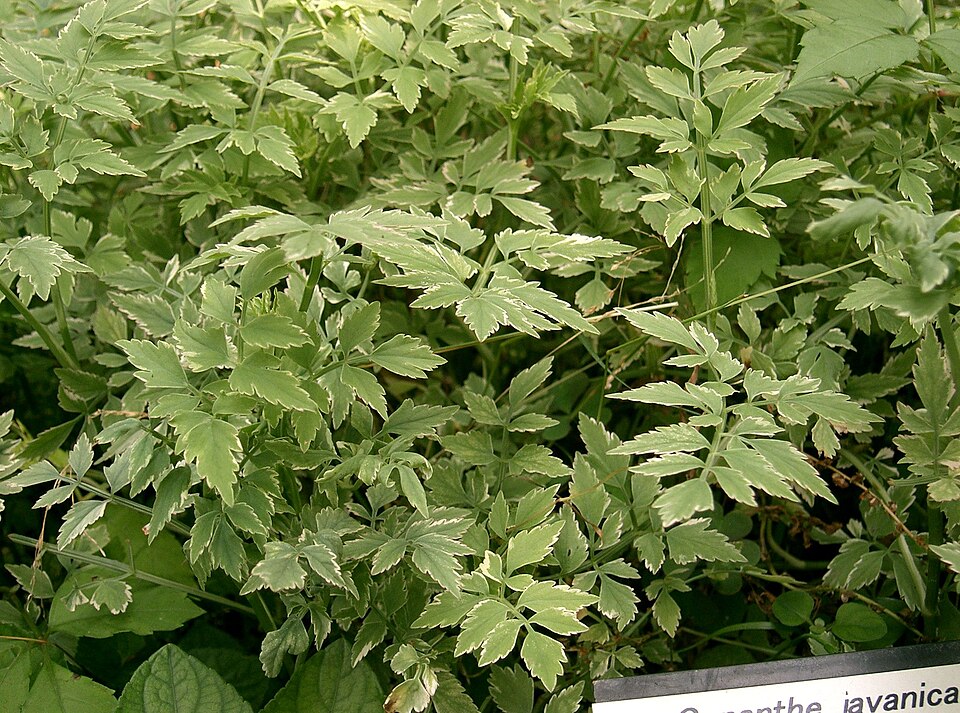
Japanese Parsley🌿
Oenanthe javanica
セリ科
One of the Seven Herbs of Spring. A perennial that grows along paddy field ridges and waterside areas, with aromatic leaves and stems that are edible. It bears small white flowers in compound umbels. The plant spreads by stolons, rooting at the nodes. It is the "seri" used in the traditional seven-herb rice porridge (nanakusa-gayu).

Lily Turf🌿
Liriope muscari
キジカクシ科
An evergreen perennial widely used as a ground cover in shady areas of gardens and parks. It produces pale purple to purple florets in spike-like racemes from summer to early autumn, followed by glossy black spherical fruits in autumn to winter. Highly shade- and drought-tolerant, making it easy to maintain. Variegated cultivars are commonly planted in gardens.

Persian Silk Tree🌿
Albizia julibrissin
マメ科
A deciduous tall tree that produces fluffy pale pink flowers (clusters of stamens) in summer. It is notable for its nyctinastic leaf movement: the leaflets fold together at night, giving it the Japanese name "sleeping tree." Found along riverbeds, in parks, and by roadsides. As a legume, it harbors nitrogen-fixing bacteria in root nodules.

Brake Fern
Pteris multifida
イノモトソウ科
An evergreen fern growing along roadsides, stone walls, and around wells. Sori are arranged in continuous marginal bands along the edges of the pinnately compound fronds. Pteridaceae is one of the largest fern families in the world, with great morphological diversity.

Chrysanthemum Anemone🌸
Anemone pseudoaltaica
キンポウゲ科
A perennial that blooms in early spring in deciduous forests. A spring ephemeral with striking large petal-like sepals in white to pale purple. Many members of the buttercup family have reduced petals, with the sepals developing into showy petal-like structures.

Gardenia
Gardenia jasminoides
アカネ科
An evergreen shrub that produces fragrant white flowers in early summer. The fruits turn yellow-orange when ripe but remain indehiscent (they do not split open), hence the Japanese name kuchinashi ("no mouth"). The fruits are used as a dye and in traditional medicine. Widely planted as a garden shrub, known for its intensely sweet fragrance.

Japanese Honeysuckle
Lonicera japonica
スイカズラ科
A climbing evergreen shrub found at forest edges and roadsides. The flowers open white and gradually turn yellow, giving rise to the Chinese name "gold-and-silver flower." The Japanese name means "sucking nectar" as children traditionally sipped the sweet nectar from the flowers. The flowers are used in traditional Chinese medicine.

Stonecrop
Sedum japonicum
ベンケイソウ科
A small succulent plant growing on rocky surfaces, stone walls, and rooftops. It stores water in its fleshy leaves and thrives even in dry conditions. It produces numerous small yellow flowers.

Eggplant🌿
Solanum melongena
ナス科
An annual (in Japan) native to India and one of the most important summer vegetables. The purple fruit is an indispensable ingredient in Japanese cuisine. It appears in the Japanese proverb "Don't let your daughter-in-law eat autumn eggplant" (interpreted as either too delicious to share or too cold-natured for expectant mothers).

Verbena
Verbena × hybrida
クマツヅラ科
An ornamental plant widely used in flower beds and street plantings. Small flowers bloom in dense clusters in a wide range of colors including red, pink, purple, and white. It flowers over a long period from spring to autumn.

Greater Celandine
Chelidonium majus
ケシ科
A naturalized plant of European origin found along roadsides and stone walls. When the stem is broken, it exudes bright orange-yellow latex. It produces small flowers with four yellow petals and elongated capsular fruits containing many seeds.

White Mulberry
Morus alba
クワ科
A deciduous tall tree native to China, introduced to Japan long ago as feed for silkworms. The sweet-sour, dark purple multiple fruits are edible and widely known as mulberries.

Common Rush
Juncus effusus var. decipiens
イグサ科
A perennial growing in rice paddies and wetlands. The cylindrical stems contain a spongy pith and have been used to make tatami mat coverings, rush mats, and woven baskets. It is an essential plant underlying Japan's tatami culture.
Grape
Vitis vinifera
ブドウ科
A deciduous climbing shrub native to western Asia. The fruit is consumed fresh, as wine, and as juice, making it one of the world's most important fruit crops. In Japan, traditional cultivars such as Koshu grape are also grown.

Japanese Iris
Iris ensata var. ensata
アヤメ科
A Japanese native perennial that adorns waterside and wetland areas in early summer. Extensively bred as ornamental iris since the Edo period, with thousands of cultivars in existence. The falls have a yellow signal line at the base.

Pipewort
Eriocaulon cinereum
ホシクサ科
A small annual growing in rice paddies and wetlands. In autumn, it produces white, cottony button-like flower heads on slender stalks. Populations have declined in recent years due to paddy field drainage and conversion.

Chinaberry
Melia azedarach
センダン科
A deciduous tall tree growing near coasts and in urban areas of warm western Japan. It produces numerous pale purple flowers in early summer, and yellow drupes persist on the branches into autumn. The fruits are toxic to mammals but are eaten by birds.

Adder's Tongue Fern
Ophioglossum vulgatum
ハナヤスリ科
A small fern growing in grasslands and on forest floors. It has a unique form consisting of a single ovate sterile frond and one erect spike-like fertile frond. Ophioglossaceae is one of the most ancient fern lineages.
.jpg?width=400)
Bristle Fern
Microlepia strigosa
ヒメウラボシ科
A large fern growing on the forest floor and cliff faces in warm regions. The fronds are bi- to tripinnate and densely hairy throughout. Sori are located near the leaf margins, enclosed in cup-shaped indusia.

Japanese Lacquer Tree🍂
Toxicodendron vernicifluum
ウルシ科
A deciduous tall tree native to Japan and China. Its sap (lacquer) has been used as the raw material for lacquerware for thousands of years. It contains urushiol, a potent allergen that can cause contact dermatitis.

Hardy Begonia
Begonia grandis subsp. evansiana
シュウカイドウ科
A perennial native to China and Southeast Asia that has naturalized throughout Japan. It produces pale pink flowers from summer to autumn. The asymmetrical leaves are a hallmark of the genus Begonia.

Squirrel's Foot Fern
Davallia mariesii
シノブ科
An evergreen epiphytic fern that grows on rocks and tree trunks. The rhizome is covered with fine hairs and is used to make "shinobu-dama" (hanging moss ball ornaments) for summer display. It curls up when dry and revives when watered, demonstrating remarkable desiccation tolerance.

Japanese Witch Hazel
Hamamelis japonica
マンサク科
A deciduous shrub to small tree that is among the first to bloom in early spring with yellow flowers. The name derives from "manzu saku" meaning "the first to bloom." The petals are distinctively long and ribbon-shaped.

Diapensia
Diapensia lapponica var. obovata
イワウメ科
An evergreen dwarf shrub growing on alpine rocky outcrops and gravel slopes. It produces dense clusters of small white flowers, and the small leaves are tightly packed. It is a cushion plant distributed in alpine and arctic regions of the Northern Hemisphere.

Climbing Fern
Lomariopsis japonica
ナナバケシダ科
An epiphytic and creeping fern found in forests of the Nansei Islands and southern Kyushu. It extends slender stems along rocks and tree trunks. The pinnately compound fronds are distinctive.

Touch-me-not
Impatiens textorii
ツリフネソウ科
An annual growing along mountain streams and in moist forest edges from summer to autumn. The reddish-purple flowers hang down like hanging boats, giving the plant its distinctive appearance. When the ripe fruits are touched, they explosively eject their seeds.

Buddhist Pine
Podocarpus macrophyllus
マキ科
An evergreen tall tree native to warm regions of Japan. Although a conifer with linear leaves, it does not produce typical cones; instead, seeds develop on a fleshy receptacle (red to purple) in a distinctive fruiting structure. Widely used as a hedge and garden tree.

Silver Vine
Actinidia polygama
マタタビ科
A deciduous woody climber found at forest edges in mountain areas. In summer, the tips of some leaves turn white (leaf bleaching), a highly conspicuous feature. The fruit is edible and medicinal, and is famously attractive to cats due to the compounds it contains.
Japanese Persimmon
Diospyros kaki
カキノキ科
A deciduous tall tree native to Japan and China, and one of the most iconic autumn fruit trees. The large orange fruits are enjoyed fresh and as dried persimmon (hoshigaki), and the tree is widely cultivated in farmyards and satoyama landscapes.
_plant_in_Hyderabad%2C_AP_W_IMG_9354.jpg?width=400)
Sugar Apple
Annona squamosa
バンレイシ科
A deciduous to semi-evergreen small tree native to tropical America. It is cultivated in Okinawa and the Ogasawara Islands for its sweet fruit. The green, scale-textured fruit is also known as "sugar apple" or "custard apple."

Canna
Canna × generalis
カンナ科
A perennial of tropical American origin, widely planted in parks and flower beds. It is characterized by large leaves and showy flowers in red, orange, yellow, and other vivid colors. The rhizome contains a large amount of starch.

New Zealand Spinach
Tetragonia tetragonoides
ツルナ科
A perennial (overwintering annual in Japan) found on coastal sandy ground. The fleshy leaves are edible and were used as a substitute for spinach. Also known as New Zealand spinach.

Meliosma
Meliosma rigida
アワブキ科
An evergreen small tree growing in forests of warm regions. The name means "foam-blowing tree" because bubbles emerge when branches are broken, due to saponin content. It produces dense panicles of small white flowers.

Monochoria
Monochoria korsakowii
ミズアオイ科
An annual herb growing in rice paddies and ponds. It produces beautiful blue-purple flowers in summer. Once commonly seen as a weed in rice paddies, it has drastically declined in recent years due to herbicide use.

Icacina
Gomphandra tetrandra
クロタキカズラ科
An evergreen shrub to small tree found in forests of the Nansei Islands (Yaeyama Islands, etc.). Icacinaceae is primarily distributed in the tropics, with a few species occurring in the Nansei Islands of Japan.

Climbing Fern
Lygodium japonicum
カニクサ科
A distinctive climbing fern that twines around other plants in grasslands and forest edges. It has the unusual morphology of an indeterminately growing rachis that functions as a vine.

Japanese Bayberry
Morella rubra
ヤマモモ科
An evergreen tall tree native to warm regions of western Japan. It bears red, spherical fruits in early summer that are sweet-sour and used fresh, in liquor, and in jams. Also planted as a street and park tree.

Stemona
Stemona japonica
ビャクブ科
A climbing perennial herb of mountain forest edges and grasslands. Its slender stems twine around other plants. The fusiform tuberous roots are used in traditional Chinese medicine as 'Baibu' (Stemonae Radix), serving as an antitussive and insecticide.

Lopseed
Phryma leptostachya subsp. asiatica
ハエドクソウ科
A perennial herb growing in mountain forest edges and understory. Fruits are dispersed by hooking onto animals or clothing via hooked calyx lobes. The roots and leaves contain insecticidal compounds that kill flies, which is the origin of its Japanese name ('fly-poison herb').

Acerola
Malpighia emarginata
キントラノオ科
An evergreen shrub to small tree native to the West Indies. Known for its red fruits with exceptionally high vitamin C content; cultivated in Okinawa. Bears charming small pink flowers.

Wintersweet
Chimonanthus praecox
ロウバイ科
A deciduous shrub native to China. In midwinter, it blooms with waxy yellow flowers on bare branches, emitting a strong sweet fragrance. Famous as a winter-flowering plant in parks and gardens.

Sesame
Sesamum indicum
ゴマ科
An annual herb native to Africa. Its seeds are an important oilseed crop used worldwide as cooking oil and a seasoning. Produces capsules following white to pale purple tubular flowers.

Sandalwood
Santalum album
ビャクダン科
A hemiparasitic evergreen small tree native to India. Its fragrant sandalwood timber and essential oil have long been prized for perfumery, Buddhist implements, and incense. Introduced to Japan along with Buddhist culture.

Sweet Flag
Acorus calamus
ショウブ科
A perennial herb growing along ponds and marshes. Famous for its use in 'Shobu-yu' (sweet flag baths) during the Boys' Day festival on May 5th. The leaves are aromatic. It is distinct from Iris (Hanashobu), belonging to a different family.

Bird of Paradise
Strelitzia reginae
ゴクラクチョウカ科
A perennial herb native to South Africa. Its distinctive flowers, with orange and blue coloring likened to a bird of paradise, are distributed worldwide as cut flowers and grown as potted plants in Japan.

Cape Pondweed
Aponogeton distachyos
レースソウ科
An aquatic perennial native to South Africa. Cultivated ornamentally in ponds and aquariums. It floats leaves on the water surface and produces white flowers. Naturalized occurrences have been reported in Japan.

Poisonous Elder
Coriaria japonica
ドクウツギ科
A deciduous shrub endemic to Japan and one of Japan's three most poisonous plants. The glossy black ripe fruits appear sweet but contain coriamyrtin, a potent toxin that can be fatal if ingested.

Tree Fern
Dicksonia antarctica
ジクソニア科
A tree fern native to Australia. Cultivated as an ornamental in greenhouses and parks in Japan. Its crown of large pinnate fronds atop a trunk evokes a prehistoric atmosphere.

Blazing Star
Loasa tricolor
ロアサ科
An annual herb native to South America. Its stinging hairs irritate the skin upon contact (similar to nettle), but the flowers are beautiful with a mix of white, red, and yellow. Rarely cultivated as an ornamental.

Liane Sandpaper
Tetracera scandens
ビワモドキ科
A woody climber distributed in tropical Asia. Some species occur naturally in Okinawa, Japan. The leaves have a sandpaper-like rough texture. Bears white flowers.

Mitrastemon
Mitrastemon yamamotoi
ヤッコソウ科
A highly unusual holoparasitic plant that parasitizes the roots of evergreen oaks (Quercus/Castanopsis). Lacking chlorophyll, the entire plant is white to pale reddish. An endemic variety occurs in Shikoku, Kyushu, and the Nansei Islands.

Lobster Claw
Heliconia psittacorum
ヘリコニア科
A perennial herb native to tropical America. Known for its distinctive inflorescence of overlapping red to orange boat-shaped bracts, it is a famous tropical flower widely traded as cut flowers and foliage plants in Japan.

Ribbon Fern
Plagiogyria japonica
スジヒトツバ科
A fern growing on moist mountain forest floors. The fertile fronds are narrower than the sterile ones and stand erect, likened to the tail feathers of a pheasant ('Kiji'). It possesses a distinctive morphology belonging to an ancient lineage.

Cardiopteris
Cardiopteris quinqueloba
ヤマイモモドキ科
A woody climber distributed in Southeast and South Asia. Native to Okinawa in Japan. It bears small flowers and winged fruits. A very small family with limited distribution in Japan.

Giant Rhubarb
Gunnera manicata
グンネラ科
A perennial herb native to Brazil and one of the largest-leaved herbaceous plants in the world, with leaf blades sometimes exceeding 3 m in diameter. Cultivated ornamentally in botanical gardens and parks in Japan.

Japanese Umbrella Pine🌲
Sciadopitys verticillata
コウヤマキ科
An evergreen tall tree endemic to Japan. Linear leaves are whorled at branch tips, creating a distinctive umbrella-like crown shape. Common around Mount Koya, its water-resistant timber has traditionally been used for boats and tubs.

Yellow-eyed Grass
Xyris pauciflora
トウエンソウ科
A small perennial herb growing in wetlands of southern Kyushu and the Nansei Islands. Flower scapes emerge from tufts of narrow leaves, bearing small yellow flowers at the tip. It has become rare due to wetland loss.

Cunonia
Cunonia capensis
クノニア科
An evergreen small tree native to South Africa. Its attractive white spicate inflorescences make it an ornamental tree planted in gardens and parks in warm regions. Rarely established in Japan.

Antarctic Beech
Nothofagus antarctica
ナンキョクブナ科
A deciduous tall tree native to the southernmost tip of South America (Patagonia). A representative species of the genus Nothofagus, disjunctly distributed across the Southern Hemisphere due to the breakup of Gondwana. Cultivated in botanical gardens in Japan.

Scheuchzeria
Scheuchzeria palustris
ホロムイソウ科
A perennial herb growing in peat bogs (Sphagnum mires) of the boreal to subarctic zones of the Northern Hemisphere. A rare species in Japan, found in raised bogs of Hokkaido and central to northern Honshu.

Moringa / Drumstick Tree
Moringa oleifera
ワサビノキ科
A deciduous tall tree native to India. Known as the 'miracle tree' because its leaves, seeds, and pods are all edible and medicinal. Cultivation is expanding in Okinawa and other parts of Japan.

Eucommia / Hardy Rubber Tree
Eucommia ulmoides
トチュウ科
A deciduous tall tree native to China. The bark, leaves, and fruits contain gutta-percha (a natural rubber-like substance); tearing a leaf reveals white elastic threads. Used in traditional Chinese medicine as 'Du Zhong' tea, a popular health beverage.
.jpg?width=400)
Umbrella Sedge
Cyperus microiria
カヤツリグサ科
A common annual herb found throughout Japan in moist wastelands and waterside areas. From summer to autumn, it produces radiating branch-like spikelets at the stem apex. The triangular stem cross-section is a characteristic diagnostic feature of the sedge family.

Wishbone Flower
Torenia fournieri
ゴマノハグサ科
An annual herb native to Southeast Asia, widely cultivated in Japan as a summer bedding plant. It produces bilabiate flowers in purple, white, pink, and other colors from summer through autumn. Valued in gardens and parks for its shade tolerance.
_sl48.jpg?width=400)
Bracken Fern
Pteridium aquilinum
ワラビ科
A fern widely distributed across mountain fields throughout Japan. The young spring fiddleheads ('warabi') are a beloved edible wild plant and a quintessential mountain vegetable. Starch extracted from the rhizome is used to make warabi-mochi (bracken starch cakes).

Lady Fern
Athyrium niponicum
メシダ科
A common fern found in moist mountain forests and understory throughout Japan. Bipinnately compound fronds are soft and bright green. It resembles bracken fern but is inedible, hence the name 'Inu-warabi' ('useless bracken').

Marsh Fern
Thelypteris palustris
ヒメシダ科
A fern growing in wetlands and waterside areas across Japan. It forms colonies by extending slender creeping rhizomes. Fronds are bipinnately shallowly lobed and bright yellow-green. Known as an indicator species of wetland ecosystems.

Japanese Gentian🌸
Gentiana scabra var. buergeri
リンドウ科
A perennial herb native to Japanese mountain meadows and a quintessential autumn wildflower. It bears several blue-purple bell-shaped flowers at the stem apex, opening only on sunny days, earning it the nickname 'fair-weather flower.' The root is used as the herbal medicine 'Ryutan' (Gentianae Radix), a stomachic.
.jpg?width=400)
Filmy Fern
Crepidomanes minutum
コケシノブ科
A tiny epiphytic fern growing on rocks and tree trunks in warm, humid forests of Japan. Its fronds are only one cell layer thick and translucent, resembling moss—hence the Japanese name. It can survive only in environments with very high humidity.

Japanese Aralia
Fatsia japonica
ウコギ科
An evergreen shrub native to coastal forests in warm regions of Japan, widely cultivated nationwide as a garden plant. Characterized by large palmate leaves (20–40 cm across). In late autumn, it produces spherical umbels of small white flowers.
_Asplenium_trichomanes_(maidenhair_spleenwort)_between_Wei%C3%9Fenburggegend_and_Hofstadtgegend%2C_Frankenfels%2C_Austria.jpg?width=400)
Maidenhair Spleenwort
Asplenium trichomanes
チャセンシダ科
A fern growing in crevices of rock walls and stone walls in mountain areas across Japan. Named for its narrow fronds spreading radially like a 'chasen' (bamboo tea whisk). Evergreen, growing in rock crevices.

Burning Bush
Euonymus alatus
ニシキギ科
A deciduous shrub native to mountains throughout Japan. Its most distinctive feature is the corky, wing-like ridges on the branches. Named 'Nishikigi' ('brocade tree') for its exceptionally vivid red autumn foliage, it is highly popular as a garden plant.

Summer Cypress
Bassia scoparia
ヒユ科
An annual herb native to Eurasia, known in Japan as 'Kochia' and popular as an ornamental for its beautiful autumn coloring. Named 'Houkigi' ('broom plant') because it was once dried and used as a broom. Its seeds ('tonburi') are eaten as 'land caviar.'

Maidenhair Fern
Adiantum capillus-veneris
ホウライシダ科
A tropical to subtropical fern, native in the Nansei Islands, Shikoku, and Kyushu in Japan, and widely cultivated as a houseplant. Known by its genus name Adiantum, it is admired for its delicate beauty—fine dark stipes and fan-shaped pinnules.
.jpg?width=400)
Greenbrier
Smilax china
サルトリイバラ科
A deciduous climbing shrub commonly found at forest edges on hills and mountains throughout Japan. Its thorns are said to snag even monkeys, hence the name. In western Japan, the leaves are used to wrap kashiwa-mochi (rice cakes) instead of oak leaves. The red berries in autumn are decorative.

Winter Daphne
Daphne odora
ジンチョウゲ科
An evergreen shrub native to China, long cultivated as a garden plant in Japan. In early spring, it produces clusters of small flowers with an intensely sweet fragrance at the branch tips. The Japanese name 'Jinchoge' refers to a scent combining agarwood (jinko) and clove (choji).

Pondweed
Potamogeton distinctus
ヒルムシロ科
A perennial aquatic herb growing in rice paddies and ponds throughout Japan. It has two leaf types: ovate floating leaves on the water surface and linear submerged leaves. Wind-pollinated spicate inflorescences emerge above the water surface.

Purple Loosestrife
Lythrum anceps
ミソハギ科
A perennial herb growing in wetlands and rice paddy levees throughout Japan. It produces reddish-purple small flowers in spikes during summer. Traditionally offered as a Buddhist flower during the Obon festival, it is also called 'Bon-bana' (Obon flower) or 'Shoryo-bana' (spirit flower).

Japanese Yew
Taxus cuspidata
イチイ科
An evergreen conifer native to Japanese mountains, distributed from Hokkaido to the subalpine zone of Honshu. Distinguished by red arils (edible, but the seeds are toxic). Long-lived, its name derives from its wood being used for 'ichii' (the highest court rank) scepters.

Prickly Pear Cactus🌵
Opuntia ficus-indica
サボテン科
A cactus native to Mexico, widely cultivated in Japan as an ornamental and garden plant; also naturalized on the Izu Islands and elsewhere. Flat, paddle-shaped stem segments (cladodes) link together, producing yellow flowers. The fruits are edible.

Rock Spikemoss
Selaginella tamariscina
イワヒバ科
A lycophyte (Lycopodiophyta, not a true fern) growing on dry rocks in Japanese mountains. Known as a 'resurrection plant'—its fronds curl up during drought and unfurl when rehydrated. Cultivated as bonsai and ornamental.

Japanese Banana
Musa basjoo
バショウ科
A large perennial herb native to southern China, introduced to Japan in ancient times and cultivated as a garden plant. The haiku poet Basho took his pen name from this plant. It has large banana-like leaves and is cold-hardy enough to be grown in gardens throughout Honshu.

Tree Fern
Cyathea spinulosa
ヘゴ科
A tree fern native to forests of southern Kyushu and Okinawa. Its erect trunk-like stem reaches 3–5 m tall, with large pinnate fronds spreading from the crown. It has a tropical atmosphere and is also found in parks and botanical gardens.

Four O'Clock Flower
Mirabilis jalapa
オシロイバナ科
A perennial herb native to South America (treated as an annual in Japan), naturalized along roadsides and vacant lots from summer to autumn. Its English name 'Four O'Clock' derives from its habit of opening flowers around 4 PM. The Japanese name 'Oshiroibana' (face-powder flower) comes from the white powdery endosperm inside the black seeds, once used as face powder.

Sand Broomrape
Aeginetia indica
ハマウツボ科
An annual holoparasitic plant found throughout Japan, parasitizing the roots of Miscanthus and other grasses. Lacking chlorophyll, it obtains all nutrients from its host. From summer to autumn, it sends up flower stalks directly from the soil, bearing reddish-purple flowers. It has been celebrated in Japanese poetry since the Man'yoshu anthology.

Japanese Snowbell
Styrax japonicus
エゴノキ科
A deciduous small tree native to mountains and hills throughout Japan. In May–June, it produces abundant white bell-shaped flowers hanging downward from branches, creating a stunning display. The name derives from the acrid taste ('egoi') of the fruit. The fruit rind contains ego-saponin and is toxic.

False Daphne
Daphniphyllum macropodum
ユズリハ科
An evergreen tall tree native to warm-temperate forests of Japan. The name 'Yuzuriha' (yielding leaf) comes from its habit of old leaves dropping as new ones emerge, symbolizing generational succession. It is used in New Year decorations as a good-luck tree representing family prosperity. Leaves are large, leathery, and glossy.

Japanese Walnut
Juglans mandshurica var. sachalinensis
クルミ科
A deciduous tall tree native to mountain valleys in Japan. The drupe has an extremely hard shell, and the kernel inside is edible. Leaves are large, odd-pinnately compound. It displays beautiful yellow autumn foliage and is the representative Juglans species of Japan.

Butterfly Bush
Buddleja japonica
マチン科
A deciduous shrub native to mountain valleys and rocky sites in Japan. In summer, it produces dense spikes of pale purple flowers. Commonly known as 'Butterfly Bush' for its strong attraction to butterflies. The related ornamental Buddleja species are widely cultivated.

Kibushi
Stachyurus praecox
キブシ科
A deciduous shrub native to mountain and hill forest edges in Japan. In early spring, before leaves emerge, pendulous racemes of small yellow flowers hang from branches. The elliptical green to yellowish-green fruits were historically used to make wax for candles.

Plum Yew
Cephalotaxus harringtonia
イヌガヤ科
An evergreen shrub to small tree native to mountain forests in Japan. Leaves are broader than those of Taxus and sharply pointed. It produces elliptical pseudo-fruits (arils) resembling those of yew, but inedible—hence the name 'Inugaya' (worthless torreya).

Sword Fern
Nephrolepis cordifolia
タマシダ科
A fern native to the Ryukyu Islands and southern Kyushu, widely cultivated as an ornamental houseplant in warm regions. It produces numerous elegant, elongated arching fronds. The Japanese name refers to the spherical tubers ('tama' = ball) formed on its rhizomes.

Kandelia
Kandelia obovata
ヒルギ科
An evergreen shrub to tree found in estuarine tidal flats (mangrove forests) of southern Kyushu and Okinawa. Adapted to environments submerged at high tide, it extends numerous aerial prop roots from the base. It produces viviparous seeds that germinate while still attached to the parent tree.

Rangoon Creeper
Combretum indicum
シクンシ科
A woody climber native to Southeast Asia, found wild in the Ryukyu Islands and cultivated ornamentally in Okinawan gardens. The flowers open white and change to red or deep red—a distinctive trait. They emit a sweet fragrance at night.

Picrasma
Picrasma quassioides
ニガキ科
A deciduous tall tree native to Japanese mountains. The entire tree has an intensely bitter taste, giving rise to the name 'Nigaki' (bitter tree). The bark and wood are used in traditional medicine ('kuboku') as a stomachic, antipyretic, and detoxifying remedy. It bears red fruits in autumn.

Waterwort
Elatine triandra
ミゾハコベ科
A small annual herb growing in shallow waters of rice paddies and ponds throughout Japan. Stems are creeping or floating in water. Leaves are small, elliptical, and opposite. In summer, extremely small white to pale pink flowers appear in leaf axils.

Naupaka
Scaevola taccada
クサトベラ科
An evergreen shrub native to the coasts of the Ryukyu Islands and southern Kyushu. It grows at the forefront of sandy beaches and rocky shores, tolerating strong winds, saltwater, and intense sunlight. The flowers have a distinctive half-flower shape, with petals arranged on one side only.

Star Grass
Curculigo orchioides
キンバイザサ科
A perennial herb native to grasslands of the Ryukyu Islands and southern Kyushu. The linear leaves, resembling those of iris, emerge in basal tufts. Small yellow flowers appear near ground level from spring to summer. In traditional Chinese medicine, the rhizome is called 'xianmao' and used as a tonic.

Spiral Ginger
Costus speciosus
コスタス科
A perennial herb native to Southeast Asia, found wild at forest edges in the Ryukyu Islands and cultivated in greenhouses and gardens as an ornamental. Its most distinctive feature is the spiral arrangement of leaves along the stem, earning it the name 'Spiral Ginger.'

Chinese Tamarisk
Tamarix chinensis
ギョリュウ科
A deciduous shrub to small tree native to China and Central Asia, cultivated in Japan as a garden tree, windbreak, and bonsai. The fine scale-like leaves and soft drooping branches resemble pine foliage, giving rise to the Japanese name 'Gyoryu.' Pale pink small flowers appear in spikes from spring to summer.

Nutmeg
Myristica fragrans
ニクズク科
An evergreen tall tree native to Indonesia, world-famous as the source of the spices nutmeg (seed) and mace (aril). In Japan, it can be seen in botanical gardens and greenhouses in Okinawa. Historically, this spice was so prized that it was traded at prices equal to gold.

Barringtonia
Barringtonia asiatica
サガリバナ科
An evergreen tall tree distributed along tropical coasts from the Indian Ocean to the Pacific, found wild in coastal forests of Okinawa, Japan. It produces large white to pale pink flowers at night, emitting a sweet fragrance. The square, corky fruits are dispersed by ocean currents.

Mignonette
Reseda odorata
モクセイソウ科
An annual or biennial native to the Mediterranean coast, occasionally cultivated ornamentally in Japan. The small pale yellowish-green flowers have an exceptionally strong fragrance and have been historically valued as a perfume ingredient. Its French name 'Reseda' means 'little darling.'

Water Shield
Brasenia schreberi
ジュンサイ科
A perennial aquatic plant growing in lakes and ponds throughout Japan. Characterized by small elliptical floating leaves and a gelatinous mucilage covering the stems and young leaves. The young shoots are a prized delicacy traded as 'junsai,' used in salads and clear soups.

Water Clover
Marsilea quadrifolia
デンジソウ科
A fern found in rice paddies and wetlands throughout Japan. Its distinctive four leaflets arranged like a four-leaf clover are characteristic. Traditionally a symbolic plant of paddy fields, it has declined sharply due to widespread herbicide use and is designated as endangered in many regions.

Aloe
Aloe vera
ツルボラン科
A succulent plant native to Africa, widely cultivated in Japanese home gardens and pots. The transparent gel inside the leaves (aloe vera gel) has long been used as a folk remedy for burns and skin irritation. In warm climates, it can overwinter outdoors.

Whisk Fern
Psilotum nudum
マツバラン科
A fern ally epiphytic on rocks and tree trunks in warm regions of Japan. It is among the simplest vascular plants, possessing neither true leaves nor roots (only a rhizome), consisting solely of green dichotomously branching stems. Called a 'living fossil' due to its resemblance to Paleozoic plants.

Chinese Ephedra
Ephedra sinica
マオウ科
A gymnosperm native to China and Central Asia, representative of the genus Ephedra. It has erect green jointed stems with leaves reduced to scales. It contains ephedrine, the source of the traditional medicine 'mahuang' used for colds and asthma. Cultivated in Japan for medicinal and ornamental purposes.

Papaya
Carica papaya
パパイア科
An evergreen small tree native to Central and South America, cultivated and naturalized in Okinawa and the Ryukyu Islands as a tropical and subtropical fruit tree. Large palmately lobed leaves cluster at the crown, and the trunk is hollow and soft. The fruit is sweet and rich in vitamin C.

Gleichenia Fern
Gleichenia japonica
ウラジロ科
A fern widely native to mountain and forest edges on the Pacific side of Japan. Named 'Urajiro' (white underside) for its white leaf undersurfaces. It has been a beloved plant since ancient times as an essential auspicious decoration for New Year shimenawa and kagami-mochi.
Centrolepis
Centrolepis banksii
ホソバノイグサ科
An extremely small wetland herb native to Australia and Southeast Asia, recorded very rarely in the Ryukyu Islands (Ogasawara Islands, etc.) of Japan. The flowers are extremely simplified, and the leaves are filiform.

Ruppia
Ruppia maritima
ホッスモ科
A submerged perennial aquatic plant growing in saline wetlands, brackish lakes, and intertidal zones in Japan. Stems are slender and thread-like, with extremely narrow linear leaves. Pollination occurs underwater or at the water surface. Distribution is localized nationwide and sensitive to environmental changes.
Balanophora
Balanophora japonica
ツチトリモチ科
A parasitic plant found in warm-temperate to subtropical forests of Japan. Completely lacking chlorophyll, it parasitizes tree roots for nutrients. In autumn, it pushes ovoid, reddish-orange inflorescences above the soil surface. Though resembling a fungus, it is a true angiosperm.

Flagellaria
Flagellaria indica
トウツルモドキ科
A climbing perennial herb native to Southeast Asia and Pacific islands, found wild in coastal forests of Okinawa and the Ryukyu Islands. Leaf tips are modified into tendrils that grasp other plants. Stems are slender but tough with bamboo-like nodes, once used for basket weaving.

Jacob's Ladder
Polemonium caeruleum
ハナシノブ科
A perennial alpine plant endemic to Japan (Polemoniaceae is rare in Japan), growing in subalpine zones of Hokkaido and central Honshu. Numerous blue-purple small flowers bloom in clusters. The pinnate compound leaves resemble the fern Davallia (shinobu), giving rise to the Japanese name.

Lindsaea Fern
Lindsaea odorata
ホングウシダ科
A fern growing in moist forests of the Ryukyu Islands and southern Kyushu. It has a delicate appearance with small elongated fronds bearing fan-shaped pinnae arranged in two rows. The name derives from 'Hongu' (a place name in Kumano), reflecting its preference for warm, humid environments.

Roureopsis
Rourea minor
マメモドキ科
A climbing shrub distributed from Southeast Asia to Pacific islands, found wild in forests of Okinawa and the Ryukyu Islands. Characterized by odd-pinnately compound leaves and dehiscent fruits that reveal seeds with red arils. Its distribution in Japan is very limited.

Dichapetalum
Dichapetalum gelonioides
カイナンボク科
A woody climber distributed in Southeast Asia, recorded very rarely in the Ryukyu Islands (around Iriomote Island) in Japan. Known for seeds containing fluoroacetic acid (a potent toxin), making it a taxonomically and ecologically intriguing family.

Curculigo
Curculigo capitulata
パナマソウ科
A perennial herb native to Southeast Asia, found wild in forests of the Ryukyu Islands and cultivated in greenhouses as an ornamental. Its striking clumping habit with large iris-like leaves is eye-catching. Classified near Arecales or Zingiberales, its phylogenetic placement remains debated even under the APG system.

Sphenoclea
Sphenoclea zeylanica
スフェノクレア科
An annual rice paddy weed native to tropical Asia and Africa, confirmed as naturalized in rice paddies of the Ryukyu Islands. It has erect stems with narrow leaves and dense spike-like inflorescences at the tips. Known worldwide as an invasive weed of tropical rice paddies.

Hardy Orchid🌸
Calanthe discolor
ラン科
A representative terrestrial orchid native to Japanese forest floors. In spring, it produces beautiful flowers with a striking contrast of brownish-purple and white. Long prized as an ornamental, wild populations have drastically declined due to overcollection.

Japanese Azalea🌸
Rhododendron kaempferi
ツツジ科
A deciduous shrub of Ericaceae widely native to mountains throughout Japan. In spring, it produces masses of vermilion-red flowers that paint mountain slopes red. It is one of the most widely distributed azalea species in Japan.

Sun Spurge
Euphorbia helioscopia
トウダイグサ科
An annual herb growing in fields and along roadsides. White milky latex exudes when the stem is cut. The upper leaves spread in a whorl-like arrangement with distinctive cyathia (cup-shaped inflorescences) at the center.
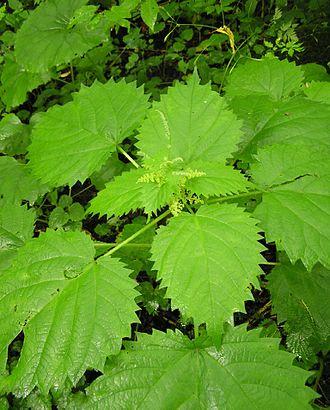
Stinging Nettle (Japanese)
Laportea bulbifera
イラクサ科
A perennial herb growing on moist forest floors of mountains. It forms bulbils in leaf axils for vegetative reproduction. Stems and leaves bear stinging hairs that cause intense pain and swelling on contact.

Birthwort
Aristolochia debilis
ウマノスズクサ科
A climbing perennial herb of meadows and roadsides. It bears distinctively shaped tubular flowers and is known as the larval food plant of the Chinese Windmill butterfly (Atrophaneura alcinous). The entire plant contains toxic aristolochic acid.

Japanese Primrose🌸
Primula sieboldii
サクラソウ科
A perennial herb growing in river floodplains and moist meadows. In spring, it produces pale pink to white flowers resembling cherry blossoms. A Japanese endemic species designated as the prefectural flower of Saitama. Once common on the Kanto Plain, it is now endangered.

Hairy Willowherb
Epilobium pyrricholophum
アカバナ科
A perennial herb growing in moist meadows and waterside areas. The name 'Akabana' (red plant) derives from the stems and leaves turning red in autumn. Pale pink 4-petaled flowers bloom from summer to autumn, and the long pod-like capsules release wind-dispersed seeds with white plumes when ripe.

Common St. John's Wort
Hypericum erectum
オトギリソウ科
A perennial herb of mountain meadows and forest edges. Yellow flowers bloom in summer. When held up to the light, the leaves reveal translucent oil glands and dark spots. Long known as a medicinal plant, the Japanese name 'Otogirisou' (brother-slaying herb) derives from a tragic legend.

Common Mallow🌺
Malva neglecta
アオイ科
An introduced annual to biennial from Europe, growing along roadsides and wastelands. Small pale purple flowers bloom successively from spring to autumn. The cheese-shaped schizocarp fruit is distinctive.

Japanese Snake Gourd
Trichosanthes cucumeroides
ウリ科
A climbing perennial herb of forest edges and thickets. In summer nights, it produces white lace-like flowers, and in autumn bears red, ball-shaped fruits. Starch was also historically extracted from the root.

Wild Iris
Iris ensata var. spontanea
アマ科
Linaceae is a family represented by flax (Linum usitatissimum). Flax is an annual cultivated since antiquity as a source of fiber and linseed oil, bearing blue-purple 5-petaled flowers in early summer.

Flax
Linum usitatissimum
アマ科
An annual cultivated since antiquity, globally important as the source of linen fiber and linseed oil. It bears blue-purple 5-petaled ephemeral flowers in early summer that open in the morning and fall by midday. Cultivated in Japan as a medicinal and oil crop.

Jujube
Ziziphus jujuba
クロウメモドキ科
A deciduous small tree native to China. The fruits have been valued for food and medicine since ancient times, and it is also planted as a garden tree in Japan. Elliptical fruits ripen red in autumn.

Guava
Psidium guajava
フトモモ科
An evergreen small tree native to tropical America. In Okinawa, it is called 'banshiru' and has become naturalized and commonly seen. It produces white flowers and aromatic round fruits. The numerous stamens characteristic of the Myrtaceae family are prominent.

Japanese Ginger
Zingiber mioga
ショウガ科
A plant native to Japan or long cultivated there, whose flower buds (hana-myoga) and leaf sheaths emerging from the rhizome are edible. From summer to autumn, flower spikes emerge from the base and produce pale yellow flowers.

European Mistletoe
Viscum album
ヤドリギ科
An evergreen hemiparasitic plant that parasitizes deciduous broadleaf trees such as Quercus serrata and Celtis sinensis. Spherical clumps attach to tree branches and grow. In winter, it bears translucent white to yellow berries, which are favored by thrushes that disperse the seeds.

Common Bladderwort
Utricularia australis
タヌキモ科
A carnivorous plant that floats in ponds and marshes. It extends filamentous organs with bladder traps into the water, lacking distinct roots and leaves, and captures small aquatic animals by suction. In summer, it raises yellow flower spikes above the water surface.

Canadian Pondweed
Elodea canadensis
トチカガミ科
A submerged aquatic plant native to North America, now naturalized in ponds and rivers throughout Japan. The whorled leaves are widely used as teaching material for photosynthesis experiments in school science classes.

Pineapple🍍
Ananas comosus
パイナップル科
A perennial herb native to South America and a globally important tropical fruit crop. In Japan, it is cultivated in Okinawa and Kagoshima, as well as in greenhouses. The leaf margins are serrate, and a large multiple fruit (syncarp) develops from the center.

Sacred Lotus
Nelumbo nucifera
スイレン科
A perennial aquatic plant growing in ponds and paddy fields. Deeply associated with Buddhism, it is commonly planted in temple ponds. Revered as a symbol of purity for blooming clean flowers from muddy water. Seeds have been known to germinate after thousands of years of dormancy.

Gooseberry
Ribes uva-crispa
スグリ科
A deciduous shrub native to Europe, cultivated and occasionally escaped in Hokkaido and highland areas of Japan. It bears small green to red fruits with strong acidity, used for jam and preserves. The related Ribes fasciculatum is native to Japan.

Arrowhead
Sagittaria trifolia
オモダカ科
A perennial herb growing in rice paddies and along waterways. Characterized by its distinctive arrowhead-shaped leaves, it is related to the Chinese arrowhead (Kuwai). White 3-petaled flowers bloom in summer. Although a troublesome rice paddy weed, its dignified leaf shape earned it the name 'Omodaka' (noble face).

Shoestring Fern
Vittaria flexuosa
シシラン科
A fern that grows epiphytically on rocks and bark of old trees in warm regions. The fronds are simple, ribbon-like, 1–2 cm wide and 30–60 cm long. Sori are arranged in linear rows near the leaf margins.

Sea Coast Eurya
Eurya emarginata
イソマツ科
A representative Japanese species of Plumbaginaceae is Limonium tetragonum. It is a perennial growing in coastal salt marshes, bearing numerous small purple flowers on slender stems. It possesses salt glands that excrete excess salts.

Gleichenia Fern
Dicranopteris pedata
コシダ科
A fern forming colonies on hillsides, forest edges, and roadsides in warm regions. The fronds repeatedly fork dichotomously to create large fan-shaped fronds. It thrives even in acidic and nutrient-poor soils, often dominating the understory of Cryptomeria plantations and eroded slopes.

Screw Pine
Pandanus boninensis
タコノキ科
An evergreen tall tree endemic to the Ogasawara (Bonin) Islands. Named for its numerous aerial roots (stilt roots) extending from the trunk, resembling octopus legs. Leaves are long, rigid, and spirally arranged, and the plant produces pineapple-like aggregate fruits.

Elaeocarpus
Elaeocarpus sylvestris
ホルトノキ科
An evergreen tall tree growing in coastal forests of warm regions. It is distinctive for the red-colored senescent leaves interspersed among the evergreen foliage. White fringed flowers bloom in summer, followed by olive-like blue-purple fruits.

Round-leaved Sundew
Drosera rotundifolia
モウセンゴケ科
A carnivorous plant growing in bogs. Numerous red sticky tentacles on the leaf surface capture insects with mucilage and digest them for nutrient absorption. It is distributed from the bogs of Hokkaido to the alpine marshes of Kyushu.

Water Milfoil
Myriophyllum spicatum
アリノトウグサ科
A submerged aquatic plant growing in ponds and rivers. Finely pinnately dissected leaves spread beautifully in the water. Flower spikes emerge above the water surface for wind pollination. Well-known as an aquarium plant.

Ghost Plant
Monotropa uniflora
ヒナノシャクジョウ科
Monotropa uniflora, commonly known as Indian pipe, is actually classified in Ericaceae. As a representative of Burmanniaceae, Burmannia championii is presented here. It is a small mycoheterotrophic herb growing on the floor of tropical and warm-temperate forests, bearing small tubular flowers in pale purple to white.

Wild Sapodilla
Planchonella obovata
アカテツ科
An evergreen tall tree growing in coastal forests from Okinawa to southern Kyushu. The leaves are thick and glossy, and white latex exudes when the trunk or branches are wounded. It bears small white flowers and ellipsoid fruits that ripen to dark purple and are edible.

River Moss Plant
Cladopus nipponica
カワゴケソウ科
A highly specialized aquatic plant that clings to rock surfaces in fast-flowing streams. Its moss-like flat thallus adheres to rocks, growing submerged during high water and flowering when water levels drop. A Japanese endemic found in clear streams of Kyushu, Shikoku, and the Chugoku region.

Buckbean
Menyanthes trifoliata
ミツガシワ科
A perennial growing in northern bogs and ponds. Named 'mitsugashiwa' (three oaks) because the trifoliate leaves resemble oak leaves. In spring, it produces white star-shaped flowers with conspicuous fringed hairs on the inner surface of the petals.

Sago Palm🌴
Cycas revoluta
ソテツ科
A gymnosperm native to southern Kyushu and Okinawa. A 'living fossil' surviving from the age of dinosaurs. Pinnately compound leaves spiral at the top of a stout trunk. It is dioecious, producing male and female cones. The starch from the trunk was historically used as food.

Floating Fern
Salvinia natans
サンショウモ科
A floating aquatic fern found in ponds and rice paddies. Leaves occur in groups of three: two floating leaves and one submerged leaf bearing sporocarps. The floating leaf surface has fine papillae that repel water.

Giant Fern
Angiopteris lygodiifolia
リュウビンタイ科
A large fern growing on moist forest floors in Okinawa and Ogasawara. The fleshy stipules (auriculate stipules) at the base of the petiole are conspicuous. A single frond can reach 2–3 m in length, making it a giant fern known as a primitive eusporangiate fern.

Eelgrass
Zostera marina
アマモ科
A seagrass growing in shallow seas (tidal flats to several meters depth). Eelgrass beds, where photosynthetic vascular plants grow submerged in the sea, provide critical ecosystems as nursery grounds for juvenile fish and as carbon dioxide sinks.

Pokeweed
Phytolacca americana
ヤマゴボウ科
A large perennial herb native to North America, naturalized along roadsides and wastelands. Growing 1–2 m tall, it produces white flowers in summer and dark purple grape-like berries in autumn. All parts are poisonous, with especially strong toxicity in the roots and fruits.

Proteaceous Tree
Helicia cochinchinensis
ヤマモガシ科
An evergreen tall tree growing in evergreen forests of southern Kyushu and Okinawa. Proteaceae is a predominantly Southern Hemisphere family, with only this and a few other species native to Japan. Numerous pale yellow flowers are borne on elongated spicate inflorescences.

Hornwort
Ceratophyllum demersum
キンギョモ科
A submerged aquatic plant growing in ponds and rice paddies. It has no roots and grows drifting in the water. Whorled leaves with dichotomously forked, stiff linear segments are characteristic. Widely used as an aquarium plant (hornwort or goldfish weed).

Japanese Hop
Humulus japonicus
アサ科
A climbing annual herb growing along roadsides and riverbanks. Sharp prickles on the stems and leaves help it cling to and smother other plants, forming large colonies. It is dioecious, with female plants producing cone-like fruit clusters. It is in the same genus as hops, used in beer production.

Purple Pitcherplant
Sarracenia purpurea
サラセニア科
A carnivorous plant native to North America, cultivated mainly in greenhouses and biotopes in Japan. The leaves form tubular pitfall traps (pitcher traps) that capture insects with downward-pointing hairs and digestive fluids. Large reddish-purple flowers bloom in spring.

Horsetail She-oak
Casuarina equisetifolia
モクマオウ科
An evergreen tall tree growing on tropical and subtropical coasts, planted and naturalized in Okinawa. The leaves are reduced to scales, and slender green jointed branchlets (cladodes) perform photosynthesis, resembling Equisetum. Root nodules with nitrogen-fixing bacteria enable growth in nutrient-poor soils.

Malabar Spinach
Basella alba
ツルムラサキ科
A climbing annual herb native to Southeast Asia, cultivated as a vegetable in Japan. Heat-tolerant in summer, its succulent leaves are used in stir-fries and blanched dishes. Small pale pink to white flowers are borne in spicate inflorescences, and fruits ripen to dark purple.

Rafflesia
Rafflesia arnoldii
ラフレシア科
A parasitic plant endemic to Southeast Asia, famous for producing the world's largest flower (up to 1 m in diameter). Lacking leaves, stems, and roots, it parasitizes the tissues of its host vine (Tetrastigma, Vitaceae) in a fungus-like manner. It emits a carrion odor and is pollinated by beetles and flies.

Arrowgrass
Triglochin palustre
シバナ科
A perennial herb growing in salt marshes and inland wetlands. Characterized by slender, rod-shaped leaves and grass-like spicate inflorescences. Contains cyanogenic glycosides in the leaves and roots and is poisonous. Rarely found in the wetlands of Hokkaido, Japan.

Japanese Elderberry
Sambucus racemosa subsp. sieboldiana
レンプクソウ科
A deciduous shrub to small tree growing at forest margins and along valleys in mountains. Numerous small white flowers bloom in paniculate inflorescences in early spring, followed by clusters of small red berries ripening in early summer. Reclassified from Caprifoliaceae to Adoxaceae.

Olax
Olax imbricata
オラクス科
A shrub distributed in tropical and subtropical regions, native to Okinawa and the Nansei Islands in Japan. It is hemiparasitic, sending haustoria into the roots of other plants. It bears small white to pale yellow flowers.

Octopus Tree
Hernandia nymphaeifolia
ハスノハギリ科
An evergreen tall tree growing near coasts in the Ogasawara and Ryukyu Islands. Named for its large circular leaves resembling lotus leaves. It produces white flowers and distinctive fruits enclosed in balloon-like involucral bracts.

Coca Plant
Erythroxylum novogranatense
コカノキ科
Erythroxylaceae is best known for the coca plant of South America. It has virtually no wild occurrence in Japan and is known only in the context of pharmaceutical research. The leaves contain cocaine and other tropane alkaloids, and have been chewed as a stimulant in the Andes since ancient times.

Annatto
Bixa orellana
ベニノキ科
An evergreen shrub to small tree native to Central and South America. Natural dye (annatto pigment) is extracted from the reddish-orange aril surrounding the seeds. It produces large pink flowers resembling hibiscus. Rarely seen as a greenhouse plant in Japan.

Hanguana
Hanguana malayana
ハングアナ科
A monocot growing in tropical forests of Southeast Asia. Rarely seen in Japan as a cultivated plant in Okinawa and elsewhere. It spreads large leaves in a rosette and produces flower spikes directly from the stem. Hanguanaceae is a monogeneric family.

Flowering Rush
Butomus umbellatus
ハナイ科
A perennial aquatic plant native to Eurasia. Rarely confirmed as naturalized in Japan. It bears erect, triangular, slender leaves and produces an umbellate inflorescence atop a long flowering stalk in summer, with beautiful pale pink flowers having 6 tepals.

Gnetum
Gnetum gnemon
グネツム科
A gymnosperm growing in tropical forests of Southeast Asia. A unique gymnosperm with broad leaves resembling those of angiosperms and seeds covered by a fleshy sarcotesta. Seeds and young leaves are eaten in Southeast Asia. Rarely planted in Okinawa and Ogasawara in Japan.

Restio
Restio tetraphyllus
サンアソウ科
A monocot distributed mainly in South Africa (fynbos) and Australia. The leaves are reduced and green stems perform photosynthesis. In Japan, it is available to a limited extent as a garden plant but does not grow wild.

Panda Plant
Panda oleosa
パンダ科
A large evergreen tall tree growing in tropical rainforests of West Africa (Gabon and Cameroon). Pandaceae is a small family of about 3 genera with no native species in Japan. The fruits are edible and the seeds yield oil.

Welwitschia
Welwitschia mirabilis
ウェルウィッチア科
A 'living fossil' gymnosperm endemic to the Namib Desert. It produces only two leaves in its entire lifetime, which continue growing for years and become tattered. Individuals over 1,000–2,000 years old exist. A monotypic lineage (1 family, 1 genus, 1 species).

Albany Pitcherplant
Cephalotus follicularis
フクロユキノシタ科
A carnivorous plant native only to southwestern Australia. It has unique pitfall traps and simultaneously produces two types of leaves: ordinary flat leaves and pitcher-type trapping leaves. Highly prized among carnivorous plant enthusiasts.

Opilia
Opilia amentacea
オピリア科
A shrub or woody vine distributed in tropical Africa and Asia. Not native to Japan, but the leaves and fruits are used for food and medicine in India and Southeast Asia. It is hemiparasitic, with haustoria on the roots.

Holly Fern
Cyrtomium falcatum
オシダ科
An evergreen fern growing on rocky shores and stone walls near the coast. Distinguished by its glossy pinnae, it is also used as Christmas decoration in Western countries. Dryopteridaceae is one of the most species-rich fern families in Japan.

Strawberry Begonia
Saxifraga stolonifera
ユキノシタ科
A perennial herb growing on moist rocks and stone walls. The two lower petals of the small white flowers hang down conspicuously, and the name 'yukino-shita' (under the snow) refers to its blooming habit beneath overhanging surfaces. The leaves are edible and delicious when tempura-fried.

Wall Fern
Lepisorus thunbergianus
ウラボシ科
A small evergreen fern that grows epiphytically on tree bark, rocks, stone walls, and under eaves. The fronds are simple and slender, with round sori arranged in two rows on the underside. The leaves curl when dry but unfurl upon rehydration.

Sweet Osmanthus
Osmanthus fragrans var. aurantiacus
モクセイ科
An evergreen tall tree that blooms with intensely fragrant, small orange flowers in autumn. Widely planted as a garden tree in Japan. Native to China; since only male clones are common in Japan, it rarely sets fruit.

Yuzu🍊
Citrus junos
ミカン科
An evergreen small tree of the Rutaceae family long cultivated in Japan. The fruit is highly acidic, and its aromatic rind is especially prized. The custom of adding yuzu to the bath at the winter solstice is deeply rooted, making it one of Japan's most representative citrus.

Forget-me-not
Myosotis alpestris
ムラサキ科
An annual to biennial herb that produces numerous small blue-purple flowers in spring. Originally from Europe, it is widely cultivated and naturalized throughout Japan, found along riverbanks and roadsides. Known for its flower language meaning 'forget-me-not.'

Windmill Palm
Trachycarpus fortunei
ヤシ科
The most familiar palm tree in Japan, an evergreen tall tree. Brown fibrous leaf sheaths persist on the trunk, and fan-shaped leaves cluster at the crown. Possibly native to southern Kyushu, though details are unclear; long planted in gardens throughout Japan.

Justicia
Justicia procumbens
キツネノマゴ科
A small annual herb commonly found along roadsides and grasslands. From summer to autumn, it bears pale reddish-purple bilabiate flowers in spike-like inflorescences. The Japanese name alludes to the resemblance of the flower spike to a fox's grandchild.

Japanese Holly
Ilex integra
モチノキ科
An evergreen tall tree of the warm-temperate zone in Honshu, Shikoku, and Kyushu. It bears red spherical fruits in winter and is popular as a garden and park tree. Named for the sticky birdlime substance (torimochi) obtained from its bark.

Running Clubmoss
Lycopodium clavatum
ヒカゲノカズラ科
A clubmoss (lycophyte) growing on mountain forest floors. Its creeping stems extend long distances, densely covered with small scale-like leaves. The smooth, flammable spores were once used in pyrotechnics and medicine.

Oleander🌸
Nerium oleander
キョウチクトウ科
An evergreen shrub to small tree native to the Mediterranean. In summer, it produces numerous large 5-petaled flowers in pink, white, and other colors; widely planted along road medians and in parks. All parts are highly toxic, and even smoke from burning is dangerous.

Asiatic Sweetleaf
Symplocos sawafutagi
ハイノキ科
A deciduous shrub to small tree growing along mountain streams and forest edges. In early summer, white florets bloom densely on branches; in autumn, it bears attractive indigo-blue fruits that are popular with birds.

Heavenly Bamboo
Nandina domestica
メギ科
An evergreen shrub native to Japan and China. Considered auspicious due to a Japanese wordplay meaning 'to turn away misfortune,' it is widely planted in gardens and temple grounds. The red berries are beautiful in winter, and the foliage turns red in autumn to winter.

Summer Oleaster
Elaeagnus multiflora
グミ科
A deciduous shrub found in mountains, fields, and coastal areas throughout Japan. In early summer, it bears elliptical red fruits that are sweet-sour and edible. The undersides of leaves and young stems are covered with silvery-white peltate scales.

Rock Tobacco
Conandron ramondioides
イワタバコ科
A perennial herb growing on wet rock walls in ravines. Named for its large leaves resembling tobacco leaves. It blooms with purple flowers in summer, adorning rocky ravine walls. The representative species of the Japanese endemic genus Conandron.

Indian Rhododendron
Melastoma candidum
ノボタン科
An evergreen shrub of southern Kyushu and Okinawa. It produces large purple 5-petaled flowers from summer to autumn. The leaves have prominent 3 main veins, and the leaf surface is densely hairy. It clearly exhibits the characteristic arcuate venation of Melastomataceae.

Chinese Trumpet Creeper
Campsis grandiflora
ノウゼンカズラ科
A deciduous woody climber native to China. In summer, it produces numerous large trumpet-shaped orange-red flowers. It clings to supports and walls using aerial roots, and has long been cultivated as a garden plant in Japan.

Japanese Yam
Dioscorea japonica
ヤマノイモ科
A perennial twining herb native to mountain fields. An elongated tuberous root extends vertically underground and is edible. Bulbils (mukago) form in leaf axils, and the heart-shaped leaves are opposite to whorled.

Piper Vine
Piper kadsura
コショウ科
An evergreen woody climber growing at forest edges in warm regions. A Japanese species of the genus Piper, with small flowers densely packed in spike-like inflorescences. Leaves are coriaceous, ovate, and glossy; fruits are small and ripen red.

Chain Fern
Blechnum niponicum
シシガシラ科
A fern growing on mountain forest floors and along ravines. Characterized by pronounced dimorphism between sterile and fertile fronds. The sori on fertile fronds are arranged in continuous lines along the midrib.

Asian Moonseed
Cocculus orbiculatus
ツヅラフジ科
A deciduous woody climber growing at forest edges and roadsides in mountain fields. In autumn, dark indigo-blue spherical fruits form in clusters, and the seeds inside have a distinctive snail-like shape. Leaf form is highly variable.

Milkwort
Polygala japonica
ヒメハギ科
A small perennial herb growing in sunny grasslands and mountain fields. It blooms with purple flowers from spring to early summer. The flower shape resembles Fabaceae but belongs to a different family, an example of convergent evolution.

Common Purslane
Portulaca oleracea
スベリヒユ科
An annual herb growing in fields and roadsides. Its succulent stems and leaves are drought-resistant, thriving vigorously even in midsummer heat. The leaves are edible and used as a vegetable worldwide.

Spider Flower
Cleome gynandra
フウチョウソウ科
An annual herb native to South Asia, naturalized in warm regions of Japan such as Okinawa and the Ogasawara Islands. Characterized by 4 white to pale purple petals and long protruding stamens, with a strong odor throughout the plant.

Japanese Box
Buxus microphylla var. japonica
ツゲ科
An evergreen shrub to small tree endemic to Japan. The wood is extremely hard and dense, traditionally prized for making shogi pieces, seals, and combs. Widely used as a garden tree and hedge.

Passion Flower
Passiflora caerulea
トケイソウ科
An evergreen perennial climber native to South America. Called 'clock plant' in Japanese because the flower resembles a clock face. Widely cultivated as an ornamental in Japan; naturalized in warm areas.

Japanese Pittosporum
Pittosporum tobira
トベラ科
An evergreen shrub to small tree growing along coasts. In spring, it produces strongly fragrant white flowers; in autumn, fruits split open to reveal orange-red sticky seeds. Tolerant of salt wind, it is widely used as a windbreak and garden tree.

Triuris🌸
Sciaphila secundiflora
ホンゴウソウ科
A mycoheterotrophic monocot lacking chlorophyll, living parasitically on fungi. The stem is slender, reddish-brown to white, appearing above ground only briefly. Found on humid forest floors of the Southwest Islands.

Bladdernut
Staphylea bumalda
ミツバウツギ科
A deciduous shrub growing at mountain forest edges and along ravines. In spring, white florets bloom in drooping raceme-like clusters. The fruit is a bladder-like inflated capsule containing hard seeds. Named for its trifoliate leaves.

Tree Peony
Paeonia suffruticosa
ボタン科
A deciduous shrub native to China, also called the 'king of flowers.' Large, magnificent blooms open in April–May in diverse cultivar colors including white, crimson, and purple. Introduced to Japan in the Nara period, it is deeply rooted in Japanese horticultural culture.

Akebi
Akebia quinata
アケビ科
A deciduous woody climber native to mountain fields. In autumn, purple fruits split open to reveal sweet white pulp and black seeds. Distinguished by its 5 leaflets; small purple flowers appear in spring.

Sarcandra
Sarcandra glabra
センリョウ科
An evergreen shrub of warm-temperate forest floors. In winter, it bears numerous round red fruits and is prized as an auspicious New Year decoration. Together with Ardisia crenata, it is a representative winter ornamental symbolizing good fortune.

Tropical Pitcher Plant🪴
Nepenthes mirabilis
ウツボカズラ科
A carnivorous plant distributed mainly in Southeast Asia; some species are native to the Ogasawara Islands in Japan. Leaf tips are modified into pitcher-shaped traps that store digestive fluid to capture insects.

Norfolk Island Pine
Araucaria heterophylla
ナンヨウスギ科
An evergreen conifer native to Norfolk Island, cultivated in Japan in warm areas and as an indoor foliage plant. Distinguished by its neat triangular silhouette, it is also used as a Christmas tree.

Manatee Grass
Syringodium isoetifolium
シラスナ科
A seagrass growing on sandy sea floors. The leaves are cylindrical with a round cross-section, distributed in tropical waters around Okinawa and the Southwest Islands. Together with Zostera species, it forms seagrass beds and serves as a vital foundation for coastal ecosystems.

Kadsura
Kadsura japonica
マツブサ科
An evergreen woody climber growing at forest edges in warm-temperate zones. In autumn, it bears beautiful spherical aggregate fruits composed of red fruitlets. Mucilage extracted from leaves and stems was traditionally used as a hair-styling preparation.

Water Fern
Azolla japonica
アカウキクサ科
A small aquatic fern floating in rice paddies, ponds, and marshes. Tiny overlapping leaves turn red in autumn to winter. It forms a symbiosis with cyanobacteria (Anabaena) for nitrogen fixation and is used as green manure in rice paddies.

Quillwort
Isoetes japonica
ミズニラ科
An aquatic lycophyte growing in mountain ponds and marshes. Slender chive-like leaves arise in tufts from the corm. A descendant of Carboniferous giant trees, it is among the most primitive living lycophytes.

Carpet Weed
Mollugo stricta
ザクロソウ科
A small annual herb growing in fields and roadsides. Stems creep along the ground or ascend slightly. Named for its leaves arranged in apparent whorls that resemble pomegranate leaves. Small white flowers bloom from summer to autumn.

Chinese White Olive
Canarium album
カンラン科
An evergreen tall tree native to East and Southeast Asia. Its olive-like fruits are edible, known as 'ganlan' in Chinese. The aromatic resin has long been used in medicine and as incense.

Puncture Vine
Tribulus terrestris
ハマビシ科
A prostrate annual herb growing on coastal sandy ground. Named for its hard, spiny fruits resembling a diamond shape. It blooms with small yellow flowers in summer; the fruits easily pierce bare feet.

Devil's Claw
Proboscidea louisianica
ツノゴマ科
An annual herb native to North America, naturalized in Japan. The fruit bears two long hooked horns that catch on animal feet and fur for dispersal. Stems and leaves are densely covered with sticky glandular hairs and have a distinctive odor.
Katsura Tree
Cercidiphyllum japonicum
カツラ科
A deciduous tall tree native to Japan and China. Famous for releasing a sweet caramel-like fragrance when its leaves turn yellow in autumn. Heart-shaped leaves are opposite, and it grows into large trees along streams and in moist valleys.

Nasturtium
Tropaeolum majus
ノウゼンハレン科
An annual herb native to South America. Characterized by round peltate leaves and vivid orange, yellow, and red flowers; cultivated worldwide as an ornamental and edible plant. Both flowers and leaves have a peppery flavor and are used in salads.

Chrysobalanus
Parinari laurina
クリソバラヌス科
An evergreen tall tree growing in coastal forests of Okinawa and the Southwest Islands. Chrysobalanaceae is a family of Rosales widely distributed in the tropics; in Japan, only a few species are known from the Southwest Islands. It bears hard drupes.

Japanese Clethra
Clethra barbinervis
リョウブ科
A deciduous small to tall tree growing on mountain ridges and in open forests. In summer, numerous white florets bloom in spike-like racemes with a sweet fragrance. The bark is smooth and peeling, resembling crape myrtle. Young leaves are edible.

Petrosavia
Petrosavia sakuraii
サクライソウ科
A mycoheterotrophic monocot growing on dark mountain forest floors. Lacking chlorophyll, it obtains organic matter through fungi. Rarely found in Honshu, Shikoku, and Kyushu in Japan.

Wheel Tree
Trochodendron aralioides
ヤマグルマ科
An evergreen tall tree of mountainous areas in Japan, Korea, and Taiwan. It produces flowers lacking petals and sepals, and leaves cluster at branch tips in a wheel-like arrangement. Notable as a primitive woody plant lacking vessel elements (tracheids only).

Dipterocarp
Vatica mangachapoi
フタバガキ科
An evergreen tall tree distributed in Okinawa and the Southwest Islands. Dipterocarpaceae constitutes the dominant tree family of Southeast Asian tropical rainforests; in Japan, only a few species occur in the Southwest Islands. The fruit develops wing-like calyx lobes.

Euptelea
Euptelea polyandra
フサザクラ科
A deciduous small tree growing along mountain ravines. In spring, clusters of red stamens hang beautifully before the leaves emerge. It possesses a primitive flower structure lacking petals and sepals. Eupteleaceae is a small family of only 1 genus and 2 species.

Rockrose
Helianthemum nummularium
ハンニチバナ科
A perennial herb to subshrub native to the Mediterranean coast, rarely found as a naturalized plant in Japan. Named for its yellow flowers that open only in the morning and close (half-day flower). Prefers dry grasslands on limestone.

Philydrum
Philydrum lanuginosum
タヌキアヤメ科
An aquatic perennial herb distributed from East Asia to Australia; in Japan, found in western Honshu, Shikoku, and Kyushu. It grows in wetlands and around rice paddies, bearing yellow flowers in spike-like inflorescences in summer.

Datisca
Datisca cannabina
ダティスカ科
A perennial herb native to the eastern Mediterranean and Central Asia, cultivated in botanical gardens in Japan. Named 'cannabina' for its hemp-like pinnate compound leaves. Contains a yellow dye pigment.

Bay Cedar
Suriana maritima
スリアナ科
An evergreen shrub of tropical and subtropical coasts; in Japan, it grows on coral reef sandy ground in Okinawa and the Southwest Islands. Tolerant of strong salt wind and drought, it plays a role in stabilizing coastlines.

Degeneria
Degeneria vitiensis
デゲネリア科
An evergreen tall tree endemic to Fiji, comprising only one genus with two species. Cultivated only in botanical gardens in Japan, it is an extremely important 'living fossil' for studying the early evolution of angiosperms.

Souari Nut
Caryocar brasiliense
バターナット科
An evergreen tall tree native to South America, cultivated only in botanical gardens in Japan. The fruit is a large, hard drupe that is edible. It is one of the representative tree species of the Brazilian cerrado (savanna).

Ancistrocladus
Ancistrocladus heyneanus
アンシストロクラダス科
A woody climbing plant distributed in tropical Asia and Africa, belonging to a monotypic family with only one genus. It climbs by hooking onto other objects with its hook-shaped branch tips. A rare plant cultivated only in botanical gardens in Japan.
-_Root.jpg?width=400)
Rice🌾
Oryza sativa
イネ科
An annual grass cultivated as Japan's staple food for thousands of years. The japonica variety grown in paddy fields is predominant in Japan, believed to have been introduced from the Asian continent during the Yayoi period. Rice is fundamental to Japanese food culture, used in cooked rice, mochi, sake, and miso, while rice cultivation has shaped Japan's rural culture, festivals, and landscape.

Wheat🌾
Triticum aestivum
イネ科
One of the world's three major cereal crops, an annual grass used as the raw material for bread, noodles, pastries, and many other foods. Introduced to Japan before the Nara period, it is deeply rooted in Japanese food culture through udon, somen, and okonomiyaki. Hokkaido is the main domestic production area.

Barley🌾
Hordeum vulgare
イネ科
An annual grass used to produce barley tea, mixed grain rice, miso, beer, and whisky. More cold- and drought-tolerant than wheat, the practice of 'mugi-fumi' (treading barley seedlings) has been a traditional spring scene in Japan. Pressed barley mixed with white rice has recently regained attention as a dietary fiber supplement.

Soybean🫘
Glycine max
マメ科
An annual legume known as 'meat of the field,' forming the backbone of Japanese food culture through tofu, miso, soy sauce, natto, and soy milk. Rich in protein, lipids, and isoflavones. It fixes nitrogen through symbiosis with rhizobia, also enriching the soil when used in crop rotation.
Adzuki Bean🫘
Vigna angularis
マメ科
An essential bean in Japanese traditional and ceremonial foods such as wagashi confections, sekihan (red rice), and zenzai (sweet bean soup). Characterized by its red color and sweetness, the custom of eating sekihan at New Year and celebrations has continued since ancient times. Native to East Asia and long cultivated in Japan, with Hokkaido as the main production area.

Corn / Maize🌽
Zea mays
イネ科
An annual grass native to the Andes region of South America and one of the world's three major cereal crops. In Japan it is enjoyed as a summer vegetable, boiled or grilled, and is also widely used for cornstarch, animal feed, and biofuel. It is an especially important crop in Hokkaido's large-scale agriculture.

Buckwheat🌸
Fagopyrum esculentum
タデ科
An annual herb that is the source of Japan's traditional soba noodles. Belonging to Polygonaceae rather than Poaceae, it is a 'pseudocereal' whose seeds are ground into flour for noodles and sobagaki. It grows well even on poor soils in mountainous areas and is deeply tied to Japanese food culture, including New Year's Eve soba and regional traditions of Shinshu and Izumo.

Daikon Radish🌿
Raphanus sativus
アブラナ科
One of the most consumed vegetables in Japan. The white, large root (enlarged hypocotyl) is eaten in simmered dishes, pickles, and grated as a condiment, making it indispensable in Japanese cuisine. Contains the pungent compound isothiocyanate and is rich in digestive enzymes. Numerous cultivars exist, including Miura and Aokubi types.

Cabbage🥬
Brassica oleracea var. capitata
アブラナ科
A biennial (treated as an annual in cultivation) derived from Mediterranean kale, eaten for its enlarged spherical head of leaves. Widely used in both Western and Japanese dishes including salads, stir-fries, okonomiyaki, and stuffed cabbage rolls. Rich in vitamins C and U, it is known as a vegetable beneficial for the stomach and intestines.

Carrot🥕
Daucus carota subsp. sativus
セリ科
A biennial grown for its orange taproot. Rich in beta-carotene, which is converted to vitamin A in the body, making it a highly nutritious vegetable. Widely used in Japanese, Western, and Chinese cooking for simmered dishes, curries, and kinpira. The Western-type carrot introduced to Japan around the 17th century is now the predominant form.

Tomato🍅
Solanum lycopersicum
ナス科
An annual plant native to the Andes of South America. The red ripe fruit is rich in lycopene and vitamin C, and is a staple ingredient in Western cuisine for salads, pasta, and ketchup. Introduced to Japan during the Edo period, it became widely consumed only after the Meiji era. Japan's greenhouse cultivation technology produces high-quality domestic tomatoes.

Cucumber🥒
Cucumis sativus
ウリ科
A climbing annual vine native to India. The green fruit is a quintessential summer vegetable, widely used in pickles, salads, and vinegar-dressed dishes across Japanese, Western, and Chinese cuisines. With its high water content and refreshing quality, it is indispensable in Japanese food during the hot summer months.

Onion🧅
Allium cepa
ヒガンバナ科
A biennial (treated as annual in cultivation) native to Central Asia. The enlarged bulb is eaten and widely used in stir-fries, soups, and stews across both Western and Japanese cuisines. Characterized by pungency and sweetness from allyl sulfides, its sweetness intensifies when heated. Hokkaido is the largest domestic production area.

Potato🥔
Solanum tuberosum
ナス科
A perennial (treated as annual in cultivation) native to the Andes of South America. The underground tubers are eaten and deeply integrated into Japanese cuisine in dishes such as nikujaga, curry, and croquettes. Rich in starch, vitamin C, and potassium, it became widespread in Japan from the late Edo to Meiji period. Hokkaido produces approximately 80% of the national crop.

Spinach🌿
Spinacia oleracea
ヒユ科
An annual to biennial plant native to Central Asia. A representative green-yellow vegetable rich in iron, folic acid, beta-carotene, and vitamin K. Indispensable in Japanese meals as ohitashi (blanched greens), stir-fries, and soups. Blanching is recommended due to oxalic acid content, though low-oxalate salad varieties have recently become popular.
Burdock🌿
Arctium lappa
キク科
A biennial in Asteraceae native to Eurasia. An unusual vegetable whose root is eaten only in Japan, Korea, and Taiwan, used in kinpira gobo, tonjiru (pork miso soup), and takikomi gohan (mixed rice). Rich in dietary fiber and said to improve gut health. Characterized by its distinctive earthy aroma and crisp texture.

Japanese Bunching Onion🌿
Allium fistulosum
ヒガンバナ科
A perennial (cultivated as annual to biennial) native to China. An essential vegetable in Japanese cuisine used as a garnish, in hot pot dishes, and as a soba topping. Broadly divided into white leek types (naga-negi) and green types, with the Kanto region preferring the white shaft and Kansai preferring the green leaves. Its pungency and aroma enhance the flavor of dishes.

Garlic🌿
Allium sativum
ヒガンバナ科
A perennial (treated as annual in cultivation) native to Central Asia. The bulb is used for food and medicine, prized for its strong aroma and flavor in Japanese, Western, and Chinese cuisine. Allicin, a sulfur compound, is said to have antibacterial, immune-boosting, and fatigue-recovery effects. Aomori Prefecture is the main production area in Japan.

Pumpkin / Japanese Pumpkin🎃
Cucurbita moschata
ウリ科
A climbing annual vine native to Central and South America. Both Japanese squash (Cucurbita moschata) and Western squash (C. maxima) are widely cultivated. Used in simmered dishes, tempura, soups, and sweets, with a tradition of eating squash on the winter solstice. A highly nutritious vegetable rich in beta-carotene, vitamins C and E.

Sweet Potato🍠
Ipomoea batatas
ヒルガオ科
A climbing perennial (treated as annual in cultivation) native to Central and South America. The enlarged tuberous roots are used in a variety of dishes including roasted sweet potato, tempura, imo-kenpi (candied sweet potato sticks), and sweet potato desserts. It spread throughout Japan via Satsuma (Kagoshima) during the Edo period, hence the name 'Satsuma-imo.' Rich in beta-carotene, dietary fiber, and vitamin C.

Satsuma Mandarin🍊
Citrus unshiu
ミカン科
The most popular citrus in Japan, also known as Satsuma mandarin. Believed to originate from China, it has been cultivated in Japan since ancient times. Well-balanced in sweetness and acidity, and seedless for easy eating. Major production areas include Shizuoka, Wakayama, Ehime, and Kumamoto. Synonymous with winter in Japan, traditionally enjoyed while sitting at a kotatsu (heated table).
_flowers_3.jpg?width=400)
Apple🍎
Malus domestica
バラ科
A deciduous fruit tree native to Central Asia and one of the most widely cultivated fruits in the world. Western cultivars were introduced to Japan in the Meiji era, and it is now produced on a large scale, centered in Aomori and Nagano. Numerous cultivars exist, including 'Fuji,' 'San-Fuji,' and 'Tsugaru.' The red fruits harvested in autumn are highly nutritious and widely used in processed foods.

Peach🍑
Prunus persica
バラ科
A deciduous fruit tree native to China, believed to have been introduced to Japan during the Yayoi period. Deeply rooted in Japanese food culture and folklore, it appears in the legend of Momotaro. Major production areas are Yamanashi, Fukushima, and Nagano. The fruit is sweet and fragrant, with white-fleshed and yellow-fleshed cultivars. The pale pink flowers blooming in spring are also valued ornamentally.

Japanese Pear🍐
Pyrus pyrifolia
バラ科
A deciduous fruit tree native to East Asia with over a thousand years of cultivation history in Japan. Widely distributed cultivars include 'Kosui,' 'Hosui,' and 'Nijisseiki.' The fruit is characterized by its crisp, gritty texture and high water content, available from summer to autumn. Major production areas include Chiba, Ibaraki, Tochigi, and Tottori.

Strawberry🍓
Fragaria × ananassa
バラ科
A cultivated variety also called garden strawberry, bred through hybridization in 18th-century Europe. Introduced to Japan in the late Edo period, numerous Japanese-bred cultivars such as 'Tochiotome,' 'Amaou,' and 'Sagahonoka' have since been developed. Essential as an ingredient for cakes and sweets, its peak season has shifted to winter–spring through forcing culture in vinyl greenhouses.

Watermelon🍉
Citrullus lanatus
ウリ科
An annual plant native to southern Africa and the quintessential summer fruit. It became widespread in Japan during the Edo period, with current main production areas including Kumamoto, Chiba, and Yamagata. Beneath the green-and-dark-striped rind lies sweet red flesh composed of nearly 95% water. Widely consumed as a hydration source during the hot summer months.

Japanese Horseradish🌿
Wasabia japonica
アブラナ科
A perennial herb endemic to Japan, growing naturally along clear mountain streams. The green pungent compound (allyl isothiocyanate) obtained by grating the rhizome is an indispensable condiment for sushi and sashimi. Main production areas include Shimane and Shizuoka (Amagi, Oigawa). Cultivation methods include water-grown wasabi (sawa-wasabi) and field-grown wasabi (oka-wasabi).

Japanese Pepper🌿
Zanthoxylum piperitum
ミカン科
A native Japanese deciduous shrub used as a traditional spice in various forms throughout the year: young leaves (kinome) in spring, flower buds (hana-zansho), and berries (mi-zansho). The distinctive tingling, numbing pungency comes from sanshool (hydroxy-alpha-sanshool). It is essential in Japanese cuisine, particularly with grilled eel (kabayaki) and tsukudani (simmered preserves).

Perilla🌿
Perilla frutescens var. crispa
シソ科
An annual herb native to East Asia, believed to have been used in Japan since the Jomon period. Available as red shiso and green shiso (ooba), it is widely used for coloring umeboshi (pickled plums), as a garnish, in tempura, and for juice. Its distinctive refreshing fragrance comes from perillaldehyde, which has preservative and antibacterial properties.

Ginger🌿
Zingiber officinale
ショウガ科
A perennial herb native to tropical Asia, believed to have been introduced to Japan during the Yayoi period. The underground rhizome contains pungent and aromatic compounds (gingerol and shogaol) and is widely used as a condiment, herbal medicine, and in processed foods. Kochi Prefecture is Japan's largest production area. It is also used to combat cold sensitivity due to its body-warming effect.

Rose🌹
Rosa hybrida
バラ科
The world's most widely beloved ornamental flowering plant. Modern roses are a group of garden cultivars developed through breeding in Europe and America since the 19th century. Cultivation in Japan began in the Edo period, and numerous cultivars now circulate domestically and internationally. An international symbol as a gift flower for Valentine's Day and anniversaries.

Tulip🌷
Tulipa gesneriana
ユリ科
A bulbous plant native to Central Asia and the eastern Mediterranean. Known for the 'Tulip Mania' speculative bubble in 17th-century Netherlands. Introduced to Japan in the late Edo period, with Niigata and Toyama as the main bulb production areas today. A quintessential spring flower bed plant with thousands of cultivars varying in color, shape, and pattern.

Chrysanthemum🌸
Chrysanthemum morifolium
キク科
A perennial herb native to China, introduced to Japan during the Nara period. As one of Japan's unofficial national flowers, it is used in the Imperial family crest and has been depicted in poetry, paintings, and crafts since ancient times. At the Chrysanthemum Festival (Choyo no Sekku) in autumn, there is a custom of drinking chrysanthemum sake. Uses range from Buddhist offerings and edible chrysanthemums to cut flowers and bonsai.

Japanese Wisteria💜
Wisteria floribunda
マメ科
A deciduous woody climber endemic to Japan, a representative spring flower celebrated in the ancient Manyoshu poetry collection. The pendulous racemes of pale purple to white flowers are spectacular; the great wisteria at Ashikaga Flower Park in Tochigi Prefecture is world-famous. The trunk twines clockwise (right-handed). Widely used on pergolas in Japanese gardens and parks.

Azalea🌸
Rhododendron obtusum
ツツジ科
An evergreen to semi-evergreen shrub widely distributed and planted in mountains, fields, and parks throughout Japan. Its vivid spring flowers are a seasonal hallmark, making it one of the most commonly used plants for roadside and park hedges. Numerous cultivars exist, including Hirado Azalea, Kirishima Azalea, and Kurume Azalea, with diverse flower colors in white, pink, red, and purple.

Narcissus🌼
Narcissus tazetta var. chinensis
ヒガンバナ科
A bulbous plant native to the Mediterranean coast, believed to have been introduced to Japan around the Muromachi period. Also called Japanese narcissus, it features a beautiful contrast between white outer tepals and a yellow corona (cup). Famous colony sites include the Echizen coast in Fukui, Awaji Island in Hyogo, and Nokogiriyama in Chiba. It blooms with elegant white flowers from winter to early spring and is used in New Year's flower arrangements.

Moso Bamboo🎋
Phyllostachys edulis
イネ科
A large bamboo native to China, introduced to Japan in the mid-Edo period (18th century). The most widely distributed bamboo in Japan, its rapid expansion via underground rhizomes has become a problem, while its bamboo shoots (April–May) are prized as food. Culms reach up to 20 cm in diameter and over 20 m in height. The timber is used for building materials, crafts, musical instruments, and charcoal.

Japanese Beech🌳
Fagus crenata
ブナ科
A deciduous broadleaf tree endemic to Japan, distributed from southwestern Hokkaido to Kyushu. It forms pure stands (beech forests) in the cool-temperate montane zone, representing Japan's climax vegetation. The virgin beech forest of the Shirakami Mountains (Aomori/Akita) is registered as a UNESCO World Natural Heritage Site. The term 'Beech Zone culture' reflects how deeply this species is intertwined with the ecology and culture of heavy-snowfall regions. Its autumn golden foliage is also beautiful.

Dwarf Chinese Holly
Ilex rotunda
モチノキ科
A dioecious broadleaf evergreen tree that produces dense clusters of bright red berries from late autumn through winter. Widely planted as a garden tree and street tree in Japan.

Chinese Sweetgum
Liquidambar formosana
フウ科
A deciduous tree of the Altingiaceae family native to China and Taiwan, planted in parks for its beautiful autumn foliage. The leaves are three-lobed, and it bears spherical, spiny aggregate fruits.

Japanese Chinquapin🌳
Castanopsis sieboldii
ブナ科
An evergreen tree of the Fagaceae family and a representative species of warm-temperate laurel forests. It produces slender acorns in autumn that can be eaten raw.
(Arisaema_ringens_(Thunb.)_Schott)-花_(5846532863).jpg?width=400)
Japanese Cobra Lily🌿
Arisaema ringens
サトイモ科
A perennial herb of the Araceae family (genus Arisaema). Its spathe has a distinctive shape resembling a horse's stirrup, and it bears large leaves composed of three leaflets.

Hisakaki
Eurya japonica
サカキ科
An evergreen small tree of the Pentaphylacaceae family, widely used as offerings at Shinto and Buddhist altars. In early spring it bears dense clusters of small white to pale yellow flowers with a distinctive odor.
Japanese Aucuba
Aucuba japonica
ガリア科
An evergreen shrub of the Garryaceae family that grows in somewhat shaded forest floors. Female plants bear bright red elliptical fruits in winter, and it is also planted in gardens as an ornamental.

Japanese Larch🌲
Larix kaempferi
マツ科
A deciduous conifer of the Pinaceae family that is unusual among Japanese conifers in turning yellow and shedding its needles in autumn. It grows wild in subalpine zones and is also widely planted for forestry.
Spinyfruit Buttercup🌸
Ranunculus muricatus
キンポウゲ科
An annual herb of the Ranunculaceae family native to the Mediterranean region, naturalizing increasingly in recent years. It is characterized by long spiny projections on the surface of its fruit.

Japanese Bay Tree🌿
Machilus thunbergii
クスノキ科
An evergreen tree of the Lauraceae family and a representative species of coastal laurel forests. The bark and leaves yield a powder used as incense ingredient.
Hair-cap Moss
Pogonatum inflexum
スギゴケ科
A moss of the Polytrichaceae family that forms colonies on damp ground in forests and along roadsides. It resembles Polytrichum juniperinum but is somewhat smaller with shorter leaves.

Black Mangrove
Bruguiera gymnorhiza
ヒルギ科
An evergreen tree of the Rhizophoraceae family and a representative species of subtropical mangrove forests. It produces distinctive bent, knee-like breathing roots (pneumatophores) above the ground.

Red Mangrove
Rhizophora mucronata
ヒルギ科
An evergreen tree of the Rhizophoraceae family that grows in mangrove forests of the Yaeyama Islands and other parts of the Ryukyu Islands. It is characterized by stilt roots resembling octopus legs.

Japanese Grape Fern
Botrychium japonicum
ハナヤスリ科
A winter-green fern of the Ophioglossaceae family with separate sterile and fertile fronds. Leaves emerge in autumn, overwinter, and disperse spores in spring.

Buttercup🌸
Ranunculus silerifolius
キンポウゲ科
A perennial herb of the Ranunculaceae family that grows in damp places. It produces small yellow flowers and, being poisonous and avoided by livestock, often persists in grazed pastures.

Fuzzy Deutzia🌸
Deutzia scabra
アジサイ科
A deciduous shrub of the Hydrangeaceae family that produces numerous small white flowers in conical panicles in early summer. Its leaves are relatively rounded.
Buckshorn Plantain
Plantago coronopus
オオバコ科
A biennial herb of the Plantaginaceae family native to Europe, naturalized near coasts. It is characterized by leaves that are deeply pinnately divided.

Japanese Fig
Ficus erecta
クワ科
A deciduous small tree of the Moraceae family (genus Ficus), dioecious in habit. It produces small fig-like fruits that ripen to a dark purple.
Jack In The Pulpit🌿
Arisaema serratum
サトイモ科
A perennial herb of the Araceae family (genus Arisaema) widely distributed from the Kanto region westward. The spathe is green to purplish-brown, and in autumn it bears red corn-like aggregate fruits.

Japan Wax Tree🍂
Toxicodendron succedaneum
ウルシ科
A deciduous small tree of the Anacardiaceae family with brilliant autumn color. Its fruits once yielded Japan wax and the tree was formerly cultivated for this. Contact with the sap may cause skin irritation.

Tawny Daylily
Hemerocallis fulva
ワスレグサ科
A perennial herb of the Asphodelaceae family that produces double orange flowers in summer. It is triploid and does not set seed, spreading by rhizomes.

大島桜 Oshima Cherry🌸
Cerasus speciosa
バラ科
A deciduous tree of the Rosaceae family, a cherry species native to the Izu Islands. It is the parent of many ornamental cultivars including Somei-yoshino. Its leaves are used to wrap sakura-mochi.

Miquel's Mazus
Mazus miquelii
サギゴケ科
A perennial herb of the Mazaceae family that forms colonies along rice paddy ridges and in damp grasslands. It was named for its white to purple flowers that resemble egrets (sagi).

American Sweetgum
Liquidambar styraciflua
フウ科
A deciduous tree of the Altingiaceae family native to North America, with leaves resembling maple and 5 to 7 lobes. Its vivid autumn color makes it popular as a street tree and park tree.

Japanese Silver Tree🌿
Neolitsea sericea
クスノキ科
An evergreen tree of the Lauraceae family named for the silvery white underside of its leaves. It is dioecious, and in late autumn small yellow flowers bloom at the same time as its red fruits ripen.

Water Chestnut
Trapa bicornis
ミソハギ科
A floating-leaved plant of the Lythraceae family (genus Trapa) that produces fruits larger than those of Trapa japonica with two horns. Native to China, its seeds are used as food.

Japanese Rockcap Fern
Polypodium niponicum
ウラボシ科
An evergreen fern of the Polypodiaceae family that grows epiphytically on rocks and tree trunks. It produces pinnate fronds from creeping rhizomes.

Japanese Mountain Cherry🌸
Prunus jamasakura
バラ科
A deciduous tree of the Rosaceae family and a representative wild cherry species of Japan. Its flowers and young leaves open at the same time, and the young leaves are characteristically reddish-brown.

Ichi Oak Tree🌳
Quercus gilva
ブナ科
An evergreen tree of the Fagaceae family that grows into a large specimen in warm-temperate laurel forests. The undersides of the leaves are densely covered with golden-brown hairs that give a golden sheen.

Horse Chestnut🍁
Aesculus turbinata
ムクロジ科
A deciduous tree of the Sapindaceae family with large palmately compound leaves and beautiful upright conical white inflorescences. Its seeds, after leaching out the bitterness, are used to make tochimochi (horse chestnut rice cakes).

Ring-cupped Oak🌳
Quercus glauca
ブナ科
An evergreen tree of the Fagaceae family and one of the representative species of laurel forests. The upper half of the leaf margin has coarse serrations, which is the origin of its Japanese name 'ara-kashi' (rough oak).

Lusterleaf Holly
Ilex latifolia
モチノキ科
An evergreen tree of the Aquifoliaceae family. Characters can be written on the underside of its leaves (scratches turn black), and it is said to be the origin of the Japanese word for postcard ('hagaki'). Female plants bear red fruits.

Angelica-tree
Aralia elata
ウコギ科
A deciduous shrub of the Araliaceae family whose young shoots (tara-no-me) are famous as a mountain vegetable. Its trunks and petioles bear many sharp spines.

Thunberg Knotweed🌿
Persicaria thunbergii
タデ科
An annual herb of the Polygonaceae family that forms colonies in wet areas and along water. Its leaves resemble a cow's forehead, giving rise to its alternative name 'ushi-no-hitai'.

Hassaku Orange🍊
Citrus hassaku
ミカン科
An evergreen small tree of the Rutaceae family, a citrus cultivated mainly in Wakayama Prefecture. It has a distinctive flavor with a slight bitterness and is harvested from winter to spring.

Chinese Milk Vetch🌿
Astragalus sinicus
マメ科
A biennial herb of the Fabaceae family, also called renge-sou. It was formerly widely cultivated as green manure in rice paddies, where fields of its purplish-red flowers bloomed in spring.

Japanese Stone Oak🌳
Lithocarpus edulis
ブナ科
An evergreen tree of the Fagaceae family characterized by large acorns. The nuts can be eaten raw, and the tree is widely planted as a street tree and windbreak.

Kuma Bamboo Grass🌾
Sasa veitchii
イネ科
An evergreen bamboo grass of the Poaceae family whose leaf margins become whitened in winter. It was originally cultivated mainly around Kyoto but is now planted throughout Japan.

Loquat🌸
Eriobotrya japonica
バラ科
An evergreen small tree of the Rosaceae family that blooms with white flowers from late autumn to winter and ripens orange-yellow fruits in early summer. Its leaves are also used medicinally.

Autumn Fern
Dryopteris erythrosora
オシダ科
An evergreen fern of the Dryopteridaceae family named for the reddish tint of its new fronds. It is commonly seen on forest floors and on stone walls.

Montbretia
Crocosmia × crocosmiiflora
アヤメ科
A bulbous plant of the Iridaceae family of garden origin from South Africa. In summer it bears spikes of vivid orange-red flowers and has become naturalized in many regions.

Tea Plant🌺
Camellia sinensis
ツバキ科
An evergreen shrub of the Theaceae family whose leaves are the source of green and black tea. It produces small nodding white flowers in autumn.

Golden Bamboo🌾
Phyllostachys aurea
イネ科
A medium-sized bamboo of the Poaceae family named because the internodes of its culms swell unevenly, resembling the belly of the deity Hotei. Native to China, it is planted as an ornamental.

Spear-leaf Selliquea Fern
Selliguea hastata
ウラボシ科
An evergreen fern of the Polypodiaceae family characterized by leaves divided into three lobes. It grows epiphytically on rocks and tree trunks.
_8592.JPG?width=400)
Apple Moss
Bartramia pomiformis
タマゴケ科
A moss of the Bartramiaceae family that forms colonies on forest floors and rocks. Its name derives from the spherical, egg-like capsules of its sporophytes.

Marsh Marigold🌸
Caltha palustris
キンポウゲ科
A perennial herb of the Ranunculaceae family that grows in wetlands and along streams. It produces brilliant yellow flowers in early spring.

Boston Ivy
Parthenocissus tricuspidata
ブドウ科
A deciduous climbing vine of the Vitaceae family that climbs walls using adhesive disks on its tendrils. Its autumn coloration is beautiful.
Stock🌼
Matthiola cv
アブラナ科
An annual or biennial herb of the Brassicaceae family native to the Mediterranean region. It bears many fragrant flowers in spikes and is cultivated for cut flowers and flower beds.

Giant Foxtail🌾
Setaria faberi
イネ科
An annual herb of the Poaceae family (genus Setaria), larger than the common foxtail grass with heavier drooping spikes. It is conspicuous in autumn.
Beautiful Branch Moss
Callicladium haldanianum
ハイゴケ科
A moss of the Hypnaceae family that creeps over rotting wood and soil on forest floors. It forms bright yellow-green mat-like colonies.
Rose Moss
Rhodobryum giganteum
ハリガネゴケ科
A large moss of the Bryaceae family that grows upright on forest floors, with leaves spreading radially like an umbrella. It is exceptionally large among mosses.

Crested Iris
Iris japonica
アヤメ科
An evergreen perennial herb of the Iridaceae family that forms colonies on forest floors. It is triploid and does not set seed, spreading by rhizomes. In spring it produces showy pale purple flowers.

Himesyara🌺
Stewartia monadelpha
ツバキ科
A deciduous tree of the Theaceae family characterized by smooth, beautiful reddish-brown bark. In early summer it produces small white flowers smaller than those of natsutsubaki.

Crape Myrtle
Lagerstroemia indica
ミソハギ科
A deciduous small tree of the Lythraceae family that blooms with red, white, or pale purple flowers over a long period in summer. Its name (literally 'monkey slip') derives from the smooth bark left after the old bark peels off.

Mountain Wisteria🌿
Wisteria brachybotrys
マメ科
A deciduous woody vine of the Fabaceae family resembling the common wisteria but with shorter inflorescences and left-twining stems. It grows wild in mountains from western Honshu westward.

Long-headed Poppy
Papaver dubium
ケシ科
A biennial herb of the Papaveraceae family native to the Mediterranean region, rapidly spreading as a naturalized plant in recent years. It is characterized by orange-red flowers and elongated fruits.

Star Anise Tree
Illicium anisatum
マツブサ科
An evergreen small tree of the Schisandraceae family, widely used as a Buddhist altar offering. The whole plant contains toxic compounds, and the fruits in particular are highly poisonous.
Siberian Lupin🌿
Thermopsis lupinoides
マメ科
A perennial herb of the Fabaceae family that grows in coastal sands and grasslands, bearing racemes of yellow pea-like flowers in early summer.

Hirado Azalea🌸
Rhododendron × pulchrum
ツツジ科
An evergreen shrub of the Ericaceae family, a garden hybrid derived from crosses involving the Kerama azalea and others. It produces many large flowers and is widely planted as hedges and in parks.

Japanese Ivy
Hedera rhombea
ウコギ科
An evergreen woody vine of the Araliaceae family that climbs other objects using aerial roots. It produces spherical flower clusters from autumn through winter.

Lilytree🌸
Magnolia denudata
モクレン科
A deciduous tree of the Magnoliaceae family native to China that produces large, pure white flowers before the leaves emerge in early spring. It is widely planted as a garden and park tree.

Kousa Dogwood🌸
Cornus kousa
ミズキ科
A deciduous tree of the Cornaceae family that opens four white flower-like bracts in early summer. In autumn it produces red aggregate fruits and beautiful foliage color.

Malayan Banyan
Ficus microcarpa
クワ科
An evergreen tree of the Moraceae family (genus Ficus) distributed in subtropical and tropical regions. It sends down numerous aerial roots from its trunk and grows with an enveloping, strangling habit.

Incised Fumewort
Corydalis incisa
ケシ科
A biennial herb of the Papaveraceae family (genus Corydalis) that forms colonies at forest edges and in semi-shaded damp places. It produces racemes of elongated purplish-red lip-shaped flowers. The whole plant is poisonous.

Cockle Burr🌼
Xanthium occidentale
キク科
An annual herb of the Asteraceae family native to North America, naturalized on riverbanks and wastelands. Its fruits bear hooked spines that disperse by attaching to animals and clothing.

緑 Banana Green
Musa cv
バショウ科
A large perennial herb of the Musaceae family (genus Musa), a representative tropical fruit. What appears to be the stem is actually a pseudostem formed by overlapping leaf sheaths.

Geji-geji Fern
Phegopteris decursivepinnata
ヒメシダ科
A summer-green fern of the Thelypteridaceae family named because the small pinnae along its rachis resemble the legs of a house centipede (gejigeji). It forms colonies on forest floors.
Satsumainamori
Ophiorrhiza japonica
アカネ科
An evergreen perennial herb of the Rubiaceae family that forms colonies on forest floors in warm regions. In early spring it produces small, white, star-shaped flowers.

Japanese Dock🌿
Rumex japonicus
タデ科
A perennial herb of the Polygonaceae family (genus Rumex) that grows along damp roadsides and rice paddy ridges. Its stems are thick and erect, bearing many small green flowers in spikes.

Japanese Fir🌲
Abies firma
マツ科
A tall evergreen conifer of the Pinaceae family that becomes a large tree in warm mountain forests. It is known as a Christmas tree and as material for coffins.

Japanese Andromeda🌸
Pieris japonica
ツツジ科
An evergreen shrub of the Ericaceae family that produces clusters of white urn-shaped flowers in early spring. The whole plant contains toxic compounds, and it was named because horses that eat it become unsteady on their feet.
Indian Chrysanthemum🌼
Chrysanthemum indicum
キク科
A perennial herb of the Asteraceae family that grows on coasts and in mountains, producing yellow flower heads in late autumn. It is considered one of the wild ancestors of the cultivated chrysanthemum.
_02.jpg?width=400)
Lizard's Tail
Saururus chinensis
ドクダミ科
A perennial herb of the Saururaceae family that forms colonies in wetlands and along water. Its name derives from the upper leaves turning half white around the time of the summer solstice.

Chinese Hackberry
Celtis sinensis
アサ科
A deciduous tree of the Cannabaceae family that often remains as a large specimen at shrines and along old highways. It is also known as the tree traditionally planted at ichirizuka (milestone mounds).

Bittercress🌼
Cardamine scutata
アブラナ科
A biennial herb of the Brassicaceae family that grows in damp places and produces racemes of small white cruciform flowers. Its leaves are larger than those of the related tanetsukebana.

デコポン Sumo Mandarin🍊
Citrus reticulata
ミカン科
An evergreen small tree of the Rutaceae family, also known as Dekopon. It is characterized by a bump-like protrusion on the top of its fruit.

Common Liverwort
Marchantia polymorpha
ゼニゴケ科
A liverwort of the Marchantiaceae family that spreads over damp ground and stone walls. The thallus is flat with diamond-shaped markings on its surface, and female plants raise umbrella-shaped reproductive organs.
Ezo Daylily
Hemerocallis citrina
ワスレグサ科
A perennial herb of the Asphodelaceae family that grows on coasts and grasslands from Hokkaido to Tohoku. Its fragrant pale yellow flowers open in the evening and wither by the next morning.

Sweet Autumn Clematis🌸
Clematis terniflora
キンポウゲ科
A perennial climbing herb of the Ranunculaceae family that produces many white cruciform flowers in summer. Its fruits have long feathery hairs that resemble the beard of a hermit (sennin), giving rise to its name.

Taro Potato🌿
Colocasia esculenta
サトイモ科
A perennial herb of the Araceae family, an ancient cultivated crop native to Southeast Asia. Its underground corms are used as food.

Japanese Grand Ivy🌿
Glechoma hederacea
シソ科
A perennial herb of the Lamiaceae family that spreads along the ground with runners. In spring it bears pale purple lip-shaped flowers in the leaf axils.

Dawn Redwood🌲
Metasequoia glyptostroboides
ヒノキ科
A deciduous conifer of the Cupressaceae family known as a living fossil. Native to China, it is widely used as a park tree for its well-formed conical shape and beautiful autumn color.

Green Peas🌿
Pisum sativum
マメ科
A biennial herb of the Fabaceae family widely cultivated as the garden pea. In early spring it produces white to purple pea-like flowers, and its young pods and seeds are used as food.

Apricot🌸
Prunus armeniaca
バラ科
A deciduous small tree of the Rosaceae family that produces pale pink flowers in early spring slightly later than the Japanese apricot. Its fruits ripen to an orange-yellow color in early summer and are eaten fresh or used for jam.

Henon Bamboo🌾
Phyllostachys nigra
イネ科
A medium-sized bamboo of the Poaceae family with somewhat slender culms and prominent nodal rings. Native to China, it is used for bamboo shoots and crafts.
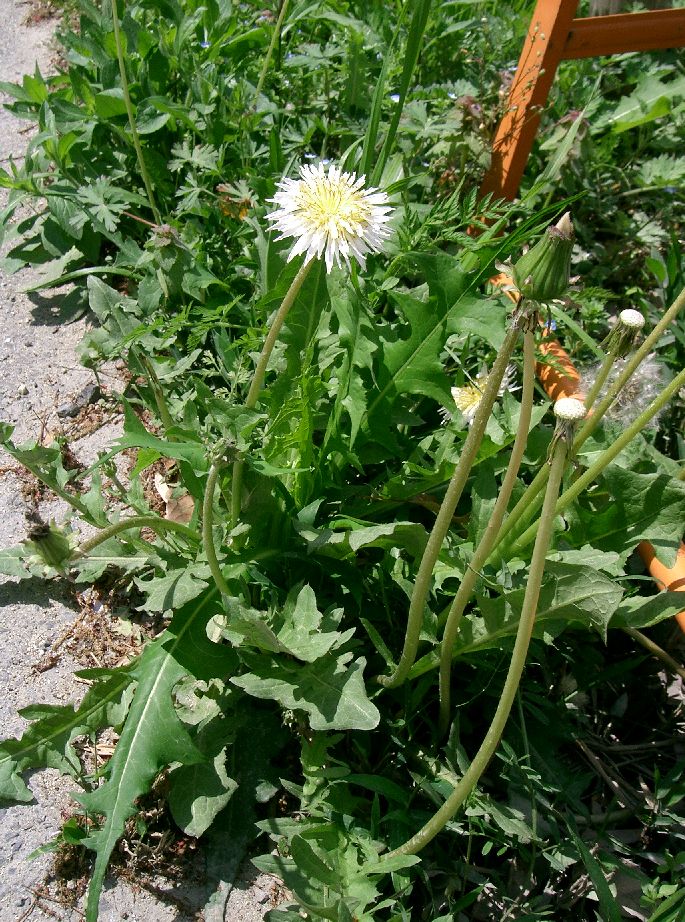
White-flowering Japanese Dandelion🌼
Taraxacum albidum
キク科
A perennial herb of the Asteraceae family, a native dandelion common in western Japan. It is characterized by white ray florets and grows on roadsides and in grasslands.
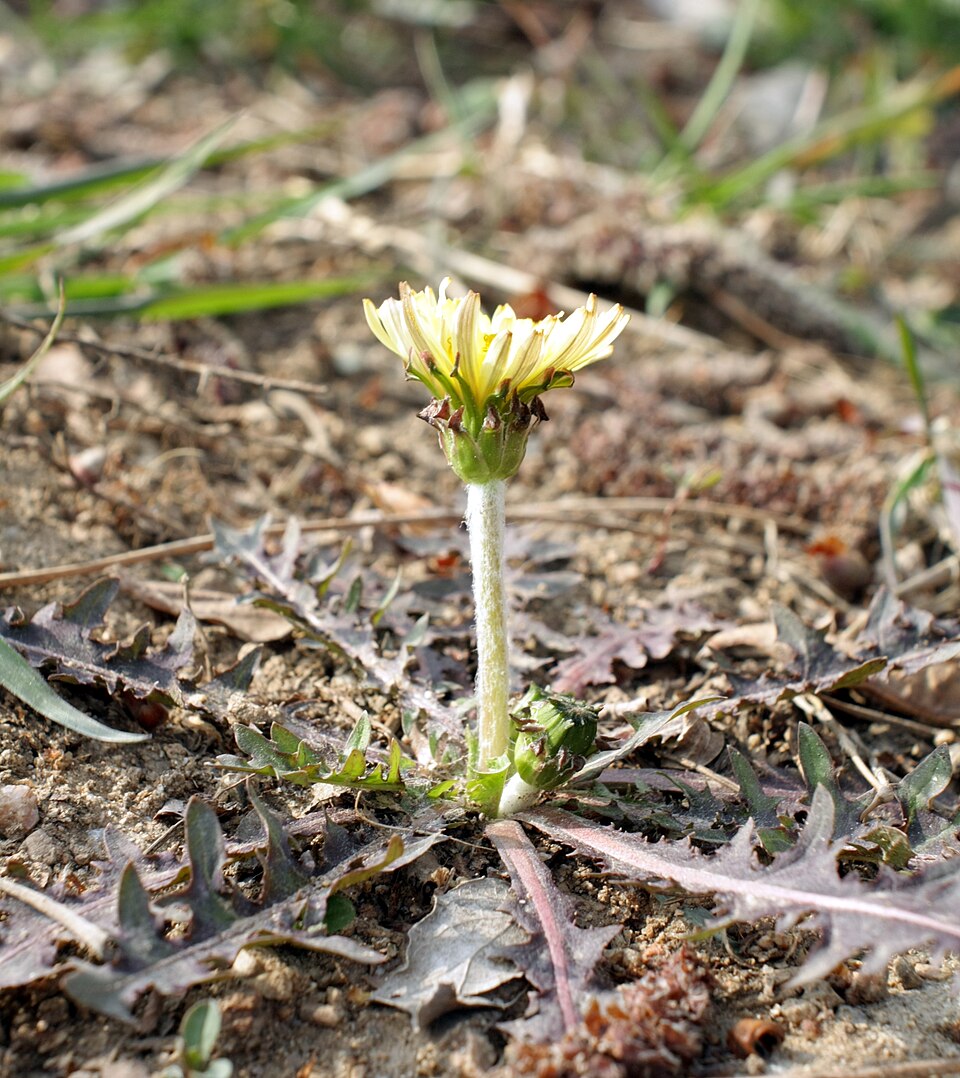
Kanto Dandelion🌼
Taraxacum platycarpum
キク科
A native Japanese dandelion distributed from the Kanto region to southern Tohoku. Distinguished from the introduced Taraxacum officinale by involucral bracts that stand upright (rather than reflexing). A sexual diploid that flowers only in spring, producing seeds through normal pollination.

Kansai Dandelion🌼
Taraxacum japonicum
キク科
A native Japanese dandelion distributed from Kansai to Chugoku, Shikoku, and Kyushu. Like the Kanto dandelion, its involucral bracts do not reflex, and it is a sexual diploid that flowers only in spring. Slightly smaller flower heads and narrower involucres than the Kanto species.

Japanese Plum🌸
Prunus salicina
バラ科
A deciduous small tree of the Rosaceae family native to China. In early spring it produces white flowers resembling those of the Japanese apricot, and in early summer it bears reddish-purple fruits.

Onoe's Weeping Fern
Lepisorus onoei
ウラボシ科
A small evergreen fern of the Polypodiaceae family that grows epiphytically on rocks and tree trunks. It is smaller than the related nokishinobu with narrower fronds.

Summer Mandarin Orange🍊
Citrus natsudaidai
ミカン科
An evergreen small tree of the Rutaceae family that bears large citrus fruits with a strong sour flavor in early summer. Hagi City in Yamaguchi Prefecture is known as a notable production area.

East Asian Yellow Water-lily
Nuphar japonicum
スイレン科
A perennial herb of the Nymphaeaceae family that grows in ponds and slow-flowing water, sending thick rhizomes into the mud. In summer it produces yellow cup-shaped flowers above the water surface.
.jpg?width=400)
Gentian🌸
Gentiana zollingeri
リンドウ科
A biennial herb of the Gentianaceae family, a small gentian that grows at bright forest edges and in grasslands. In spring it produces small, bluish-purple tubular flowers.

Chinese Violet Cress🌼
Orychophragmus violaceus
アブラナ科
A biennial herb of the Brassicaceae family native to China, also known as hanadaikon or shokatsusai. It has naturalized in many regions, covering fields with purple cruciform flowers in spring.

Dead-nettle🌿
Lamium album
シソ科
A perennial herb of the Lamiaceae family that forms colonies at forest edges and in grasslands. Whorls of white to pale pink lip-shaped flowers arranged in leaf axils are likened to dancers (odoriko).
Star Jasmine🌸
Trachelospermum jasminoides
キョウチクトウ科
An evergreen woody vine of the Apocynaceae family that climbs other objects using adhesive roots. In early summer it produces fragrant white pinwheel-shaped flowers.

Tiger Lily🌷
Lilium leichtlinii
ユリ科
A perennial herb of the Liliaceae family that grows in damp grasslands and at forest edges. In summer it produces recurved orange-red flowers resembling the tiger lily but without aerial bulbils.

Tsukushi Rose🌸
Rosa multiflora var. adenochaeta
バラ科
A deciduous climbing shrub of the Rosaceae family, a wild rose distributed along riverbanks around Kyushu (the Tsukushi region). It produces pale pink flowers in early summer.

Cottonweed🌼
Pseudognaphalium affine
キク科
A biennial herb of the Asteraceae family, known as gogyo, one of the seven spring herbs. It is covered with white woolly hairs and bears yellow flower heads in corymbs.

Nipplewort (Japanese)🌼
Lapsanastrum apogonoides
キク科
A small winter annual in the Asteraceae. This is the true 'hotokenoza' of Japan's seven herbs of spring, not the modern plant of the same name (which is Lamium amplexicaule in the Lamiaceae). Grows as a flat rosette on paddy edges and wet fields, with small yellow ligulate heads.

Double File💧
Pollia japonica
ツユクサ科
A perennial herb of the Commelinaceae family that forms colonies on forest floors. Its large leaves resemble those of Japanese ginger (myoga), and in summer it produces white flowers in whorls followed by bluish fruits.
White Spider Lily🌺
Lycoris albiflora
ヒガンバナ科
A bulbous plant of the Amaryllidaceae family, the white-flowered form of the red spider lily (a natural hybrid with shokizuisen). It produces white to pale yellow flowers around the autumn equinox.

Green Leopard Plant🌼
Farfugium japonicum
キク科
An evergreen perennial herb of the Asteraceae family that grows near coasts and in gardens. It is characterized by leathery, glossy leaves and yellow flower heads that bloom in late autumn.

Himalayan Cedar🌲
Cedrus deodara
マツ科
An evergreen conifer of the Pinaceae family native to the Himalayas. Its beautiful conical form makes it popular as a park and street tree.

Prickly Pear🌵
Opuntia dillenii
サボテン科
A succulent of the Cactaceae family (genus Opuntia) with flat, paddle-shaped stem segments. It has long been naturalized in warm regions of Japan and grows in colonies on rocky coasts.

Brazilian Waterweed
Egeria densa
トチカガミ科
A submerged aquatic plant of the Hydrocharitaceae family native to South America, naturalized and proliferating in ponds and waterways throughout Japan. Its long, narrow leaves are arranged in whorls along the stem.

️🌺
Hibiscus hamabo
アオイ科
A deciduous shrub of the Malvaceae family that grows in coastal salt marshes and estuaries. In summer it produces yellow hibiscus-like flowers.

Galanthus🌺
Galanthus nivalis
ヒガンバナ科
A bulbous plant of the Amaryllidaceae family native to Europe. It produces small nodding white flowers in early spring and was named for its habit of flowering even through snow.

Mango🍂
Mangifera indica
ウルシ科
An evergreen tree of the Anacardiaceae family, a representative tropical fruit. It is cultivated in warm regions and produces sweet, orange-yellow fruits.
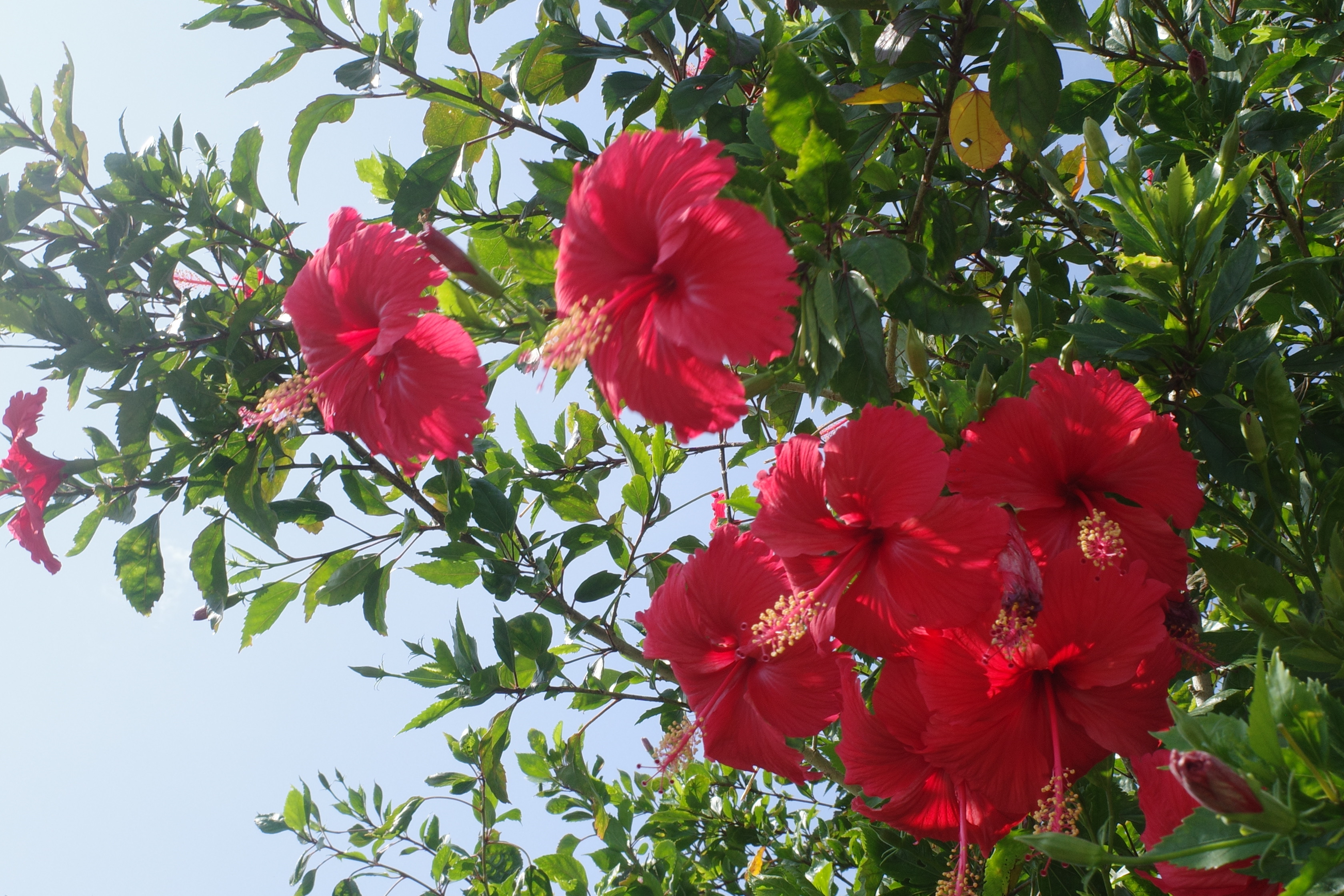
Hibiscus🌺
Hibiscus cv
アオイ科
An evergreen shrub of the Malvaceae family, a tropical ornamental. Each flower lasts only a day but new large flowers open successively, and it is used for hedges and container cultivation in warm regions.

Sticky Chickweed🌸
Cerastium glomeratum
ナデシコ科
A biennial herb of the Caryophyllaceae family native to Europe, widely naturalized in urban areas in recent years. It is densely covered with sticky glandular hairs and bears small white five-petaled flowers.

Satsuki Azalea🌸
Rhododendron indicum
ツツジ科
An evergreen shrub of the Ericaceae family named because it blooms in May (satsuki), later than other azaleas. It is popular as bonsai and for hedges, with many cultivars.

Tree Moss
Climacium japonicum
コウヤノマンネングサ科
A moss of the Climaciaceae family that grows upright on forest floors, spreading pinnate leaves like an umbrella at the top of its stem. It is notably large among mosses.

Japanese Hemlock🌲
Tsuga sieboldii
マツ科
An evergreen conifer of the Pinaceae family that grows in temperate mountain forests. Its leaves are short with rounded tips, and the undersides have two white stomatal bands.

Japanese Torreya
Torreya nucifera
イチイ科
An evergreen conifer of the Taxaceae family with sharply pointed leaves. Its seeds yield oil and are also roasted for eating, and its wood is the finest material for go and shogi boards.

Kawazu Sakura🌸
Prunus lannesiana
バラ科
A cherry of the Rosaceae family thought to be a natural hybrid discovered in Kawazu Town on the Izu Peninsula. It is an early-flowering variety that produces deep pink flowers from February over an extended period.

Hogweed🌿
Heracleum sphondylium
セリ科
A large perennial herb of the Apiaceae family that grows along mountain streams. It produces large compound umbels bearing many small white flowers.

Medicinal Spikemoss
Selaginella involvens
イワヒバ科
An evergreen fern ally of the Selaginellaceae family that grows on rocks and tree trunks. Its stems are erect and branch in the upper portion, spreading in a pinnate arrangement.

Great Scented Liverwort
Conocephalum conicum
ジャゴケ科
A liverwort of the Conocephalaceae family that forms large thalli on rocks and soil along damp streams. The thallus surface has a hexagonal pattern resembling snake scales.

Small Appendages Cremastra🌸
Cremastra appendiculata
ラン科
A perennial herb of the Orchidaceae family that grows on forest floors. At the tip of its flowering stem it bears pale purplish-red flowers arranged somewhat to one side, resembling a general's baton (sahai), which gives the plant its name.
_DSCF1084.jpg?width=400)
Jack In The Pulpit🌿
Arisaema japonicum
サトイモ科
A collective term for perennial herbs of the Araceae family (genus Arisaema) whose stems have markings resembling the mamushi pit viper. They bear a spathe and produce red corn-like aggregate fruits in autumn.

Pomelo🍊
Citrus maxima
ミカン科
An evergreen tree of the Rutaceae family, a large citrus also called buntan (pomelo). Its fruits can reach the size of a softball with thick rind.

Timber Bamboo🌾
Phyllostachys reticulata
イネ科
A large bamboo of the Poaceae family and a representative bamboo species of Japan. It is widely used for bamboo crafts and construction material, and flowers synchronously on a roughly 120-year cycle.

Triangular Club-rush
Schoenoplectus triangulatus
カヤツリグサ科
A perennial herb of the Cyperaceae family that grows in wetlands and along water. Its stems are erect and triangular in cross-section, bearing cymose inflorescences at the top.

Japanese Spindle Tree
Euonymus japonicus
ニシキギ科
An evergreen shrub of the Celastraceae family that grows wild near coasts and is widely planted as a hedge. In autumn, its pale pink fruits ripen and split open to reveal orange-red seeds.

Ribbon Fern
Neocheiropteris ensata
ウラボシ科
An evergreen fern of the Polypodiaceae family named for its simple leaves resembling chestnut (kuri) leaves. It grows both epiphytically on tree trunks and rocks and terrestrially in forests.

Sakaki
Cleyera japonica
サカキ科
An evergreen small tree of the Pentaphylacaceae family, a representative tree used in Shinto rituals. Its leaves are leathery and entire, and in early summer it produces small, nodding white flowers.

Oriental False Hawksbeard🌼
Youngia japonica
キク科
A biennial herb of the Asteraceae family commonly found on roadsides and in fields. It extends a stem and bears small yellow flower heads sparsely along it.

Wright's Viburnum
Viburnum wrightii
レンプクソウ科
A deciduous shrub of the Adoxaceae family that grows in mountains. In early summer it produces white corymbs, and in autumn it bears red edible fruits.

Prickly Sow-thistle🌼
Sonchus asper
キク科
An annual herb of the Asteraceae family native to Europe, naturalized throughout Japan. Its leaf spines are sharp, harder and more painful to touch than those of the related sow thistle.
Marsh Labrador Tea🌸
Ledum palustre
ツツジ科
An evergreen low shrub of the Ericaceae family that grows in raised bogs of Hokkaido and Tohoku. The undersides of its leaves are densely covered with brown hairs, and it produces small white flowers in early summer.

Amur Daylily
Hemerocallis dumortieri
ワスレグサ科
A perennial herb of the Asphodelaceae family that grows in grasslands of Hokkaido and Tohoku, also called ezo-kanzou. In early summer it produces large orange-yellow flowers.
Jack In The Pulpit🌿
Arisaema heterocephalum
サトイモ科
A perennial herb of the Araceae family (genus Arisaema), a rare species distributed in the Hitoyoshi region of Kyushu. It is small and distinctive in producing two flowering stalks.

Japanese Staunton Vine
Stauntonia hexaphylla
アケビ科
An evergreen woody vine of the Lardizabalaceae family that grows in warm regions. It is related to akebi but has evergreen leaves and produces fruits that do not split open when ripe.

Smartweed🌿
Persicaria longiseta
タデ科
An annual herb of the Polygonaceae family commonly found along rice paddy ridges and roadsides. Affectionately known as akamanma, it produces small red flowers in spikes.

Japanese Buttercup🌸
Ranunculus japonicus
キンポウゲ科
A perennial herb of the Ranunculaceae family, also called kinpouge. Its name derives from the leaves resembling a horse's hoof print, and it produces glossy yellow five-petaled flowers in spring.

洋梨 La France Pear🌸
Pyrus communis
バラ科
A deciduous tree of the Rosaceae family native to Europe. Its fruit, the European pear, is more elongated and gourd-shaped than the Japanese pear and has a stronger fragrance.
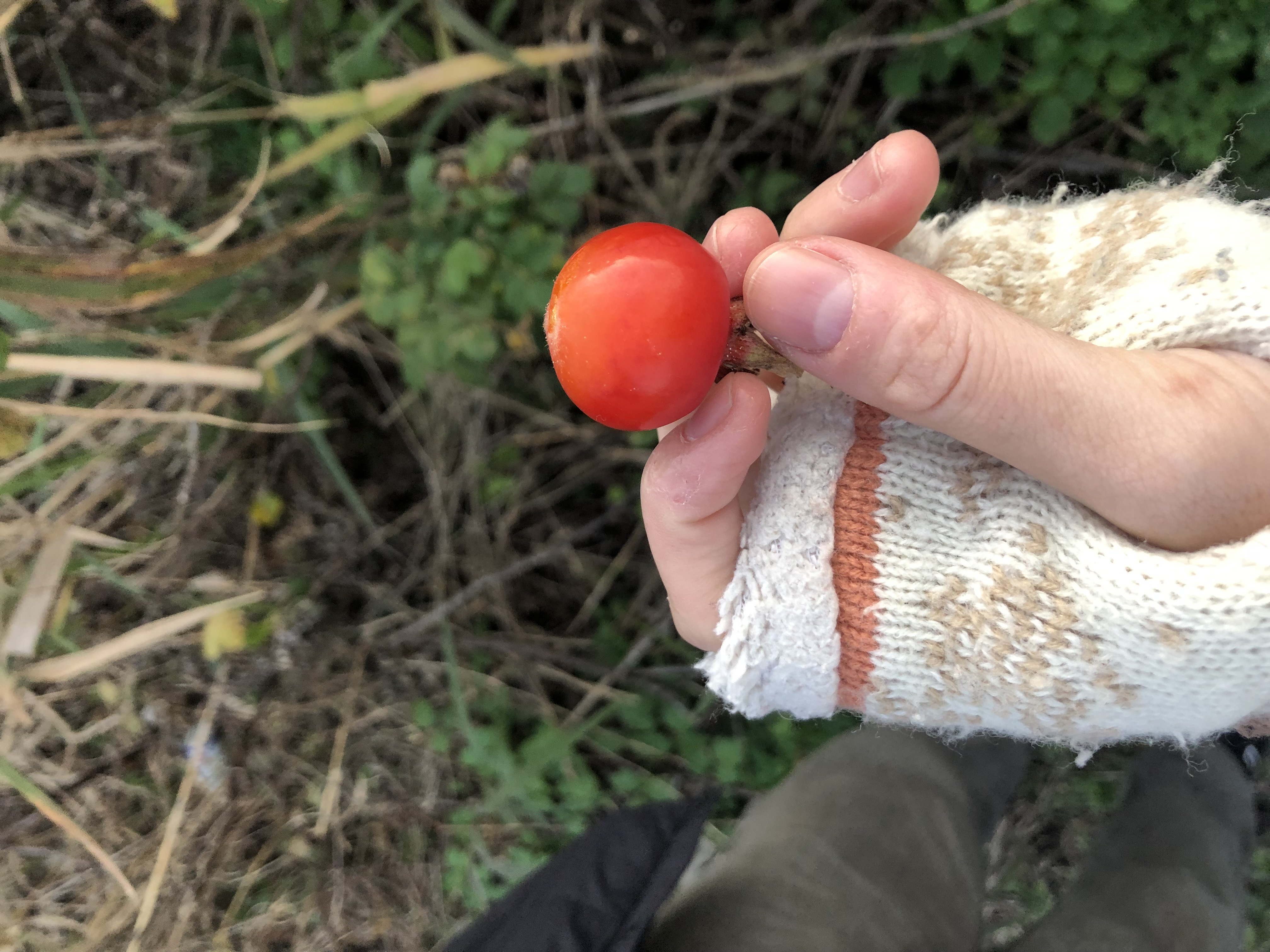
Japanese Hamanasu Rose🌸
Rosa rugosa
バラ科
A deciduous shrub of the Rosaceae family that forms colonies on coastal sands of northern Japan. Its large reddish-purple flowers are strongly fragrant, and its spherical fruits are also called hamanashi.

Tiger Lily🌷
Lilium lancifolium
ユリ科
A large perennial herb of the Liliaceae family that produces recurved orange-red flowers in summer. It reproduces vegetatively by producing aerial bulbils in the leaf axils.

Suckling Clover🌿
Trifolium dubium
マメ科
An annual herb of the Fabaceae family native to Europe, naturalized in lawns and along roadsides. Its small yellow flowers resembling those of clover are gathered in spherical heads.

Buttercup🌸
Ranunculus cantoniensis
キンポウゲ科
A perennial herb of the Ranunculaceae family that grows in damp places. It resembles kitsune-no-botan but is hairier overall and has fruits with nearly straight tips.
Statice
Limonium sinuatum
イソマツ科
An annual or perennial herb of the Plumbaginaceae family native to the Mediterranean region. Its papery calyx retains its color even when dried, making it popular for dried flower arrangements.
Water Caltrop
Trapa natans
ミソハギ科
A floating-leaved plant of the Lythraceae family (genus Trapa) that produces fruits smaller than those of Trapa japonica with four horns. It grows in ponds and rice paddies.

つくね芋 Tsukune Potato
Dioscorea opposita
ヤマノイモ科
A climbing perennial of the Dioscoreaceae family, a cultivated form of Japanese yam grown for its edible tubers. It is a variety of nagaimo with spherical to fist-shaped tubers.

Japanese Pagoda Tree🌿
Styphnolobium japonicum
マメ科
A deciduous tree of the Fabaceae family native to China. In summer it produces pale yellowish-white pea-like flowers in panicles, and it is planted as a street tree and park tree.
.jpg?width=400)
Musk Melon
Cucumis melo
ウリ科
An annual climbing herb of the Cucurbitaceae family native to Africa and West Asia. Various cultivars are grown as fruit, including both greenhouse and field-grown types.

Pride-of-Rochester🌸
Deutzia crenata
アジサイ科
A deciduous shrub of the Hydrangeaceae family that produces white conical inflorescences in early summer. Known affectionately as u-no-hana, it has hollow stems.

Siberian Lily🌷
Lilium pensylvanicum
ユリ科
A perennial herb of the Liliaceae family that grows on coasts and grasslands in Hokkaido and Tohoku. Its orange-red flowers face upward, and the bases of the tepals appear translucent (sukashi).
Japanese Superb Fig
Ficus subpisocarpa
クワ科
An evergreen tree of the Moraceae family (genus Ficus) that grows on warm coasts. It sends down many aerial roots and may entwine other trees, sometimes strangling them.

Lemon🍊
Citrus limon
ミカン科
An evergreen small tree of the Rutaceae family, a citrus native to the Himalayas. Its strongly acidic fruits are widely used in cooking and beverages.
Orange Daylily
Hemerocallis fulva var. longituba
ワスレグサ科
A perennial herb of the Asphodelaceae family, a variety or close relative of yabukanzou. It grows in meadows and along paddy ridges, producing single-flowered orange-red blooms in summer.

Red-stem Fig
Ficus variegata
クワ科
An evergreen tree of the Moraceae family (genus Ficus) distributed in subtropical and tropical regions. It is characterized by cauliflory, bearing its fig-like fruits directly on the trunk.

Golden Hardhack🌸
Potentilla fragarioides
バラ科
A perennial herb of the Rosaceae family that produces yellow five-petaled flowers in spring. It sends out rosette-like basal leaves, and its name refers to a mat (mushiro) where a pheasant (kiji) would sit.

Mountain Golden Saxifrage
Chrysosplenium japonicum
ユキノシタ科
A perennial herb of the Saxifragaceae family that grows along mountain streams. In early spring it produces small yellow-green flowers, and when the fruit splits, the appearance is likened to a cat's eye.
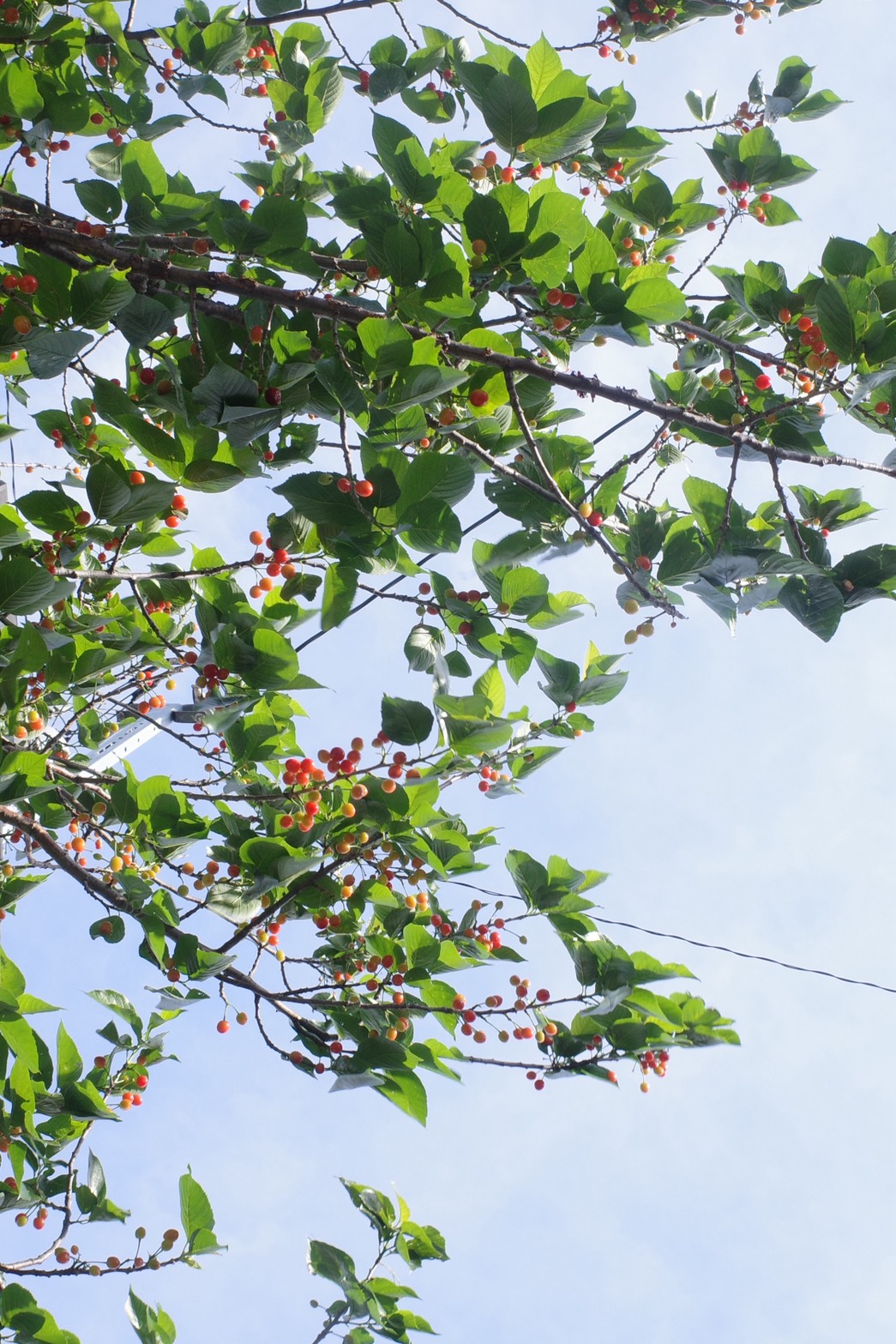
Cherry🌸
Prunus avium
バラ科
The fruit of a deciduous small tree of the Rosaceae family, the sweet cherry (Prunus avium). It produces white flowers in spring and ripens to small red fruits in early summer.

Nishiki Utsugi
Weigela decora
スイカズラ科
A deciduous shrub of the Caprifoliaceae family that grows in mountains of central Honshu and northward. Its flowers change from white to red, which gives it the name 'nishiki' (two-colored).

Yellow Flag
Iris pseudacorus
アヤメ科
A perennial herb of the Iridaceae family native to Europe. It grows along water and produces brilliant yellow flowers in early summer. It has naturalized in many regions.

Turnip🌼
Brassica rapa var. rapa
アブラナ科
A winter annual in the Brassicaceae. This is the 'suzuna' of Japan's seven herbs of spring. Native to the Mediterranean and Central Asia, grown for its swollen hypocotyl and taproot. Bears yellow 4-petaled flowers in a raceme. Belongs to the same species (*Brassica rapa*) as napa cabbage and komatsuna.

菜 百財 Napa Cabbage🌼
Brassica rapa
アブラナ科
A biennial herb of the Brassicaceae family, a representative leafy vegetable that forms a head. Native to northern China, it is harvested in winter and is a staple of hot-pot dishes.

Purple Magnolia🌸
Magnolia liliiflora
モクレン科
A deciduous shrub of the Magnoliaceae family native to China that produces purplish-red flowers before the leaves emerge in spring. It is widely planted as a garden tree.

Hirsute Raspberry🌸
Rubus hirsutus
バラ科
A deciduous low shrub of the Rosaceae family that grows at forest edges and in vacant lots. In spring it produces white five-petaled flowers, and in early summer it ripens red edible raspberry-like fruits.

Thunberg's Meadowsweet🌸
Spiraea thunbergii
バラ科
A deciduous shrub of the Rosaceae family that bears small white five-petaled flowers like snow along its supple branches. It is widely planted in gardens and parks.
紫蘭 Chinese Ground Orchid🌸
Bletilla striata
ラン科
A perennial herb of the Orchidaceae family that produces purplish-red flowers in early summer. It is a hardy orchid widely cultivated, though wild populations are limited to scattered damp grasslands.

Lilac
Syringa vulgaris
モクセイ科
A deciduous shrub in the olive family native to southeastern Europe. In Japan it is also known by its scientific Japanese name 'Murasaki-hashidoi', and in French as 'Lilas'. It bears fragrant purple or white flower panicles in spring and is widely planted along streets and in gardens.

Avocado🌿
Persea americana
クスノキ科
An evergreen tree in the laurel family and its fruit. The Japanese name is 'Wani-nashi' (crocodile pear). The fruit is high in fat and nutritious, earning it the nickname 'butter of the forest'. Native to Central America; now cultivated worldwide, especially in Mexico.

Coriander🌿
Coriandrum sativum
セリ科
An annual herb in the carrot family native to the Mediterranean, introduced to Japan around the 10th century. Known in Japan by the old name 'Koendoro', the Thai-derived 'Paku-chi', and the Chinese-derived 'Shantsai'. Both leaves and seeds are used as food and spice, essential to ethnic cuisines.

Açaí
Euterpe oleracea
ヤシ科
An evergreen palm tree native to the Amazon rainforest of Brazil. Its Japanese names are 'Nibon-modoki' and 'Wakaba-kyabetsu-yashi'. The small dark-purple berries are rich in polyphenols and iron, and are known as a superfood.
.jpg?width=400)
Manchurian Wildrice🌾
Zizania latifolia
イネ科
A perennial grass growing in wetlands by water. Its seeds were eaten as grain in ancient China and Japan. The young shoot swollen by smut fungus infection, called 'Makomo-dake', is still used as a vegetable in Chinese cuisine.
Flowering Dogwood🌸
Cornus florida
ミズキ科
A small to medium deciduous tree in the dogwood family; its botanical Japanese name is 'Amerika-yamaboushi'. Native to North America, it was gifted to Japan in return for the cherry trees sent to Washington DC in 1912. Widely planted in gardens and as a street tree.

Konjac🌿
Amorphophallus konjac
サトイモ科
A perennial herb in the arum family, native to Southeast Asia, said to have been introduced to Japan along with Buddhism. The underground corm is processed into the food 'konnyaku', a long-established part of Japanese cuisine. It occasionally produces a large, foul-smelling flower.

Opium Poppy
Papaver somniferum
ケシ科
An annual herb in the poppy family. Because it is the source of opium, cultivation is prohibited in Japan under the Opium Law. It produces large, showy flowers; latex (opium) is extracted from unripe capsules. Seeds are used for food (poppy seeds) from legally allowed varieties only.

Common Fig
Ficus carica
クワ科
A deciduous tree in the mulberry family, native to western Asia, cultivated worldwide as a fruit tree. Many tiny flowers are borne inside a syconium, which becomes the fruit. Its Japanese name '無花果' ('no flower fruit') reflects that the flowers are hidden from view.

Alligator Weed
Alternanthera philoxeroides
ヒユ科
A perennial herb native to South America, naturalized as an invasive species worldwide—sometimes called 'one of the world's worst invasive plants'. Designated as a 'Specified Invasive Alien Species' in Japan since 2005. It forms dense mats in wetlands and waterways.

Kudzu🌿
Pueraria lobata
マメ科
A climbing, semi-woody perennial in the pea family, widely native to Japanese hills and fields. One of the 'seven flowers of autumn'. Its roots are used to make kudzu starch and the traditional medicine 'Kakkonto'. Abroad, it is notorious as an invasive species.

Baby Blue Eyes
Nemophila menziesii
ムラサキ科
An annual herb in the borage family; Japanese name 'Ruri-karakusa'. Native to North America, widely cultivated in Japan as an ornamental. Its bright blue 5-petaled flowers carpet the ground in spring; famous at Hitachi Seaside Park in Ibaraki Prefecture.

Okra🌺
Abelmoschus esculentus
アオイ科
An annual (perennial in the tropics) in the mallow family, native to northeast Africa; its long green fruit is eaten. Known for its mucilaginous texture, it is a common summer vegetable in Japan. Flowers are large, pale yellow with a dark purple center.
Satsuma Mandarin🍊
Citrus unshiu
ミカン科
An evergreen shrub in the citrus family. A Japanese native citrus said to have originated on Nagashima Island in Kagoshima. Seedless and sweet, it is the most common mandarin in Japan. Main production areas include Ehime, Wakayama, and Shizuoka.

Kiwifruit
Actinidia deliciosa
マタタビ科
A deciduous vine in the family Actinidiaceae. Bred in New Zealand from the Chinese gooseberry, it was named after the country's national bird, the kiwi. A temperate fruit tree with vitamin-C-rich green or yellow flesh.
Zha cai🌼
Brassica juncea var. tumida
アブラナ科
A biennial in the mustard family, and the name of the famous Chinese pickle made from its swollen stem. The species epithet 'tumida' means 'swollen'. Originated in Sichuan Province, it is widely used as an appetizer or stir-fry ingredient in Chinese cuisine.

Broccoli🌼
Brassica oleracea var. italica
アブラナ科
A green vegetable in the cabbage family, bred in Italy from a type of cabbage. The Japanese name is 'Me-hana-yasai' (bud-flower vegetable). The edible parts are the immature flower clusters and stalk. If not harvested, it produces numerous yellow flowers.

Common Ragweed🌼
Ambrosia artemisiifolia
キク科
An annual herb in the daisy family, native to North America and naturalized in Japan. A major cause of autumn hay fever. The Japanese name 'Buta-kusa' is a direct translation of the English folk name 'Hog-weed'. Grows in dense colonies on vacant lots and riverbanks.

Chinese Lantern🌿
Alkekengi officinarum
ナス科
A perennial herb in the nightshade family, native to East Asia. The calyx inflates into a large bladder-like husk that turns orange-red, enclosing the fruit. Traditionally used as a decoration during the Obon festival; the Asakusa 'Hoozuki Market' is well known.

Pomegranate
Punica granatum
ミソハギ科
A small deciduous tree in the loosestrife family. One of the oldest cultivated fruit trees. The fruit has a hard rind enclosing numerous seeds, each covered with a translucent red aril. Also widely grown as an ornamental garden tree.

Bushkiller
Causonis japonica
ブドウ科
A climbing vine in the grape family, one of the most common weeds in Japan. Its Japanese name means 'bush-killer', reflecting its vigorous growth that smothers thickets. Also called 'poverty vine'. The orange-colored floral disc attracts many insects including ants and wasps.

Tobacco🌿
Nicotiana tabacum
ナス科
An annual (perennial in the tropics) in the nightshade family, native to tropical America. Its leaves contain the highly addictive substance nicotine, used to produce cigarettes and other tobacco products. Bears large funnel-shaped pale-pink flowers.

Betel Palm
Areca catechu
ヤシ科
An evergreen palm found in the Pacific, Asia, and parts of East Africa. The seed (betel nut) is chewed as a stimulant similar to chewing tobacco, but is classified as carcinogenic—sometimes called the 'fruit of death'. The Malay word 'pinang' is the origin of Penang Island's name.

Chinese Hawthorn🌸
Crataegus cuneata
バラ科
A deciduous shrub in the rose family, native to south-central China. Introduced to Japan in 1734 as a medicinal tree at the Koishikawa Medicinal Garden. The small red fruit is used as traditional medicine, dried fruit, and in Chinese confections.

Lettuce🌼
Lactuca sativa
キク科
An annual or biennial in the daisy family, native to the Mediterranean and West Asia. Japanese name is 'Chisha'. Many cultivars exist: head lettuce, leaf lettuce, and stem lettuce (celtuce).

Rose of Sharon🌺
Hibiscus syriacus
アオイ科
A deciduous tree in the mallow family, native from China to India. Widely planted as a garden tree. Produces a succession of large white, pink, or purple flowers from summer to autumn. Each flower lasts only one day, opening in the morning and wilting by evening. National flower of South Korea.

Date Palm
Phoenix dactylifera
ヤシ科
An evergreen palm. The fruit, called dates, is a staple food in North Africa and the Middle East. Drought-resistant, it has been cultivated since ancient Mesopotamian times as one of the world's oldest crops.
Almond🌸
Prunus amygdalus
バラ科
A deciduous tree in the rose family, native to Central Asia. Japanese name is 'Hentou' (flat peach). A close relative of apricot and peach. The fruit flesh is thin and not eaten, but the inner seed (kernel) is consumed worldwide as a nut. Flowers are pale pink, similar to cherry blossoms.
Green Pepper🌿
Capsicum annuum 'Grossum'
ナス科
A perennial (annual in temperate zones) in the nightshade family. A sweet cultivar of Capsicum with little pungency. The fruit is mostly hollow inside and typically harvested while still green. Fully ripened red or yellow variants are called paprika.

Black Pepper
Piper nigrum
コショウ科
A climbing vine in the pepper family, native to India and cultivated throughout the tropics. Its fruit, called the 'king of spices', is processed into black, white, or green pepper depending on the method. The pepper trade fueled European maritime expansion in the 15th century.

Peanut🌿
Arachis hypogaea
マメ科
An annual in the pea family; standard Japanese name is 'Nankin-mame' (Nanking bean). Uniquely, after pollination the ovary stalk pushes into the soil, where the pods develop underground. The seeds are widely consumed as peanuts.

Olive
Olea europaea
モクセイ科
An evergreen tree in the olive family, native to the Mediterranean. The fruit yields olive oil and is also eaten directly. In Japan, Shodoshima is the iconic production area. Valued for its attractive silvery-gray leaves and distinctive form.

Cacao🌺
Theobroma cacao
アオイ科
An evergreen tree in the mallow family. The genus name Theobroma means 'food of the gods' in Greek. Native to Central and South America, its seeds (cacao beans) are the raw material for chocolate and cocoa. Notable for cauliflory—flowers and fruit grow directly on the trunk.

Oat🌾
Avena sativa
イネ科
An annual grass in the oat genus. Known as 'oat' in English. The grain is used to make oatmeal and is also widely cultivated as animal feed.
Arrowhead
Sagittaria trifolia 'Caerulea'
オモダカ科
An aquatic perennial in the water-plantain family, a cultivar of threeleaf arrowhead. The corm is edible and traditionally served in Japanese New Year dishes. Leaves are distinctively arrow-shaped.

Passion Fruit
Passiflora edulis
トケイソウ科
A subtropical climbing vine in the passionflower family. Native to the Americas. The flower has a distinctive clock-face-like form. The fruit is aromatic and tart, used in juices and desserts.

Sorghum🌾
Sorghum bicolor
イネ科
An annual grass in the family Poaceae. Also known as 'kaoliang' in Chinese. The world's fifth most-produced cereal, tolerant of drought and semi-arid conditions. Used for food, feed, brewing, and industrial purposes.
Victory Onion🌺
Allium victorialis subsp. platyphyllum
ヒガンバナ科
A perennial in the onion genus. Grows in subalpine zones of Hokkaido and Honshu. Has a strong garlic-like odor; young shoots are prized as a wild mountain vegetable. The name alludes to ascetic monks who ate it.

Bitter Melon
Momordica charantia var. pavel
ウリ科
An annual climbing vine in the gourd family. Known as 'Tsuru-reishi' in standard Japanese, commonly called 'Goya' or 'Nigauri'. Native to tropical Asia. The fruit is covered with bumpy protrusions and has a distinctive bitter taste. Famous as an ingredient in Okinawan stir-fry (goya champuru).

Pawpaw
Asimina triloba
バンレイシ科
A deciduous tree in the custard apple family, native to eastern North America. The hardiest member of its family. The ellipsoidal fruit has yellow, custard-like flesh that is sweet and aromatic, earning it the nickname 'forest custard cream'. Introduced to Japan in the Meiji era.

Chinese Peony
Paeonia lactiflora
ボタン科
A perennial in the peony family, native to northeast Asia. Blooms large red, white, or pink flowers in early summer. Along with tree peony, one of the most iconic ornamental flowers. Single and double varieties exist. The root is used in traditional Chinese medicine ('shakuyaku').

Queen of the Night🌵
Epiphyllum oxypetalum
サボテン科
An evergreen succulent in the cactus family, native to Mexican tropical rainforests. Famous for its large, pure-white flowers that bloom only at night and wilt by morning. The Japanese name 'Gekka-bijin' means 'beauty under the moonlight'. Emits a strong fragrance.

Devil's Trumpet🌿
Datura metel
ナス科
An annual in the nightshade family, also called Datura. Known as 'Mandara-ge' (sacred flower). Introduced to Japan in the Edo period as a medicinal plant. The entire plant is highly toxic (scopolamine, atropine, etc.). Hanaoka Seishuu developed an anesthetic from this plant.

Siberian Iris
Iris sanguinea
アヤメ科
A perennial in the iris family. Grows in wild grasslands. Distinguished by a net-like pattern at the base of the petals, which gives it the name 'Ayame' (pattern). Often confused with kakitsubata and hanashobu, but differs in preferring dry land.

Cassava
Manihot esculenta
トウダイグサ科
A tropical shrub in the spurge family, native to Central and South America. Widely cultivated as a staple crop in the tropics. The swollen tuberous root is rich in starch and is the raw material for tapioca. Raw roots contain cyanogenic compounds and require proper processing.

Korean Ginseng
Panax ginseng
ウコギ科
A perennial in the ginseng family, native to northeast China and the Korean Peninsula. Also known as 'Korean ginseng'. The root is highly valued in traditional medicine. Unrelated to the common carrot (Apiaceae) despite sharing the Japanese name 'ninjin'.

Saffron Crocus
Crocus sativus
アヤメ科
A bulbous perennial in the iris family, believed to originate from Iran and cultivated since the Bronze Age. The dried red stigmas produce 'saffron', one of the world's most expensive spices. Used to color and flavor dishes like paella and bouillabaisse.

Japanese Enkianthus🌸
Enkianthus perulatus
ツツジ科
A deciduous shrub in the heath family. In spring it bears many small, white, urn-shaped flowers resembling lily-of-the-valley. Known for brilliant scarlet autumn foliage. Widely used for hedges and gardens.

Garlic Chives🌺
Allium tuberosum
ヒガンバナ科
A perennial in the onion genus, native to China. A quintessential East Asian vegetable. Has a distinctive strong odor and is widely used in stir-fries and dumpling fillings. White flowers bloom in umbels in autumn. One of the 'five pungent herbs'.

Holly Osmanthus
Osmanthus heterophyllus
モクセイ科
An evergreen small tree in the olive family. White, fragrant flowers bloom in clusters in winter. The leaves have spiny margins; the tree is used as a charm against evil spirits during Setsubun. Mature trees produce leaves with fewer spines.

Koshiabura
Chengiopanax sciadophylloides
ウコギ科
A deciduous tree in the ginseng family. Young shoots have a strong aroma and rich flavor, ranking alongside 'tara-no-me' (angelica tree buds) as a prized wild mountain vegetable. Superb when deep-fried as tempura. Its resin was historically used as a lacquer called 'gonzetsu'.

Chinese Artichoke🌿
Stachys sieboldii
シソ科
A perennial in the mint family, native to China. Introduced to Japan in the Edo period. The spiral, shell-shaped tubers formed on the roots are eaten. Dyed red, they are served as a lucky charm in traditional New Year dishes. Written with auspicious characters meaning 'long life and joy'.

Spicebush🌿
Lindera umbellata
クスノキ科
A deciduous shrub in the laurel family. Named 'Kuromoji' (black letters) after the dark markings on its bark. The aromatic wood is used to make premium toothpicks, and the toothpick itself is sometimes called 'kuromoji'. Also used for herbal tea and aromatherapy oil.

Rosemary🌿
Salvia rosmarinus
シソ科
An evergreen shrub in the mint family native to the Mediterranean. Japanese name 'Mannenrou'. The small, needle-like leaves have a sweet, fresh aroma. Widely used as a culinary herb for meat dishes. Essential oil obtained by steam distillation is also used medicinally and in aromatherapy.

Lily of the Valley🌿
Convallaria majalis var. keiskei
キジカクシ科
A perennial in the asparagus family. Despite the Japanese name ending in 'ran' (orchid), it is not an orchid. Also called 'Kimi-kage-sou'. Grows in colonies in highlands, producing small white bell-shaped flowers. All parts contain toxic cardiac glycosides.

Pistachio🍂
Pistacia vera
ウルシ科
A deciduous small tree in the cashew family. Mainly cultivated in Iran and the United States. The green seeds are eaten as nuts and widely used in confectionery and cooking. The shells naturally split open, and the nuts are often sold already half-opened.

Marigold🌼
Tagetes
キク科
A general term for Tagetes species cultivated as ornamentals in the daisy family. Japanese name 'Kou-ou-sou' (red-yellow flower). Native to Mexico. Known for vivid yellow and orange flowers and a distinctive odor that repels pests; often used as a companion plant in vegetable gardens.

Asparagus🌿
Asparagus officinalis
キジカクシ科
A perennial in the asparagus family. Japanese name 'Oranda-kijikakushi'. Young shoots are eaten as vegetables. The amino acid asparagine was first isolated from this plant. White asparagus is produced by blanching (blocking sunlight). The leaf-like parts are actually finely branched stems.

Agarwood
Aquilaria
ジンチョウゲ科
A tree in the daphne family. 'Jinkou' (agarwood) refers to the resin-infused wood that forms as a defense response when the tree is wounded or infected. Used as a prized incense wood. Not all wood yields agarwood, making it very rare. The highest grade is called 'kyara'.
Komatsuna🌼
Brassica rapa var. perviridis
アブラナ科
A leafy vegetable in the cabbage family. Developed around the Komatsugawa area of Edo-period Tokyo, and named after it. Has a mild flavor and is essential in Kanto-style zoni (New Year's soup). A cultivar of Brassica rapa, the same species as turnip and napa cabbage. Known as 'KOMATSUNA' internationally.

Sal Tree
Shorea robusta
フタバガキ科
An evergreen tree in the Dipterocarpaceae. Famous in Buddhism as the sacred tree under which Buddha entered parinirvana. In Japanese temples, however, trees labeled 'sala' are usually Stewartia pseudocamellia, not the true sal tree. Native to India and Southeast Asia.

Jerusalem Artichoke🌼
Helianthus tuberosus
キク科
A perennial in the daisy family. Introduced from North America. Produces yellow chrysanthemum-like flowers in summer and edible tubers underground. The inulin in the tubers is said to help regulate blood sugar and gut flora, drawing attention as a health food.

Common Poppy
Papaver rhoeas
ケシ科
An annual in the poppy family native to Europe. Also called 'Gubijin-sou' (Consort Yu flower), 'Coquelicot', or 'Shirley poppy'; often simply called 'poppy' in horticulture. National flower of France and Poland. Unlike opium poppy (Papaver somniferum), this species is legal to grow.

Feijoa
Acca sellowiana
フトモモ科
An evergreen shrub in the myrtle family, native to Uruguay, Paraguay, and southern Brazil. The green ovoid fruit has a distinctive sweet aroma reminiscent of pineapple and banana. Cold-hardy and also prized as a garden plant. The flowers have showy red stamens.

Ramie
Boehmeria nivea var. nipononivea
イラクサ科
A perennial in the nettle family, distributed from South Asia to East Asia. Long cultivated as a fiber plant; also called 'Chouma' or 'Mao'. The stem fibers are of high quality and prized for fine textiles such as Echigo-jofu and Miyako-jofu ramie cloth.

Freesia
Freesia refracta
アヤメ科
A half-hardy bulbous plant in the iris family, native to South Africa. Funnel-shaped flowers bloom in a one-sided spike on a slender stalk, with a strong sweet fragrance. Also called 'Asagi-zuisen' and 'Kousetsu-ran'. Widely cultivated as cut flowers and potted plants.

Clove
Syzygium aromaticum
フトモモ科
An evergreen tree in the myrtle family, native to the Molucca Islands of Indonesia. The dried flower buds are the world-famous spice 'clove' (Japanese: chouji). Used in curries, chai, and meat dishes, and also as a traditional medicine. One of the principal commodities of the Age of Exploration spice trade.

Titan Arum🌿
Amorphophallus titanum
サトイモ科
An angiosperm in the arum family, also called 'Sumatran corpse flower'. Native to the tropical rainforests of Sumatra. Famous for the world's largest unbranched inflorescence. Emits a powerful stench of rotting flesh — hence 'corpse flower'. Blooms only once every few years and for just two days; draws crowds when it flowers in botanical gardens.

Cotton Rose🌺
Hibiscus mutabilis
アオイ科
A deciduous shrub in the mallow family. The species name 'mutabilis' means 'changeable'; the double cultivar 'Sui-fuyou' opens white in the morning, turns pink by noon, and red by evening. Since 'fuyou' can also refer poetically to lotus, this plant is sometimes called 'moku-fuyou' (woody fuyou) for clarity.

Oriental Melon
Cucumis melo var. makuwa
ウリ科
An annual climbing vine in the gourd family, a variety of melon. Native to South Asia and long cultivated in Japan as a common people's melon. Known for natural sweetness and crisp texture. The name derives from Makuwa village in the former Mino Province. Was the main sweet fruit in Japan before Western melons became widespread.

Rhododendron🌸
Rhododendron
ツツジ科
A general term for species in the Rhododendron subgenus Rhododendron (elepidote rhododendrons). Mostly shrubs but some grow into trees. Native to high mountain zones, blooming large showy flowers from spring to early summer. National flower of Nepal and Pakistan. In Japan, Western hybrid cultivars are widely planted.
(Lonicera_caerulea_var._emphyllocalyx)-%E8%8A%B1_(5844543955).jpg?width=400)
Haskap Berry
Lonicera caerulea subsp. edulis
スイカズラ科
A deciduous shrub in the honeysuckle family. The standard Japanese name is 'Kuromi-no-uguisukagura'. A signature fruit of Hokkaido, growing wild in the Yubari Mountains and Yufutsu Plain wetlands. The blue-purple berries are rich in anthocyanins and used for jam, juice, and sweets.

Hop
Humulus lupulus
アサ科
A climbing perennial in the hemp family; dioecious. Japanese name 'Seiyou-karahana-sou'. The female cones ('kyuuka') are a key ingredient in beer, essential for bitterness, aroma, foam retention, and preservation. The craft-beer boom has driven a proliferation of cultivars.

Chamomile🌼
Matricaria chamomilla
キク科
An annual herb in the daisy family. Japanese name 'Kamitsure'. Small white flower heads give off a sweet apple-like fragrance. Long used in Europe for herbal tea and aromatherapy, said to have calming and digestive benefits. The national flower of Russia.

Bergamot Orange🍊
Citrus x bergamia
ミカン科
An evergreen shrub in the citrus family of the rue family. Mainly produced in Italy. A hybrid involving pomelo, mandarin, and citron. The fruit is too bitter for eating; the essential oil extracted from the peel is widely used as a fragrance. Famous as the flavoring of Earl Grey tea.
.jpg?width=400)
Lychee🍁
Litchi chinensis
ムクロジ科
An evergreen fruit tree in the soapberry family, the only species of its genus. Native to the Lingnan region of China. The fruit is called 'lychee' — inside the bumpy red peel is translucent white, fragrant flesh. Famous for being a favorite of Yang Guifei. Unrelated to soursop despite similar Japanese names.

Cashew🍂
Anacardium occidentale
ウルシ科
An evergreen tree in the cashew family, native to Central and South America. Also called 'Magatama-no-ki' (comma-jewel tree) for the shape of its nut. The seed is widely eaten as cashew nut. The swollen pedicel ('cashew apple') is also eaten in its native range. Designated as a food allergen.

Fennel🌿
Foeniculum vulgare
セリ科
A perennial herb in the carrot family, the only species of its genus. Known as fennel. Has a sweet aroma with a camphor-like note; long used as a spice and medicinal herb. Seeds are used in baking and spices; leaves and bulbs are used in fish dishes, salads, and soups.
Winter Melon
Benincasa pruriens f. hispida
ウリ科
An annual climbing vine in the gourd family, a summer vegetable. Harvested in summer but has a thick rind that allows storage into winter — hence the Chinese characters '冬瓜' meaning 'winter melon'. The flesh is soft and mild-flavored, well suited to simmered dishes. A seasonal word for autumn in Japanese poetry.

Chickpea🌿
Cicer arietinum
マメ科
An annual self-pollinating crop in the legume family. Known in English as chickpea or garbanzo. Its Japanese name ('chick-pea') comes from the resemblance of the seed shape to a chick's head. A staple crop in India, the Mediterranean, and the Middle East. Well known as the main ingredient of hummus and many curries.

Star Anise
Illicium verum
マツブサ科
An evergreen tree in the star anise family, native to southeastern China and northeastern Vietnam. Produces red flowers. The fruit, with 8 follicles arranged in a star shape, is the spice 'star anise' (八角/hakkaku) — essential in Chinese cuisine. Note: the closely related Japanese Illicium anisatum is highly toxic.

Bottle Gourd
Lagenaria siceraria var. siceraria
ウリ科
A plant in the gourd family, a variety of bottle gourd. Also called 'hisago' or 'fukube'. The distinctive waisted fruit is dried and processed into containers and musical instruments. One of the oldest cultivated plants, grown worldwide since antiquity. Featured in many Japanese proverbs.

Vanilla🌸
Vanilla planifolia
ラン科
An evergreen climbing orchid, native to Mexico. Cultivated in the tropics, where unripe pods are fermented and dried into 'vanilla beans' — used worldwide to flavor ice cream and confections. One of the most expensive spices, second only to saffron.

Horseradish🌼
Armoracia rusticana
アブラナ科
A cold-hardy perennial in the cabbage family. English name 'horseradish'. Native to eastern Europe. The root is grated and used as a pungent condiment. Most commercial 'wasabi paste' and 'wasabi powder' are actually made from horseradish rather than true Japanese wasabi (Eutrema japonicum).
.jpeg?width=400)
Foxtail Millet🌾
Setaria italica
イネ科
An annual grass in the foxtail genus. A millet — one of the 'five grains' and an important cereal in Japan since ancient times. Domesticated from Setaria viridis (green foxtail). Central to many food traditions including awa-mochi, awada, and awabi-zouni.

Mock Strawberry🌸
Potentilla hebiichigo
バラ科
A perennial in the rose family. Grows on paddy ridges and roadsides. Bears small red strawberry-like fruits that are tasteless — the Japanese name '蛇苺' ('snake strawberry') comes from the legend that only snakes eat them. Formerly classified in the genus Duchesnea, now placed in Potentilla. Contrary to folk belief, it is non-toxic.

Tachibana Orange🍊
Citrus tachibana
ミカン科
An evergreen small tree in the citrus family, a wild citrus native to Japan. Also called Yamato-tachibana. Long revered as a sacred plant — featured in the Nihon Shoki legend of the 'eternal fragrant fruit', in family crests, and on the Order of Culture medal. Designated as near-threatened.

Rye🌾
Secale cereale
イネ科
An annual or winter annual grass in the grain family. Also known as 'kuromugi' (black wheat). Highly tolerant of cold climates and poor soil, it is widely grown in eastern and northern Europe where wheat cannot thrive. Used for rye bread, whiskey, and fodder.

Poinsettia
Euphorbia pulcherrima
トウダイグサ科
An evergreen shrub in the spurge family, commonly known as poinsettia. Native to Mexico. In November–December the bracts at the top of the stem turn bright red, pink, or creamy white. Loved worldwide as the 'Christmas flower'. Contains toxic white latex in its sap.

Basil🌿
Ocimum basilicum
シソ科
A perennial herb in the mint family (treated as annual in Japan since it cannot overwinter). Native to India and tropical Asia. Commonly known as basil or basilico. The Japanese name 'mebouki' ('eye broom') comes from the old practice of using its soaked seeds to clean the eyes. A staple of Italian cooking, featured in tomato sauces and pesto.

Sugarcane🌾
Saccharum officinarum
イネ科
A perennial grass in the grain family. The main industrial crop for sugar production. The stem resembles bamboo but is filled with sweet sap that is pressed to extract sugar. Widely cultivated in Okinawa, the Amami Islands, and southern Kagoshima. Also used for paper and bioethanol.

Artichoke🌼
Cynara scolymus
キク科
A perennial in the daisy family. Japanese name 'Chōsen-azami' (Korean thistle), though it is morphologically a large thistle. Native to the Mediterranean. Grown as a spring vegetable in Europe — the immature flower buds are boiled and the fleshy bases of the bracts and receptacle are eaten.

Setigerum Poppy
Papaver setigerum
ケシ科
A winter annual in the poppy family. Named after Atsumi Peninsula in Aichi Prefecture, where it was first found naturalized in Japan in 1962. Like Papaver somniferum, cultivation is banned under the Opium Law. Contains opium alkaloids including morphine.

Century Plant🌿
Agave americana
キジカクシ科
A succulent in the asparagus family, subfamily Agavoideae. The Japanese name 'ryūzetsu' ('dragon's tongue') refers to the long, thick, dragon-tongue-like leaves. Native to Mexico and Central and South America. Blooms once every several decades, sending up a multi-meter flower stalk, then dies. Used for tequila and mezcal, and as a fiber crop.

Rabbit-ear Iris
Iris laevigata
アヤメ科
A perennial in the iris family. An aquatic marginal plant growing in wetlands, producing striking deep-purple flowers in early summer. Beloved since ancient times as a poetic motif — famously featured in Ariwara no Narihira's 'Kakitsubata' poem. The prefectural flower of Aichi. Designated as near-threatened.

Bay Laurel🌿
Laurus nobilis
クスノキ科
An evergreen tree in the laurel family, also known as laurel, bay, or bay tree. Native to the Mediterranean. Its dried leaves ('bay leaves' / 'laurier') are a widely used culinary spice. Deeply tied to ancient Greek and Roman culture as a symbol of Apollo and the material for laurel wreaths awarded to victors and poets.

Eucalyptus
Eucalyptus globulus
フトモモ科
The general name for trees in the myrtle family's genus Eucalyptus. About 900 species are known, most native to Australia. Famous as the food of koalas. The essential oil is used in aromatherapy, medicine, and fragrance. Fast-growing and widely planted for pulp and reforestation worldwide.

Black Locust🌿
Robinia pseudoacacia
マメ科
A deciduous tree in the legume family. Native to North America, introduced to Japan in 1873. Also known as 'nise-acacia' (false acacia). An important honey plant — the honey from its fragrant white cascading flower clusters is prized. Used as a street tree, for erosion control, and for its hard timber.

Lavender🌿
Lavandula angustifolia
シソ科
A semi-woody plant in the mint family, known in Japanese as 'kun'i-sou' (fragrant clothing herb). Native to the Mediterranean. Used since ancient Egypt, Greece, and Rome as a medicine, culinary herb, and aromatic plant. In Japan, the Furano region of Hokkaido is the main production area, famed for its lavender fields. The essential oil is widely used in aromatherapy.

Jackfruit
Artocarpus heterophyllus
クワ科
An evergreen tree in the mulberry family. Also called 'haramitsu' or jackfruit. Native to India and Bangladesh. The fruit reaches 30–50 cm in diameter — one of the largest tree-borne fruits in the world — with sweet, aromatic flesh. Widely cultivated in Southeast Asia, South Asia, Africa, and Brazil.

Southern Magnolia🌸
Magnolia grandiflora
モクレン科
An evergreen tree in the magnolia family, reaching 20 m tall. Produces huge upward-facing bowl-shaped white flowers, 20–25 cm across. The name derives from '大盞木' ('great cup tree'), later written '泰山木'. Native to the southeastern United States, now widely planted as a garden and park tree in Japan.

Hollyhock🌺
Alcea rosea
アオイ科
A perennial (sometimes biennial) in the mallow family. Synonym: Althaea rosea. Grows 2–3 m tall, with large funnel-shaped flowers blooming from bottom to top of the stalk in summer. Flower colors range from red, pink, and white to yellow. Long used as a medicinal herb; thought to originate in China and Turkey.

Lanceleaf Tickseed🌼
Coreopsis lanceolata
キク科
A perennial in the daisy family, native to North America. Introduced as an ornamental for its bright yellow flower heads, but it has spread so aggressively that it outcompetes native wildflowers. Designated as an Invasive Alien Species in Japan in 2006; cultivation, sale, and transport are now banned.

Butterfly Pea🌿
Clitoria ternatea
マメ科
A climbing perennial in the legume family (treated as annual in Japan). Known as butterfly pea (English) or an-chan (Thai). Produces striking deep-blue-purple pea-flowers. Dried flowers make a vivid blue herbal tea that turns purple to reddish when acid is added — used as a natural food coloring.

Brown Mustard🌼
Brassica juncea
アブラナ科
A winter annual in the cabbage family. The seeds are the main source of mustard. The leaves are also eaten as a vegetable. Seiyō-karashina (naturalized after the Meiji era) forms vast yellow carpets on riverbanks in spring. Cultivated forms include takana, zha-cai, and nozawana.

Japanese Bigleaf Magnolia🌸
Magnolia obovata
モクレン科
A deciduous tree in the magnolia family — native to Japan and bearing some of the largest leaves and flowers among Japanese trees. The big leaves are used to wrap and grill food (e.g., hōba-miso). The bark is used in traditional medicine as 'kōboku'. The wood, soft and uniform, is used for crafts. Distributed from the southern Kurils to Kyushu.

Longan🍁
Dimocarpus longan
ムクロジ科
An evergreen small tree in the soapberry family. Native to southern China and Southeast Asia. The fruit — 'longan' or 'dragon eye' — is named for the translucent white flesh that wraps a dark seed, resembling a dragon's eye. Related to lychee but milder in flavor. The dried fruit is used in Chinese medicine as 'ryūgan-niku'.

Shikuwasa🍊
Citrus × depressa
ミカン科
An evergreen shrub and citrus in the rue family. Japanese name 'Hiramire-mon'. The name comes from Okinawan dialect 'shi-kuwasu' ('sour-feeder'). Small and highly acidic — unripe fruit is used for juice and seasoning, ripe fruit for eating. A specialty of Okinawa, noted for its health-promoting compounds.
Bottle Gourd (edible variety)
Lagenaria siceraria var. hispida
ウリ科
A climbing annual in the gourd family. Named 'yūgao' (evening-face) because the white flowers open in the evening and close by morning. Familiar as the title of a chapter of the Tale of Genji. Comes in elongated ('Naga-yūgao') and round ('Maru-yūgao') forms. The source of 'kanpyō' (dried gourd strips) and also eaten in simmered dishes. Related to bottle gourd (hyōtan).

Rhubarb🌿
Rheum rhabarbarum
タデ科
A food-crop species in the knotweed family's Rheum genus. Japanese names 'Shokuyō-daiō' (edible rhubarb) and 'Karadaiō'. A perennial native to southern Siberia with thick rhizomes. Only the fleshy red leaf-stalks are eaten — processed into pies, jams, and crumbles. The leaves are toxic. Also has a mild laxative effect.

Dahlia🌼
Dahlia pinnata
キク科
A perennial in the daisy family, native to Mexico and its national flower. Japanese name 'Tenjiku-botan' ('Indian peony') refers to the peony-like blossoms. The genus is named after Swedish botanist Anders Dahl. Grown as a showy ornamental with an enormous range of flower forms and colors, blooming in summer and autumn.

Venus Flytrap
Dionaea muscipula
モウセンゴケ科
A carnivorous plant in the sundew family. Native to North America, the only species of its genus. Also called 'hae-tori-sō' or 'hae-jigoku' in Japanese. Modified leaf tips act as clam-like traps, snapping shut on insects that touch the sensitive trigger hairs — catching is also completed by the teeth-like marginal spines. Listed under CITES Appendix II.

Quinoa
Chenopodium quinoa
ヒユ科
A pseudo-cereal in the amaranth family, related to spinach and beet. Native to the high Andes of South America, cultivated for thousands of years in Peru and Bolivia. Its exceptional nutritional profile — close to a complete food — has made it a globally popular 'superfood' grown in over 100 countries. Grown in small quantities in Hokkaido and Shizuoka in Japan.

Mangosteen
Garcinia mangostana
フクギ科
An evergreen tree in the Clusiaceae family. Native to the Malay region of Southeast Asia. Beneath the thick purple rind is juicy white flesh with an elegant sweet-sour flavor, earning it the title 'queen of fruits'. Despite the name, it is unrelated to mango. One of the species described in Linnaeus's Species Plantarum (1753).

Turmeric
Curcuma longa
ショウガ科
A perennial in the ginger family, known in English as turmeric. Native to India and cultivated since antiquity. Curcumin in the rhizome is a major ingredient in curry powder and yellow dye, and has been used in traditional medicine including Ayurveda. In Japan, familiar in curry, Okinawan 'ucchin-cha', and hangover-prevention drinks.

Hardy Kiwi
Actinidia arguta
マタタビ科
A deciduous climbing plant in the Actinidiaceae family, dioecious or polygamo-dioecious. Also called 'shirakuchi-kazura', 'kokuwa', or 'baby kiwi'. Grows at montane forest edges. The fruit resembles a small kiwifruit and is eaten skin-and-all, with a sweet-tart flavor. The Japanese name means 'monkey pear' from monkeys eating the fruit.

Ashitaba🌿
Angelica keiskei
セリ科
A perennial in the carrot family, also called 'hachijō-sō'. Native to the Pacific coast of Japan (Izu Islands, Bōsō Peninsula, Kii Peninsula). The name 'ashitaba' ('tomorrow leaf') refers to its legendary vitality — new shoots appear the day after picking. Young leaves are eaten boiled, dressed, or tempura-fried. The specific epithet honors botanist Itō Keisuke. A seasonal word for spring.

Lantana
Lantana camara
クマツヅラ科
A small evergreen shrub in the vervain family, native to Central and South America. The Japanese name 'Shichi-henge' ('seven-changes') refers to the way flower colors shift from yellow to orange to red as the flowers age. Popular as an ornamental, but considered a major invasive species worldwide. Naturalized in warm regions of Japan.

Takana (Leaf Mustard)🌼
Brassica juncea var. integrifolia
アブラナ科
A winter annual in the cabbage family, a cultivated form of mustard (Brassica juncea). Leaves grow 20–60 cm long. Native to Central Asia; cited in the Heian-era dictionary 'Wamyōshō'. Its pungency comes from allyl isothiocyanate — the same compound as mustard. Cultivated in Fukuoka (Miike-takana), Wakayama, and inland Yamagata. Pickled as 'takana-zuke' — one of Japan's three great pickled greens alongside nozawana and hiroshimana.

Baobab🌺
Adansonia digitata
アオイ科
The general name for trees in the genus Adansonia, mallow family. Distributed in Africa, Madagascar, and Australia. Known for its enormously thick water-storing trunk (over 10 m in diameter). Some trees live for thousands of years — hence 'tree of life'. Famous from Saint-Exupéry's 'The Little Prince'. Fruit, leaves, and bark are all used as food and medicine.

Coast Redwood🌲
Sequoia sempervirens
ヒノキ科
An evergreen conifer in the cypress family, the only species of its genus. Native to the Pacific coast of North America. Individuals reaching 115 m tall have been reported — the tallest living trees on Earth. Flat lanceolate leaves resemble yew (hence the Japanese alternative 'ichii-modoki'). The genus name honors Sequoyah, inventor of the Cherokee syllabary. Endangered.

Skunkvine
Paederia scandens
アカネ科
A climbing perennial in the madder family. A common weed in thickets and roadsides. In summer it produces small white flowers with a crimson-red throat (the 'freckled' look). Crushing the leaves or stems releases a distinctive stench — the origin of its Japanese name 'he-kuso-kazura' ('fart-dung vine'). Also called 'yaito-bana' or 'saotome-bana'. A seasonal word for summer.

Durian🌺
Durio zibethinus
アオイ科
An evergreen tree in the mallow family (formerly Bombacaceae), genus Durio. Native to Southeast Asia and known as 'king of fruits'. The 20–30 cm spiky oval fruit has rich sweet flesh but a notoriously powerful smell — banned from public transport in many countries. A specialty of Malaysia, Thailand, and Indonesia.

Flowering Quince🌸
Chaenomeles speciosa
バラ科
A deciduous shrub in the rose family, native to China, introduced to Japan in the Heian period. In spring, red, pink, or white 5-petaled flowers line the branches. The ellipsoid fruit is fragrant and used for fruit liquor ('boke-shu') and Chinese medicine ('mokka'). The Japanese native congener is 'kusa-boke' (Chaenomeles japonica). Popular as bonsai and garden shrubs.

Hyacinth🌿
Hyacinthus orientalis
キジカクシ科
A bulbous perennial in the asparagus family's scilla subfamily. Japanese aliases 'hiacinth' and 'fūshinshi'. Native to the eastern Mediterranean and Central Asia. Grown as a cold-hardy autumn-planted bulb in pots or water culture. Bears dense racemes of fragrant bell-shaped flowers in spring — blue, purple, pink, white, or yellow. A seasonal word for spring.

Japanese Quince🌸
Chaenomeles japonica
バラ科
A small deciduous shrub in the rose family's Chaenomeles genus. Native to Japan, growing wild from Honshu (south of Iwate) to Kyushu in sunny fields and hillsides. Only 30–100 cm tall, spreading low along the ground. Bears vermilion-red 5-petaled flowers in spring and fragrant yellow 3–4 cm fruits in summer. Used for fruit liquor and medicinal purposes ('mokka'), and popular as bonsai and garden shrubs.

Giant Hogweed🌿
Heracleum mantegazzianum
セリ科
A giant perennial in the carrot family, native to the Caucasus. Invasive in Europe and North America where it is designated for eradication. Sap containing furocoumarins causes severe phytophotodermatitis (skin burns) on contact with sunlight — making it one of the 'most dangerous plants in the world'. Reaches 3–5 m with large white compound umbels. Not yet naturalized in Japan but listed as an alert invasive species.

Monkshood (Aconitum)🌸
Aconitum
キンポウゲ科
The collective name for perennials in genus Aconitum, buttercup family. About 300 species across the temperate Northern Hemisphere; ~30 native to Japan. The distinctive hood-shaped flower (resembling a medieval helmet) gives it both the Japanese name 'tori-kabuto' and the English 'monkshood'. Purple, white, or yellow flowers on racemes. All parts contain aconitine-type alkaloids — one of Japan's three most poisonous plants. Used historically as arrow poison and in traditional medicine ('bushi'). Grows in moist mountain forests and meadows.

Cinnamon🌿
Cinnamomum verum
クスノキ科
An evergreen tree in the laurel family. Native to Sri Lanka (hence 'Ceylon cinnamon'). The dried inner bark is among the world's oldest spices, used since ancient Egypt. Its warm, sweet fragrance is prized in pastries, drinks, and savory cooking worldwide. A close relative is Japanese cinnamon (C. sieboldii). Chinese cinnamon (C. cassia) is also sold as 'cinnamon'.

Gympie-Gympie
Dendrocnide moroides
イラクサ科
A shrub in the nettle family native to tropical rainforests from eastern Australia to the Malay Archipelago. Fine silica-tipped stinging hairs on leaves and stems inject the neurotoxic peptide moroidin, causing excruciating pain that can last for months or years — earning the title 'world's most painful plant'. Fatal cases in horses and dogs are recorded. Also known as 'stinging tree'.

Lily (Lilium)🌷
Lilium
ユリ科
The collective name for bulbous perennials in genus Lilium, lily family. About 100 species across the temperate Northern Hemisphere; Japan is a major endemic centre with 15 species. Species exported from Japan in the Meiji era — including Lilium auratum, L. longiflorum, and L. lancifolium — are the ancestors of many modern cultivars. Characterised by large, showy 6-tepaled flowers with intense fragrance. Major horticultural groups include Asiatic and Oriental hybrids.

Maple (Acer)🍁
Acer
ムクロジ科
The collective name for deciduous trees and shrubs in genus Acer, soapberry family. About 160 species worldwide, mostly in the temperate Northern Hemisphere; ~25 native to Japan. The Japanese name 'kaede' derives from 'kaeru-de' (frog's hand), describing the leaf shape. Maples are iconic for autumn colour and have long been subjects of Japanese poetry and painting. Characterised by winged fruits (samaras). The sap of sugar maple (A. saccharum, North America) is the source of maple syrup.

Silverberry / Oleaster (Elaeagnus)
Elaeagnus
グミ科
The collective name for deciduous or evergreen shrubs and small trees in genus Elaeagnus, Elaeagnaceae family. ~15 species native to Japan. Branches bear thorns; leaves and young fruit are covered with silvery to brownish scales. Tubular white to pale yellow flowers in spring or early summer produce elliptical red drupes with sweet-tart flesh, eaten fresh or made into liquor. Includes natsu-gumi, aki-gumi, bikkuri-gumi, and nawashiro-gumi among others. Unrelated to the confectionery gummy.

Mandrake🌿
Mandragora officinarum
ナス科
A perennial in the nightshade family, native from the Mediterranean to the Himalayas. Roots branching in a human-like form made this plant a subject of magic and folklore — medieval Europe believed it would scream when uprooted and kill those who heard. Famous from the Old Testament to Harry Potter. All parts contain tropane alkaloids and are toxic, but have been used since antiquity as anaesthetics and aphrodisiacs. Japanese name 'koi-nasubi'.

Jasmine (Jasminum)
Jasminum
モクセイ科
The collective name for evergreen or deciduous shrubs and climbers in genus Jasminum, olive family. About 200 species across tropical and temperate Eurasia and Africa. The intensely fragrant flowers are prized in perfumery and are the source of jasmine tea and jasmine essential oil. The type species 'matsurika' (J. sambac) is the national flower of the Philippines and Indonesia. Also includes winter jasmine (J. nudiflorum) and common jasmine.
.jpg?width=400)
Manchineel
Hippomane mancinella
トウダイグサ科
An evergreen tree in the spurge family, native to the coasts of Central America, northern South America, and the Caribbean. Recognised by Guinness as 'the world's most dangerous tree'. Its milky sap causes blistering on skin contact — even standing under it in rain causes dermatitis. The apple-like fruit is extremely toxic to eat; its specific epithet 'mancinella' (little apple) and Spanish name 'manzanilla de la muerte' (little apple of death) refer to this.

Paprika (Bell Pepper)🌿
Capsicum annuum 'Paprika'
ナス科
A cultivar group of Capsicum annuum (Solanaceae). Virtually mild, with thick, sweet fruit larger and fleshier than green bell pepper. Bright red, yellow, and orange cultivars are used as salad ingredients and for colour in cooking. Imports (notably from the Netherlands) rose in Japan from the 1990s, and paprika is now a familiar vegetable. The dried ground powder is used as a spice.

Chinese Quince🌸
Pseudocydonia sinensis
バラ科
A deciduous tree in the rose family, native to China and long naturalized in Japan. Pink 5-petaled flowers in spring give rise to large yellow oval fruit 10–15 cm long in autumn. The fragrant fruit is too astringent to eat raw but is made into preserves, liquor, and throat lozenges (karin extract). The attractive mottled bark (grey-green to brown, peeling in patches) has ornamental value. Not to be confused with the unrelated tropical 'karin' timber (Pterocarpus).

Roselle🌺
Hibiscus sabdariffa
アオイ科
An annual or short-lived perennial in the mallow family, native to West Africa and widely cultivated in tropical and subtropical regions. The fleshy red calyces at the base of the flowers are the main product — dried, they are the source of hibiscus (roselle) tea. Rich in vitamin C, citric acid, and anthocyanins, giving a vivid red colour and tart taste. Also used in jams, drinks, and sauces. In Japan, cultivated in parts of Okinawa and Kyushu.
Nutmeg
Myristica fragrans
ニクズク科
An evergreen tree in the Myristicaceae family, native to the Moluccas of Indonesia, now cultivated throughout the tropics (Indonesia, Grenada, etc.). Japanese name 'niku-zuku'. Two spices come from it: nutmeg (the ground seed) and mace (the dried red aril enclosing the seed). Its warm sweet fragrance is widely used in meat dishes, baked goods, and drinks. Large doses cause hallucinations and poisoning; only small amounts are used as spice. Historically the cause of the 16th-century 'Spice Wars'.

Pink / Dianthus🌸
Dianthus
ナデシコ科
The collective name for perennials (some annuals) in genus Dianthus, pink family. About 300 species across Eurasia and Africa; 4 native to Japan. 'Kawara-nadeshiko' (D. superbus), one of the seven autumn flowers, is an iconic Japanese wildflower and a symbol of 'yamato-nadeshiko' (the idealised Japanese woman). Petals typically have finely fringed or toothed margins. Appears in the Manyōshū — 'nadeshiko' means 'beloved child one strokes'. Carnation (D. caryophyllus) is also in this genus.

Cactus🌵
Cactaceae
サボテン科
The collective name for succulents in the Cactaceae family. About 2,000 species native to the New World (mainly the Americas), adapted to arid conditions. The typical form has a thickened water-storing stem and leaves reduced to spines arising from specialised areoles — the presence of areoles distinguishes true cacti from other succulents. Flowers are often brilliantly coloured, some blooming at night. Widely cultivated ornamentals worldwide. Prickly pear (Opuntia) fruit is edible.

Pine (Pinus)🌲
Pinus
マツ科
The collective name for evergreen conifers in genus Pinus, pine family. About 100 species across temperate and subarctic Northern Hemisphere; 6 species native to Japan (red pine, black pine, five-needle pine, creeping pine, Ryukyu pine, and Korean pine). Characterised by long needle-like leaves in bundles of 2 or 5 held by a basal sheath. In Japan, pine is the foremost of the 'shōchikubai' auspicious trio and is indispensable in gardens, bonsai, and New Year decorations. Pine nuts are edible; timber and firewood are also important uses.

Amaranth (Amaranthus)
Amaranthus
ヒユ科
The collective name for annuals in genus Amaranthus, amaranth family. Japanese name 'hiyu'. Many species native to the Americas are cultivated worldwide as pseudo-cereals, vegetables, and ornamentals. A. caudatus has been a staple in the Andes since Inca times; along with quinoa, it is regarded as a superfood, rich in calcium, iron, and dietary fibre. Young leaves are also eaten as a vegetable. A. tricolor (ha-geito) is grown for its ornamental red foliage and tail-like inflorescence.

Cardamom
Elettaria cardamomum
ショウガ科
A perennial in the ginger family, native to southern India and Sri Lanka. The dried seeds — the spice cardamom — are called 'queen of spices' and are the third most expensive spice after saffron and vanilla. Their cool, sweet fragrance is central to Indian cooking (garam masala, chai) and to Nordic baking. Japanese name 'shōzuku'. Reaches 2–3 m, with flowering stalks bearing white flowers emerging from the rhizome.

Dragon Fruit / Pitaya🌵
Hylocereus undatus
サボテン科
A climbing succulent in the cactus family, native to Central America and now widely cultivated in Vietnam, Taiwan, Indonesia, and other tropical regions. Also known as pitaya. Large white flowers (up to 30 cm across) open for a single night; when cross-pollinated, they develop into red to pink fruit with a scaly skin. The white or red flesh is studded with tiny black seeds, with a crunchy texture and mild sweetness. Rich in vitamin C, fibre, and magnesium.
Jindai-akebono Cherry🌸
Cerasus × yedoensis 'Jindai-akebono'
バラ科
A cultivar of Cerasus in the rose family. Recommended by the Japan Cherry Blossom Association as a successor to Somei-yoshino for street and park plantings. Bears slightly deeper pink flowers than Somei-yoshino at a similar time. Re-introduced to Japan from the Arnold Arboretum in the U.S., then identified and named at Jindai Botanical Gardens. Resistant to witches'-broom disease, and now widely planted nationwide as a healthier replacement for Somei-yoshino.

Poplar (Populus)🌿
Populus
ヤナギ科
The collective name for deciduous trees in genus Populus, willow family. About 35 species across the temperate Northern Hemisphere. Yamanarashi (P. tremula var. sieboldii) and dorono-ki (P. maximowiczii) are native to Japan. Widely planted as street and windbreak trees and for pulpwood. The slender Lombardy poplar (P. nigra var. italica) is the iconic tree of 'poplar rows' at Hokkaido University and elsewhere. Notable for fast growth.

Japanese Alder🌳
Alnus japonica
カバノキ科
A deciduous tree in the birch family. Distributed across Japan, Korea, China, and the Russian Far East. Grows in lowland wetlands, swamps, and rice-paddy margins. Nitrogen-fixing root nodules allow it to thrive in poor or waterlogged soils. In winter, pendant catkins precede small pine-cone-like strobili. The rot-resistant wood was used for stakes and geta clogs. Also a notable source of seasonal allergens.

Japanese Millet🌾
Echinochloa esculenta
イネ科
An annual in the grass family. Along with foxtail millet (awa) and proso millet (kibi), one of Japan's oldest cereals, cultivated since the Jōmon period. Domesticated from the wild barnyard grass (E. crus-galli). Important as a staple in cold regions and Tōhoku where rice was difficult to grow; declined after the Meiji era as rice production expanded. Now revalued as an allergen-friendly grain and in traditional foods (hie-mochi, hie-zōsui).

Clematis🌸
Clematis
キンポウゲ科
The collective name for climbing perennials and shrubs in genus Clematis, buttercup family. About 300 species worldwide; ~20 native to Japan including kazaguruma, hanshō-zuru, botan-zuru, and sennin-sō. Hundreds of large-flowered cultivars (especially hybrids of Japanese kazaguruma and Chinese tessen types) have been developed in Europe and Japan — earning the title 'queen of climbing plants'. The 'petals' are actually sepals, and show great diversity of shape and colour.

Hosta / Plantain Lily🌿
Hosta
キジカクシ科
The collective name for perennials in genus Hosta, asparagus family (Agavoideae subfamily). About 40 species native to Japan, Korea, and China — including ōba-giboshi ('uru-i') and koba-giboshi in Japan. With their large undulating leaves, hostas are prized as 'queens of the shade garden' in Western horticulture. The Japanese name refers to a temple-bridge finial ('giboshi') resembling the flower bud shape. Young leaves ('uru-i') are eaten as wild greens.

Perilla / Egoma🌿
Perilla frutescens var. frutescens
シソ科
An annual in the mint family, a variety of shiso (P. frutescens). Native to Southeast Asia and already cultivated in Japan by the Jōmon period. Leaves resemble shiso but are more strongly aromatic — in Korean cuisine known as 'kkaennip', used to wrap samgyeopsal. The pressed seed oil ('egoma-abura') is rich in α-linolenic acid and popular as a health food. Cultivated in Fukushima, Iwate, and other regions.

Water Spinach🌸
Ipomoea aquatica
ヒルガオ科
A perennial (annual in temperate zones) in the morning-glory family, native to tropical Asia. Called 'kūshinsai' ('hollow-heart vegetable') for its hollow stems. A staple vegetable in Southeast Asia — garlic stir-fried water spinach is a beloved dish. In Japan, mainly cultivated in Okinawa and used as a heat-tolerant summer leaf vegetable. Related to morning glory, producing white to pale-purple funnel-shaped flowers.

Madagascar Periwinkle🌸
Catharanthus roseus
キョウチクトウ科
A perennial (annual in Japan) in the dogbane family, native to Madagascar. 'Nichi-nichi-sō' ('daily-daily plant') refers to the continuous flowering. Vivid pink or white 5-petaled flowers bloom from early summer to autumn — a flowerbed staple. The plant contains the alkaloids vinblastine and vincristine, essential source materials for leukemia chemotherapy. Also toxic if ingested.

Tamarind🌿
Tamarindus indica
マメ科
An evergreen tree in the legume family, the only species of its genus. Native to Africa but long cultivated in India and Southeast Asia, where the fruit is essential as a souring agent in Thai and Indian cooking. The sticky brown tart pulp (seeds removed) is used in curries, chutneys, drinks, sweets, and Worcestershire sauce. Grows 20–30 m tall as a massive tropical tree; its pinnate leaves close at night (nyctinasty).

Common Bean🌿
Phaseolus vulgaris
マメ科
An annual in the legume family, Phaseolus genus. Native to Central and South America and spread worldwide after the 15th century. Introduced to Japan in the early Edo period, traditionally attributed to the Zen priest Ingen via China (though some argue he introduced hyacinth bean instead). Cultivated as green beans (immature pods), kintoki-mame, tora-mame, te-bō-mame, and many other dry-bean cultivars. A major source of plant protein.

Thoroughwort / Fujibakama🌼
Eupatorium japonicum
キク科
A perennial in the daisy family, distributed across Japan, Korea, and China. One of the seven autumn flowers and mentioned by Yamanoue no Okura in the Manyōshū. In autumn, many small pale-pink-purple flower heads are borne in corymbs; dried plants release a scent of sakura-mochi (coumarin). In the Edo period it was used as perfume for hair and clothing. Now endangered in the wild due to loss of riverbank and grassland habitat — cultivated plants and close relatives (saw-fujibakama) are often grown instead.

Anemone / Windflower🌸
Anemone
キンポウゲ科
The collective name for perennials in genus Anemone, buttercup family. About 150 species worldwide; Japanese natives include ichirin-sō, nirin-sō, kikuzaki-ichige, azuma-ichige, and shūmei-giku. The genus name derives from Greek meaning 'daughter of the wind'. The 'petals' are actually sepals. In horticulture the name usually refers to A. coronaria from the Mediterranean, grown for its vivid red, blue, and purple spring flowers as cut flowers.

Grape Hyacinth🌿
Muscari armeniacum
キジカクシ科
A bulbous perennial in the asparagus family, native to the eastern Mediterranean and Western Asia. Produces dense clusters of deep blue-purple bead-like flowers resembling grape clusters. A reliable autumn-planted spring bulb alongside tulip and hyacinth — the English name 'grape hyacinth' captures this look. Tough enough to naturalize if left in place. The genus name derives from the Latin for musk, referring to the faint fragrance.
_una_especie_de_planta_trepadora_de_la_familia_de_las_Nyctaginaceae_(sobre_Ruta_Provincial_7%2C_municipio_de_Ruiz_de_Montoya%2C_Provincia_de_Misiones%2C_Rep%C3%BAblica_Argentina).jpg?width=400)
Bougainvillea
Bougainvillea glabra
オシロイバナ科
An evergreen climbing shrub in the four-o'clock family, native to South America. Discovered on the world circumnavigation (1766–69) of French explorer Louis Antoine de Bougainville and named for him. The showy magenta, pink, orange, or white 'petals' are actually bracts; the true flowers are small tubular white blooms at their centre. Blooms year-round in the tropics, covering walls in Okinawa and the Mediterranean. Japanese name 'ikada-kazura'.

Oriental Paperbush
Edgeworthia chrysantha
ジンチョウゲ科
A deciduous shrub in the Thymelaeaceae family, native to China, introduced to Japan in the Muromachi period. The name 'mitsu-mata' ('three forks') describes the trifurcating branches. The strong bark fibres make it, alongside kōzo and gampi, one of Japan's three major washi paper materials — especially important as the raw material for Japanese banknotes. In early spring, before the leaves emerge, spherical yellow flower heads hang from branch tips with a sweet fragrance. Also planted as an ornamental.

Caper
Capparis spinosa
フウチョウボク科
A sub-shrub in the Capparaceae family, native from the Mediterranean to Western Asia. Brined or pickled flower buds are the culinary 'capers', used with smoked salmon, pasta, and meat dishes. Drought-hardy, growing in stone walls and rock crevices. Bears beautiful white to pale pink flowers with long radiating purple stamens. The Japanese name 'toge-fūchō-boku' refers to the thorns on its stems.

Black Nightshade🌿
Solanum nigrum
ナス科
An annual in the nightshade family, distributed across temperate and tropical regions worldwide. Common weed in fields, roadsides, and wastelands throughout Japan. The Japanese name 'inu-hōzuki' ('dog hōzuki') implies a useless look-alike of Chinese lantern (hōzuki). Also called 'baka-nasu'. Bears small white 5-petaled flowers and black berries under 1 cm across. Contains toxic solanine alkaloids, though young leaves are traditionally eaten (cooked) in some regions.

Sensitive Plant / Mimosa🌿
Mimosa pudica
マメ科
A perennial (annual in Japan) in the legume family, native to Brazil, grown worldwide as an ornamental. Upon touch, the leaflets fold rapidly and the petiole droops — the basis of its Japanese names 'ojigi-sō' (bowing plant) and 'ganshū-sō' (bashful plant). The leaves also perform this movement at night (nyctinasty). In summer, it bears fluffy pink spherical flower heads. A classic subject for research on plant movement and electrical signalling. Distinct from the related nemu-no-ki.

Autumn Crocus / Meadow Saffron
Colchicum autumnale
イヌサフラン科
A bulbous perennial in the Colchicaceae family, native from Europe to North Africa. Resembles saffron (Iridaceae) but belongs to a different family. Pale-purple crocus-like flowers emerge directly from the ground in autumn without leaves — hence 'autumn crocus'. Leaves and fruit appear in spring, an unusual life cycle. All parts, especially the corm and seeds, contain the powerful toxin colchicine; fatal poisonings are frequently reported. Yet colchicine is also used medically to treat gout and is famous as a chromosome-doubling agent.
.jpg?width=400)
Cockscomb
Celosia argentea var. cristata
ヒユ科
An annual in the amaranth family, native from tropical Asia to Africa. Named for its inflorescence resembling a rooster's comb (keitou = 'rooster head'). An ancient ornamental introduced to Japan before the Nara period, mentioned in the Manyōshū as 'kara-ai'. Vibrant red, yellow, and orange crest-, plume-, and spike-shaped inflorescences are autumn flowerbed staples. Also used as a cut flower and dye plant.

Foxglove
Digitalis purpurea
オオバコ科
A biennial or perennial in the plantain family, native from Europe to Western Asia. In early summer, flower stalks 1–2 m tall bear large racemes of bell-shaped blooms in purple, pink, white, or yellow with speckled interiors. All parts contain the cardiac glycosides digitoxin and gitoxin — both highly toxic and medicinally valuable. A treatment for heart failure since the 19th century and still an important pharmaceutical.

Sea Hibiscus🌺
Hibiscus tiliaceus
アオイ科
An evergreen tree in the mallow family, distributed along tropical and subtropical coasts. Native to Okinawa, the Amami Islands, and the Ogasawara Islands. An important windbreak and salt-tolerant coastal tree. The large bright yellow flowers open in the morning, turn orange to red by afternoon, and fall by evening — each flower lasts a single day. Bark fibres are used for ropes and cloth, including Polynesian 'purauke'. The Japanese name 'yūna' appears in the Manyōshū.

Sasa / Dwarf Bamboo🌾
Sasa
イネ科
The collective name for small bamboos in genus Sasa and related genera. Most diverse in Japan — kuma-zasa, miyako-zasa, chimaki-zasa, azuma-zasa, and many others are native. Distinguished from bamboo (take) in that the culm sheaths persist rather than shed, and they generally stay under 2 m tall. An ecologically important understory plant across snowy mountain forests, providing food and shelter for bears, deer, rabbits, and field mice. Essential in Japanese food culture for sasa-dango, sasa-zushi, and chimaki.

Coffee Tree
Coffea arabica
アカネ科
An evergreen shrub in the madder family, native to Ethiopia. Source of coffee, the world's most important beverage — Arabica (C. arabica, 60–70% of production) and Robusta (C. canephora) are the main species. Fragrant white flowers are followed by red 'cherries'; the roasted seeds become coffee beans. Cultivated in the tropical highlands (600–2000 m, the 'coffee belt'). Also known for the pharmacological effects of caffeine.
.jpg?width=400)
Lemongrass🌾
Cymbopogon citratus
イネ科
A perennial in the grass family, native to India and Southeast Asia. The leaves and stems contain citral, giving a strong lemon-like aroma. Essential in Thai tom yum kung, Vietnamese cuisine, and herbal teas. The essential oil is used in perfumes, aromatherapy, and insect repellents. Cannot overwinter in temperate climates but can be grown outdoors in Okinawa and southern Kyūshū. Forms large clumps over 1 m across.

Tatarian Aster🌼
Aster tataricus
キク科
A perennial in the daisy family, distributed from Siberia through China to Kyūshū, Japan. A large plant 1.5–2 m tall, bearing many pale purple to blue-purple flower heads in corymbs in autumn. A classical ornamental mentioned in Konjaku Monogatari and the Tale of Genji. The dried root, known as 'shi-on' (purple aster), is a traditional Chinese and Japanese expectorant herb. Classified as endangered (Category II) in Japan.

Deadly Nightshade / Belladonna🌿
Atropa belladonna
ナス科
A perennial in the nightshade family, native from Europe to Western Asia. All parts contain atropine and scopolamine — powerful anticholinergic alkaloids that make it highly poisonous. The name (Italian for 'beautiful lady') refers to the historic use of its pupil-dilating effect for cosmetics. Modern uses include mydriatics and antispasmodics. Iconic as a witch's potion and assassin's drug in literature. Bears bell-shaped purple-brown flowers and black berries.

St. John's Wort
Hypericum perforatum
オトギリソウ科
A perennial in the Hypericaceae/Clusiaceae family, native to Europe and naturalized worldwide, including Japan. In summer, many bright yellow 5-petaled flowers open; held to the light, the leaves show translucent oil glands. Known as 'St. John's Wort' in Western herbalism for treating mild to moderate depression, with hypericin and hyperforin as active ingredients. Notable for many drug interactions — especially with oral contraceptives and anticoagulants.

Great Burnet🌸
Sanguisorba officinalis
バラ科
A perennial in the rose family, widespread across Eurasia, native to sunny grasslands throughout Japan. From summer to autumn, dark maroon ellipsoid to cylindrical flower heads appear — petalless, with four petaloid sepals creating their distinctive look. A classic of Japanese-style gardens, cut flowers, and autumn wildflowers; a kigo ('season word') in haiku for autumn. The root ('jiyu' / 'chiyu') is used as a haemostatic and astringent herb.
.jpg?width=400)
Gerbera🌼
Gerbera jamesonii
キク科
A perennial in the daisy family, native to South Africa. Introduced to Japan in the Meiji to Taishō periods, now a leading cut flower and potted plant — ranked fifth worldwide among cut flower sales. Large 5–15 cm flower heads come in red, pink, yellow, orange, and white (but never naturally in blue or purple). The clean form with minimal stem foliage and long flower stalks suits bouquets and flower arrangements.

Celery🌿
Apium graveolens
セリ科
A biennial in the carrot family, native to the Mediterranean. Used since ancient Greece and Rome for medicine and fragrance; domesticated as a vegetable in the 17th century. Introduced to Japan in the Edo period as 'seishō-ninjin' (after Katō Kiyomasa), and cultivated in earnest from the Meiji era. The aromatic petioles (with sedanolide and apiin) are eaten raw, stewed, or in salads. In Europe, celeriac (root celery) and leaf celery are also grown.

Field Mustard / Rapeseed🌼
Brassica rapa var. nippo-oleifera
アブラナ科
An annual/biennial in the mustard family, thought to originate from the Mediterranean to Western Asia. Long cultivated for rapeseed oil; now also grown as a landscape plant ('na-no-hana', rape blossoms) and a spring vegetable ('nabana'). The small 4-petaled yellow cruciform flowers cover fields in early spring, making the rape-blossom fields of Chiba and Mie tourist attractions. Naturalized individuals are common along rivers. Taxonomically contiguous with turnip, Chinese cabbage, and komatsuna.

Japanese Ash
Fraxinus japonica
モクセイ科
A deciduous tree in the olive family, endemic to mountains of central and northern Honshū, Japan. The bark exudes a grey-white sticky latex, historically used for bird-lime — possibly the origin of the name 'to-nuri-ki' ('door-coating tree'). The elastic, hard wood is used for baseball bats, furniture, and tool handles. A major Japanese timber alongside related yachidamo, shioji, and aodamo. Small flowers in panicles in spring; winged samaras in autumn.

Proso Millet🌾
Panicum miliaceum
イネ科
An annual in the grass family, native to Central Asia; one of the world's oldest cultivated cereals since the Neolithic. One of Japan's three main traditional millets with awa and hie, cultivated as a staple across East Asia before rice. Long familiar in kibi-dango and kibi-mochi — famously the 'kibi-dango' given in the Momotarō folktale. Now revalued as a health food and allergy-friendly grain. Okayama is the main producing area in Japan.

Broad Bean / Fava Bean🌿
Vicia faba
マメ科
An annual or biennial in the legume family, native from the Mediterranean to Western Asia; cultivated since several millennia BC, one of the oldest crops. The name 'sora-mame' ('sky bean') comes from the upright pods pointing skyward. The large beans are enjoyed salt-boiled, stir-fried, as paste, or fried — a favourite early-summer treat. A staple food in ancient Egypt, Greece, and Rome. Can cause haemolytic anaemia ('favism') in some people.

Long Pepper
Piper longum
コショウ科
A climbing woody perennial in the pepper family, native to India. Before common pepper (P. nigrum) spread in the 16th century, this long pepper was the primary spice in ancient Greece and Rome. The elongated cylindrical spike fruits are dried and used as a spice. Used today in Indian and Indonesian cuisine and, as the related 'pippāchi' (P. retrofractum), in Okinawan cooking. Contains pungent piperine-class alkaloids.
.jpg?width=400)
Romanesco🌼
Brassica oleracea var. botrytis 'Romanesco'
アブラナ科
A cultivar of Brassica oleracea in the mustard family, bred near Rome in 16th-century Italy as a type of cauliflower (same species and variety). The chartreuse flower head forms self-similar fractal spirals of remarkable mathematical beauty — the number of spirals follows the Fibonacci sequence. The flavour is cauliflower/broccoli-like with a nutty note, and it is cooked similarly (boiled, sautéed, or in soup). Its striking appearance has made it increasingly common in upscale supermarkets and home gardens in Japan.

Japanese Mallotus
Mallotus japonicus
トウダイグサ科
A deciduous tree in the spurge family, distributed from Honshū to Okinawa and into China and Korea. A classic pioneer species, quickly colonizing clear-cuts and disturbed sites and dominating early succession. The name 'aka-me-gashiwa' ('red-bud oak') refers to the vivid red emerging leaves. The large leaves were historically used like oak leaves to serve food. The bark ('yago-dō') is a traditional digestive medicine; the wood is used for geta, carving, and toothpicks.

Lingonberry / Cowberry🌸
Vaccinium vitis-idaea
ツツジ科
A small evergreen shrub in the heath family, widespread across the Boreal Northern Hemisphere. Native to alpine and subalpine rocky areas and conifer forests north of central Honshū in Japan. Low-growing (10–30 cm) with small glossy evergreen leaves and 5–10 mm red berries ripening in autumn. Widely eaten as lingonberry jam or sauce in Northern Europe, traditionally served with meat. In Japan, known and loved as an alpine plant, familiar to hikers.

Golden-rayed Lily🌷
Lilium auratum
ユリ科
A perennial in the lily family, endemic to Japan and distributed in Honshū from Kinki northwards. The floral emblem of Kanagawa Prefecture. One of Japan's largest lilies (1–2 m tall), bearing massive white flowers 20–25 cm across in July and August. Each petal bears a yellow central band and crimson spots, and the flowers are intensely fragrant. The scaly bulb ('yuri-ne') is edible and was once an important export. Known as the 'King of Lilies'.

Japanese Monkshood🌸
Aconitum japonicum
キンポウゲ科
A perennial in the buttercup family, native to mountains of Honshū south of Fukushima — the representative species of Japanese Aconitum. In autumn, bluish-purple helmet-shaped flowers form racemes. All parts, especially the root, contain aconitine alkaloids, making it one of Japan's three most poisonous plants. Historically used by the Ainu as arrow poison. Though cultivated for its beauty, fatal poisonings occur every year when misidentified as the edible nirin-sō or momiji-gasa.

Fringed Pink🌸
Dianthus superbus var. longicalycinus
ナデシコ科
A perennial in the pink family, distributed across Honshū, Kyūshū, Korea, and China. One of the seven autumn flowers ('nadeshiko'), frequently praised in the Manyōshū and Kokin-Wakashū. The namesake of 'Yamato Nadeshiko' — the idealized Japanese woman — for its beautifully fringed, thread-like petals. Typically pale pink-purple with rare white forms. Prefers sunny riverbanks and grasslands; rapidly declining due to development and golf-course conversion.

Japanese Aspen🌿
Populus tremula var. sieboldii
ヤナギ科
A deciduous tree in the willow family, an endemic Japanese variety of the European aspen — the representative Populus of Japan. Distributed in mountains from Honshū to Kyūshū, growing 15–25 m tall. The long flattened petioles cause the leaves to tremble and rustle in the slightest breeze — the source of the Japanese name 'yama-narashi' ('mountain-rustler'). A pioneer species like white birch, quickly colonizing landslides and clear-cuts and dominating early forest succession. Wood used for match sticks and pulp.

Siebold's Hosta🌿
Hosta sieboldiana
キジカクシ科
A perennial in the asparagus family, endemic to Japan — found in mountain wetlands and forest edges from Hokkaidō to Kyūshū. Among the largest Hosta species, with blue-green ovate leaves 30–40 cm long. In summer, flower stalks reach nearly 1 m, bearing many white to pale-purple funnel-shaped flowers in racemes. The young leaves ('uru-i') are a major spring wild edible, especially in Tōhoku and Yamagata. In Western horticulture, an important parent of many shade-garden cultivars.

Arabian Jasmine
Jasminum sambac
モクセイ科
An evergreen climbing shrub in the olive family, native from the Himalayas to Southeast Asia. The national flower of both the Philippines and Indonesia. The small, pure-white, intensely fragrant flowers are the main scenting ingredient in jasmine tea (especially Chinese 'hua cha'), added in large quantities during processing. Culturally essential in Hawaiian lei, Indian and Southeast Asian religious garlands, and traditional wedding hair ornaments. Comes in single and double-flowered forms.

Soft Windflower🌸
Anemone flaccida
キンポウゲ科
A perennial in the buttercup family, distributed across Japan, Korea, China, Sakhalin, and the Kurils. A representative spring ephemeral, forming carpets of white flowers in mountain forests. Named 'ni-rin-sō' ('two-flowered plant') because each stalk typically bears two flowers (sometimes 1–3). The young leaves are eaten as wild vegetables but are extremely similar to the deadly poisonous Japanese monkshood (yama-torikabuto); fatal misidentifications occur every year.

Japanese Anemone🌸
Anemone hupehensis var. japonica
キンポウゲ科
A perennial in the buttercup family, native to China and long ago introduced to Japan. Naturalized at Kibune near Kyoto, giving it the alternate name 'Kibune-giku'. The only autumn-flowering Anemone commonly cultivated in Japan. From September to October, slender stalks bear 5–7 cm flowers in pale pink-purple to white; the 25–30 'petals' are in fact sepals. Despite 'giku' in the name, it is not in the daisy family but in Ranunculaceae. A classic autumn plant in shaded Japanese gardens.

Zucchini
Cucurbita pepo
ウリ科
An annual cucurbit, a cultivar of Cucurbita pepo native to North America, grown for its long cylindrical young fruits as a summer vegetable. Bred into its modern form in early 20th-century Italy and introduced to Japan from the 1970s. It looks like a cucumber but is a squash — it grows as a bush with little vining. The fruits, in pale to dark green or yellow, are used in ratatouille, stir-fries, grilled dishes, and fritters.

Toad Lily🌷
Tricyrtis hirta
ユリ科
A perennial in the lily family, endemic to Japan and native to semi-shaded forest edges and cliffs in western Honshū, Shikoku, and Kyūshū. From summer to autumn, funnel-shaped white flowers with purple speckles open upward in the leaf axils — the dotted pattern resembling the breast of the lesser cuckoo (hototogisu) that gives it its name. A classic tea-ceremony and wildflower garden plant. Stems and leaves are covered with coarse hairs.

Sawara Cypress🌲
Chamaecyparis pisifera
ヒノキ科
An evergreen conifer in the cypress family, endemic to Japan and native to mountains of Honshū, Shikoku, and Kyūshū. Closely related to hinoki, but distinguished by slightly more pointed leaf tips and H-shaped (bowtie-like) stomatal bands on the underside instead of hinoki's X. The wood is a premium timber second only to hinoki, long used for tubs, barrels, containers, and panelling. Its water resistance makes it ideal for sake and soy-sauce barrels and ofuro tubs. Cultivars like 'shinobu-hiba' and 'ōgon-sawara' are popular garden trees.

Popcorn🌾
Zea mays var. everta
イネ科
An annual in the grass family, a variety of maize (Zea mays) with small, hard-hulled kernels that burst (pop) when heated. Cultivated in Mesoamerica for thousands of years — archaeological evidence shows Native Americans were already eating popcorn. Now globally popular as the quintessential cinema snack, with major industrial production centred in the United States. Heating vaporizes the internal moisture, building pressure that ruptures the hull and lets the starch expand explosively.

Chinese Scallion🌺
Allium chinense
ヒガンバナ科
A perennial in the amaryllis family (formerly Liliaceae), native to China and introduced to Japan in the Heian period. The pickled bulbs ('rakkyō-zuke', in salt or sweet vinegar) are a classic condiment, indispensable alongside curry rice. In autumn, purple flowers open in umbels, and the plant is sometimes grown ornamentally. The pungent sulphur compounds are similar to those of onion and garlic. Used medicinally as 'gaihaku'. The Tottori Sand Dunes are a famous production area.

Oomurasaki Azalea🌸
Rhododendron x pulchrum
ツツジ科
An evergreen to semi-evergreen shrub in the heath family, a garden cultivar created in Edo-period Japan with putative hybrid origins involving Kerama azalea. The 8–10 cm bright reddish-purple flowers are exceptionally large for an azalea — hence 'ōmurasaki' ('big purple'). Widely planted in parks, streetscapes, and hedges across Japan, it defines early-summer azalea displays. The inner upper petal bears darker nectar-guide spots.

Ma Bamboo🌾
Dendrocalamus latiflorus
イネ科
A very large evergreen bamboo in the grass family, native to southern China and Southeast Asia; cultivated in Taiwan and Okinawa. One of the world's largest bamboos, with culms 14–25 m tall and 8–20 cm thick. Its large, tender, sweet bamboo shoots are the main edible bamboo shoots of Taiwan and southern China ('machiku-jun' / 'ma bamboo shoot'). The large leaves and sturdy culms are used for timber, containers, poles, and crafts.

Manchurian Elm
Ulmus laciniata
ニレ科
A deciduous tree in the elm family, distributed from Hokkaidō and northern Honshū through the Korean peninsula, Northeast China, and eastern Siberia. Distinguished from other elms by the leaf tip splitting into 3–7 shallow lobes. The inner-bark fibre is the traditional material for the Ainu 'attus' bark-fibre robe, still produced as a craft. The wood is used for timber and implements. Winged samaras appear in spring before the leaves expand.

Paulownia
Paulownia tomentosa
ノウゼンカズラ科
A deciduous tree in the Paulowniaceae, native to China and long cultivated and naturalized across Japan. Exceptionally fast-growing; the light, soft, beautifully grained wood is the classic material for tansu chests, geta clogs, koto instruments, and paulownia storage boxes. Tradition held that planting one when a daughter was born would yield wood for her bridal chest. In May, large pale-purple tubular flowers open in panicles — also a valuable honey source. The paulownia appears on Japanese government emblems and the 500-yen coin.

Banksia Rose🌸
Rosa banksiae
バラ科
An evergreen to semi-evergreen climbing shrub in the rose family, native to China. Introduced to Japan in the Edo period; now a classic for garden walls, fences, and arches. Nearly thornless, it bears many small double or single white or yellow flowers in clusters in April and May. Named after Lady Dorothea Banks, wife of the British botanist Joseph Banks. Unusually for a rose, it has only a mild fragrance. The world's largest rose bush — the Tombstone Rose Tree in Arizona — is this species.
Edo Higan Cherry🌸
Cerasus spachiana
バラ科
A deciduous tree in the rose family, a native wild cherry distributed across Honshū, Shikoku, Kyūshū, the Korean peninsula, and China. One parent of the popular Somei-Yoshino hybrid, it blooms profusely with small pale pink flowers before leaves emerge. It can grow into a giant tree over 1,000 years old — Japan's 'three great cherry trees' (Miharu-Taki-zakura in Fukushima, Neodani-Usuzumi-zakura in Gifu, and the roughly 2,000-year-old Yamataka-Jindai-zakura in Yamanashi) are all this species. The distinctive spherical to pot-shaped base of the calyx tube is a key identification feature.

Japanese Rowan🌸
Sorbus commixta
バラ科
A small deciduous tree in the rose family, native to mountains and subalpine zones from Hokkaidō to Kyūshū and extending to the Korean peninsula, Sakhalin, and the Kuril Islands. Odd-pinnately compound leaves turn vivid red in autumn, accompanied by many 5–8 mm red berries. The striking combination has made it a favourite street and park tree across Hokkaidō and Tōhoku. The name 'nanakamado' ('seven kamado') comes from a legend that it won't burn even in seven firings — though in practice it burns well. Sapporo's city tree.

Cyclamen🌸
Cyclamen persicum
サクラソウ科
A perennial tuberous herb in the primrose family, native from the Mediterranean to Western Asia. In winter and spring, reflexed 5-petaled flowers nod downward on the flower stalks — in white, pink, red, or purple. Introduced to Japan in the late Meiji period and now the definitive potted plant for Christmas and year-end gifts. The Japanese name 'kagaribi-bana' ('bonfire flower') likens the shape to a bonfire. The heart-shaped leaves are dark green with silver marbling. Tender to frost and usually grown indoors.

Japanese Spikenard
Aralia cordata
ウコギ科
A perennial in the ginseng family, native to mountains and fields from Hokkaidō to Kyūshū, also distributed in China and Korea. A large herb 1–2 m tall; young shoots and stems, with their distinctive aroma and texture, are a classic spring sansai wild vegetable used in sumiso dressings, tempura, and salads. Blanched cultivation is common; 'Tokyo udo' has been a traditional vegetable since the Edo period. The proverb 'udo no taiboku' ('a large udo tree') mocks being big but useless, as the stems can't serve as timber. Small white flowers appear in large umbels in summer.

Japanese Nettle
Urtica thunbergiana
イラクサ科
A perennial in the nettle family, native to mountain forest edges and valley streams from Hokkaidō to Kyūshū. The leaves and stems bear stinging hairs that inject histamine and formic acid, causing painful urtication. Related to the European stinging nettle (U. dioica), its young leaves — once the stinging hairs are neutralized by boiling — have a long tradition of use as sansai and a herb. The fibre has historically been used for cloth, including in Ainu clothing.

Rocket / Arugula🌼
Eruca vesicaria
アブラナ科
An annual in the mustard family, native to the Mediterranean. Cultivated as food and medicine since ancient Rome, and a classic Italian salad and pizza green. Its Japanese name is 'kibana-suzushiro' ('yellow-flower radish'). The distinctive sesame-like flavour and mild pungency come from glucosinolates. Introduced widely to Japan in the 1990s and now an easy home-garden crop. The 4-petaled cruciform flowers are white to pale cream; the young leaves are harvested for eating.

Griffith's Ash
Fraxinus griffithii
モクセイ科
A semi-evergreen to evergreen tree in the olive family, distributed across the tropics and subtropics of East and South Asia, including Okinawa, Taiwan, the Philippines, and India. Since the 1990s it has become an explosively popular symbol tree and garden tree in mainland Japan — valued for its cool, fine odd-pinnate foliage, resistance to pests, fast growth, and manageable size for small gardens. In summer, many small white flowers open in panicles. Dioecious.
_Pompelino_Grapefruit_002.jpg?width=400)
Grapefruit🍊
Citrus × paradisi
ミカン科
A small evergreen tree in the rue family, a hybrid that arose in 18th-century Barbados from natural crossing of pomelo (C. maxima) and sweet orange (C. sinensis). The name 'grapefruit' comes from the grape-like clusters of fruit. Florida and Texas (USA), Israel, and South Africa are major production areas; Japan relies mostly on imports. The flesh is white, pink, or red, with characteristic bitterness from naringin. Known to interact with many medications (via CYP3A4 inhibition) — caution is needed during drug therapy.

Japanese Cornel🌸
Cornus officinalis
ミズキ科
A small deciduous tree in the dogwood family, native to China and the Korean peninsula. Introduced to Japan from Korea as a medicinal plant during the Kyōhō era of the Edo period. In early spring, before leaves emerge, small yellow flowers cover the branches in umbels — hence its other name 'haru-kogane-bana' ('spring golden flower'), a classic harbinger of spring. In autumn, bright red elongated berries (sanshuyu / shān zhū yú) ripen; they are used in kampo medicine to tonify the liver and kidney (an ingredient in hachimi-jiō-gan). Widely planted as a garden and park tree.

Cornflower🌼
Cyanus segetum
キク科
An annual or biennial in the daisy family, native to Europe. Once a common weed in wheat fields, it has declined and is now endangered in Germany. Introduced to Japan in the Meiji period for flowerbeds and cut flowers, and often self-sows. The Japanese name likens the flower to a 'yaguruma' (pinwheel decoration at the top of a carp streamer). The famous 'cornflower blue' has given its name to a colour and a dye. A national flower of Germany and associated with the Prussian royal family; in France, the symbol of remembrance for the fallen of WWI.

Joseph's Coat
Amaranthus tricolor
ヒユ科
An annual herb of the amaranth family native to tropical Asia. Its leaves turn brilliant shades of red, yellow, green, and pink, making it a popular ornamental foliage plant in flower beds and mixed plantings. The Japanese name 雁来紅 (ganraikou) refers to the leaves coloring up in autumn when wild geese arrive. In India and Southeast Asia the young leaves and shoots are also eaten as a vegetable. One of the most widely cultivated species of the Amaranthus genus.